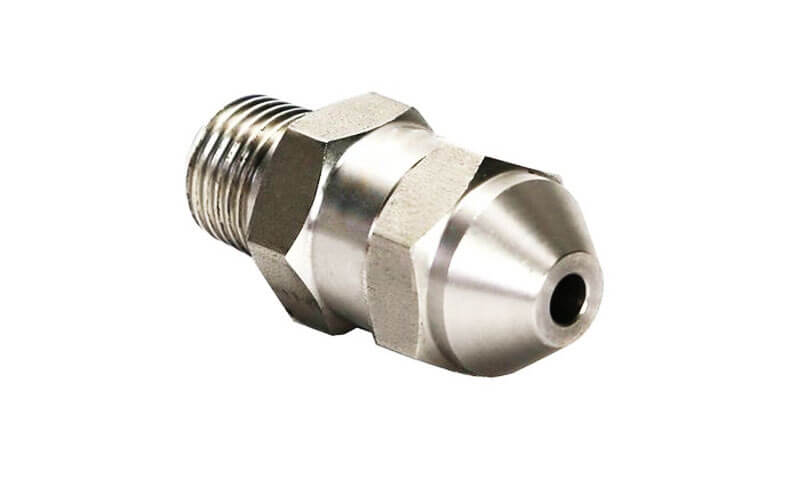
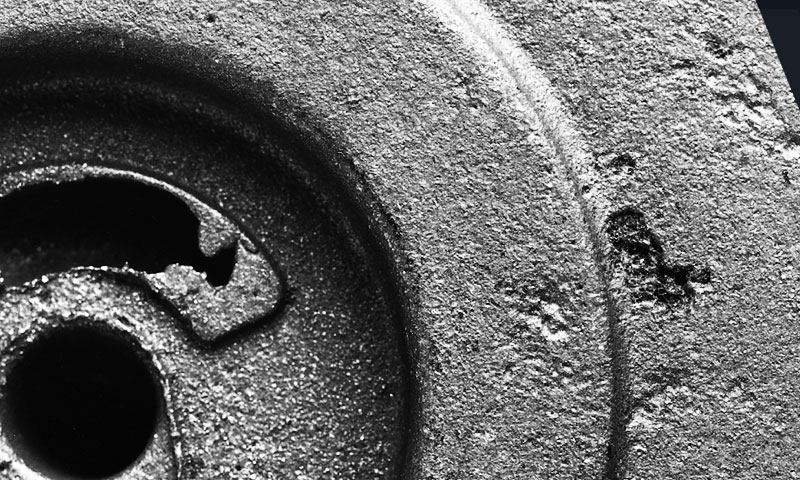
У 1.4307 stainless steel is one of the most widely used low-carbon austenitic stainless steels in European and international manufacturing.
Better known as the EN equivalent of 304L з нержавеючай сталі, it combines good corrosion resistance, выдатная формуемость, reliable weldability, and broad compatibility with modern manufacturing processes.
Its relatively low carbon content is particularly important. Compared with standard EN 1.4301 / Асі 304, У 1.4307 stainless steel is designed to reduce the risk of chromium carbide precipitation during welding or prolonged exposure to sensitization temperatures.
У выніку, it is especially suitable for welded structures, fabricated equipment, сістэмы трубаправодаў, танкі, food-processing machinery, Архітэктурныя кампаненты, and custom precision parts.
1. What Is EN 1.4307 З нержавеючай сталі?
У 1.4307 гэта austenitic chromium‑nickel з нержавеючай сталі belonging to the 18/8 сям'я (прыблізна 18% хром і 8% нік).
It is the European standard equivalent of AISI 304L (ЗША S30403) and is also known by the chemical symbol X2CrNi18‑9.
The “L” designation indicates its low carbon content (≤0.030%), which provides superior resistance to intergranular corrosion after welding.
As an austenitic grade, 1.4307 мае а face‑centred cubic (FCC) крышталічная структура, which imparts excellent ductility, Фармальнасць, і трываласць.

Like other conventional austenitic stainless steels, У 1.4307 is generally non-magnetic in the fully annealed condition.
Аднак, cold working can induce a certain amount of deformation-induced martensite, which may result in slight magnetic behavior depending on the degree of deformation and the material chemistry.
The alloy is therefore frequently selected when a manufacturer requires a corrosion-resistant material that can be formed, зварвалі, апрацаваны, and finished without the processing limitations associated with higher-carbon stainless steel grades.
У 1.4307 Stainless Steel Designations and International Equivalents
| Стандарт | Абазначэнне |
| У (Еўрапейка) | 1.4307 |
| EN Chemical Symbol | X2CrNi18‑9 |
| Асі (Амерыканка) | 304L |
| Нас | S30403 |
| Ад | 1.4307 |
| Ён (Японскі) | SUS304L |
| ISO | X2CrNi18‑9 |
| Gb (кітайскі) | 022Cr19Ni10 |
2. Хімічны склад 1.4307 З нержавеючай сталі
The low carbon content is the defining feature of 1.4307, distinguishing it from standard 304 (1.4301). The table below shows the specified composition per EN 10088.
| Элемент | Вага % (У 10088) | Роля |
| Вуглярод (C) | ≤ 0.030 | Key differentiator – low carbon prevents sensitisation and intergranular corrosion after welding. |
| Крэмнім (І) | ≤ 1.00 | Раскісліцель; паляпшае ўстойлівасць да акіслення. |
| Марганец (Мн) | ≤ 2.00 | Раскісліцель; stabilises austenite; паляпшае працаздольнасць у гарачым стане. |
| Фосфар (P) | ≤ 0.045 | Кантраляваная прымешка; reduces toughness if too high. |
| Серы (S) | ≤ 0.015 | Кантраляваная прымешка; improves machinability but reduces corrosion resistance. |
Хром (Кр) |
17.0 - 19.5 | Primary corrosion‑resistant element; forms passive chromium oxide film. |
| Нік (У) | 8.0 - 10.5 | Stabilises austenitic structure; improves corrosion resistance and toughness. |
| Жалеза (F) | Сальда | Асноўны метал. |
| Азот (N) | ≤ 0.11 | Strengthens austenite; improves pitting resistance. |
Ключавое разуменне: The carbon content of ≤0.030% is the critical difference between 1.4307 (304L) і 1.4301 (304) з нержавеючай сталі.
This low carbon content prevents the precipitation of chromium carbides at grain boundaries during welding, eliminating sensitisation and ensuring excellent corrosion resistance in welded structures.
3. Mechanical Properties of EN 1.4307 З нержавеючай сталі
Mechanical properties vary according to product form, таўшчыня, тэрмічная апрацоўка, cold-work level, and applicable standard.
The following values represent typical minimum or commonly specified properties for solution-annealed EN 1.4307 прадукцыя.
| Маёмасць | Тыповае значэнне / Патрабаванне | Інжынернае значэнне |
| Proof Strength, Rp0.2 | ≥170–210 MPa* | Resistance to the onset of permanent deformation |
| Трываласць на расцяжэнне, Rm | Approximately 480–680 MPa* | Maximum tensile stress before fracture |
| Elongation at Fracture | Typically ≥ 40–45%* | Паказвае выдатную пластычнасць і здольнасць да фарміравання |
| Эластычны модуль | Approximately 190–200 GPa | Determines elastic stiffness |
| Цяжкасць | Typically ≤215 HBW in annealed condition** | Moderate hardness with good formability |
4. Фізічныя і цеплавыя ўласцівасці
The following values are representative for EN 1.4307 / X2CrNi18-9 stainless steel.
Actual properties may vary slightly depending on product form, manufacturing condition, тэмпература, and the applicable material standard.
| Маёмасць | Тыповае значэнне | Інжынернае значэнне |
| Шчыльнасць | Прыбл. 7.9–8.0 g/cm³ | Important for component weight and mass calculations |
| Electrical resistivity at 20°C | Прыбл. 0.73 мкОм·м | Relevant for electrical and resistance-heating applications |
| Thermal conductivity at 20°C | Прыбл. 14–15 W/(м·К) | Ніжэй, чым вугляродзістай сталі; affects heat dissipation and machining |
| Specific heat capacity at 20°C |
Прыбл. 500 J/(kg·K) |
Determines the energy required to raise material temperature |
| Mean coefficient of thermal expansion, 20-100°C | Прыбл. 16–17 × 10⁻⁶/K | Important for dimensional stability during heating and cooling |
| Дыяпазон плаўлення | Прыбл. 1,400–1,450°C | Relevant to welding and melting processes |
| Магнітныя паводзіны | Звычайна non-magnetic in the annealed condition | Useful for applications requiring low magnetic response |
One of the most important engineering characteristics of 1.4307 гэта яго relatively high coefficient of thermal expansion compared with ferritic steels and carbon steels.
Components subjected to significant temperature fluctuations may therefore experience greater dimensional change.
This must be considered when designing long pipelines, цеплаабменнікі, welded structures, прэцызійныя зборкі, and components joined to materials with different thermal expansion behavior.
Прадукцыйнасць тэмпературы
- Low-temperature performance: Like all austenitic stainless steels, 1.4307 exhibits no ductile-to-brittle transition and retains excellent toughness down to cryogenic temperatures.
It is suitable for service down to -196°C and is widely used for cryogenic storage and processing equipment. - Прадукцыйнасць пры высокіх тэмпературах: Continuous service temperature is typically limited to 800–870°C for oxidation resistance.
The low carbon content slightly reduces high-temperature creep strength relative to higher-carbon 1.4301, so it is not the first choice for load-bearing high-temperature structures.
5. Устойлівасць да карозіі 1.4307 З нержавеючай сталі
Corrosion resistance is one of the defining advantages of EN 1.4307 з нержавеючай сталі.
Its corrosion performance is primarily derived from the formation of a thin, адэпт, and self-repairing chromium oxide passive film на паверхні.
When the surface is mechanically damaged, oxygen exposure allows this passive layer to reform, provided the environment is suitable for repassivation.
Агульная каразійная ўстойлівасць
У 1.4307 stainless steel performs well in environments involving:
- Indoor and normal outdoor atmospheric exposure.
- Freshwater and many clean water systems.
- Food-processing environments.
- Organic chemicals.
- Many mildly oxidizing acids.
- Pharmaceutical and sanitary equipment.
- General industrial fabrication.
The actual corrosion resistance depends heavily on surface finish, якасць вырабу, хімічнае ўздзеянне, тэмпература, канцэнтрацыя хларыдаў, and cleaning conditions.
Гладкі, properly cleaned, and passivated surface generally performs better than a rough or contaminated surface.
Iron contamination introduced during machining, драба, or fabrication can compromise surface corrosion resistance if not removed.
Resistance to Intergranular Corrosion
The major metallurgical advantage of EN 1.4307 over EN 1.4301 гэта яго меншае ўтрыманне вугляроду, generally limited to approximately 0.03% максімум.
During welding or exposure to certain elevated temperatures, carbon can combine with chromium to form chromium carbides at grain boundaries.
This process can locally reduce the chromium concentration and create regions more susceptible to intergranular corrosion.
The reduced carbon content of 1.4307 minimizes this risk. У выніку, the material is particularly suitable for:
- Welded pressure vessels.
- Tanks and pipelines.
- Fabricated process equipment.
- Structures where post-weld solution annealing is impractical.
- Components containing multiple welds or complex welded geometries.
Точкавая і шчылінная карозія
Although EN 1.4307 stainless steel provides good general corrosion resistance, it is not specifically designed for severe chloride environments.
Chloride ions can locally damage the passive film and initiate Карозія, якая піша або карозія шчыліны.
The risk increases with:
- Higher chloride concentration.
- Elevated temperature.
- Stagnant conditions.
- Crevices and deposits.
- Rough or contaminated surfaces.
- Poor drainage.
Такім чынам, з нержавеючай сталі 1.4307 may not be the preferred choice for direct seawater exposure, highly concentrated salt solutions, or aggressive chloride-containing process media.
У гэтых асяроддзях, molybdenum-containing grades such as У 1.4404 / 316L generally provide improved resistance.
Стрэс -трэсканне карозіі
Like all standard austenitic stainless steels, 1.4307 stainless steel is susceptible to chloride stress corrosion cracking at temperatures above approximately 60°C.
The low-carbon modification does not improve SCC resistance. For hot chloride service environments, duplex or ferritic stainless steels offer inherently better performance.
6. Weldability of EN 1.4307 З нержавеючай сталі
У 1.4307 is widely regarded as having Выдатная зварнасць, which is one of the main reasons for its extensive use in tanks, трубы, process equipment, архітэктурныя збудаванні, and fabricated stainless steel components.
Its low carbon content reduces the tendency toward sensitization and improves resistance to intergranular corrosion in the heat-affected zone after welding.
У многіх прыкладаннях, this allows welded assemblies to be used without post-weld solution annealing.
Suitable Welding Processes
У 1.4307 can be welded using most conventional fusion-welding processes, уключаючы:
- TIG/GTAW welding.
- MIG/GMAW welding.
- Plasma arc welding.
- Лазерная зварка.
- Контактная зварка.
- Orbital welding.
- Submerged arc welding for suitable heavy-section applications.
The choice of process depends on component thickness, joint geometry, аб'ём вытворчасці, габарытныя патрабаванні, and surface-quality expectations.
Выбар прысадачнага металу
For welded joints, filler materials are commonly selected to provide compatible corrosion resistance and weld-metal properties.
Depending on the applicable standard and service conditions, commonly used filler categories include ER304L (AWS A5.9)-type consumables; 308L is also suitable, which are designed for welding 304L-type stainless steels.
7. Common Manufacturing Processes for 1.4307 Stainless Steel Components
У 1.4307 stainless steel is valued not only for its corrosion resistance and weldability, but also for its broad manufacturing versatility.
Выраб з ліставога металу
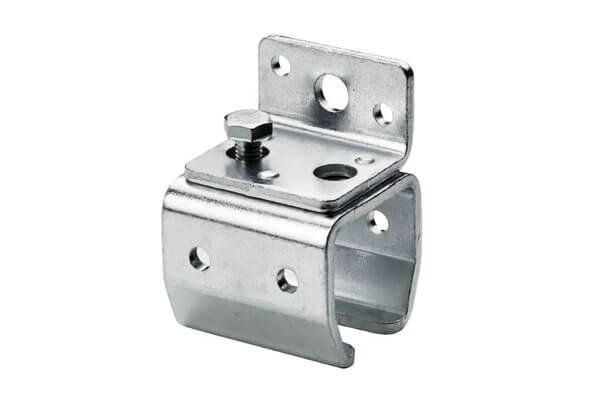
Выраб ліставога металу is one of the most widely used manufacturing routes for EN 1.4307.
The material is supplied in sheet, талерка, палоска, or coil form and can be processed through cutting, выгін, ударыць, скрутка, and forming operations to produce components ranging from simple brackets to large fabricated enclosures and process equipment.
Because EN 1.4307 combines good ductility with reliable corrosion resistance, it is particularly suitable for components requiring complex bends, welded seams, or hygienic surfaces.
Тыповыя прыкладанні
Common applications include food-processing equipment, stainless steel cabinets, machine guards, электрычныя карпусы, ёмістасці для захоўвання, паветраводы, архітэктурныя панэлі, абсталяванне для хімічнай апрацоўкі, and fabricated piping components.
Апрацоўка з ЧПУ
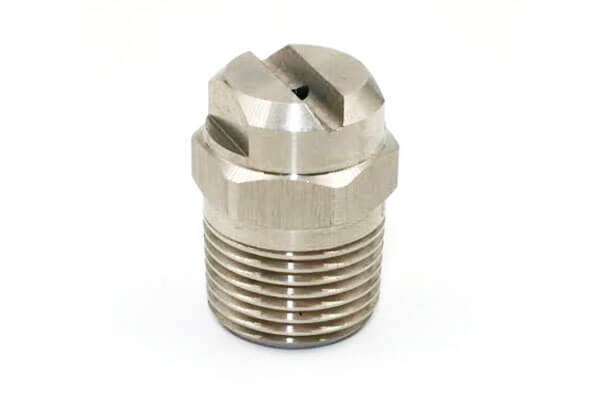
Апрацоўка з ЧПУ is used when EN 1.4307 components require high dimensional accuracy, дакладныя адтуліны, ніткі, ўшчыльненне паверхняў, or complex three-dimensional geometries.
Typical operations include CNC turning, фрэзы, свідраванне, нудны, пастукванне, і шліфаванне.
The process is particularly suitable for custom components, прататыпы, нізкі- да сярэднесерыйнай вытворчасці, and parts that require tight tolerances that may be difficult to achieve through forming or casting alone.
Тыповыя прыкладанні
У 1.4307 CNC-machined components include valve bodies and fittings, Кампаненты помпы, шахты, фланцы, калектары, прэцызійныя карпусы, threaded connectors, medical and laboratory equipment parts, and custom components for food and chemical processing systems.
Інвестыцыйнае ліццё
Інвестыцыйнае ліццё, Таксама вядомы як кастынг Lost-Wax, is suitable for manufacturing EN 1.4307 stainless steel components with complex geometry that would require extensive machining if produced from solid bar or billet.
The process involves producing a wax pattern, building a ceramic shell around the pattern, removing the wax, and pouring molten stainless steel into the resulting cavity.
Пасля застывання, the ceramic shell is removed and the casting undergoes cleaning, фініш, і, дзе трэба, дакладная апрацоўка.
Тыповыя прыкладанні
Typical EN 1.4307 investment-cast components include valve and pump bodies, трубаправодная арматура, працоўныя, кранштэды, Марскае абсталяванне, food-processing machinery components, архітэктурнае абсталяванне, and complex industrial equipment parts.
Зварка і выраб
Вінжаванне is a core manufacturing process for 1.4307 з нержавеючай сталі, particularly when producing large assemblies that cannot be economically manufactured as a single piece.
Components may be cut and formed separately before being joined through TIG, Мне, лазер, супраціў, or other suitable welding processes.
This approach allows manufacturers to create tanks, рамы, сістэмы трубаправодаў, корпуса абсталявання, and custom structural assemblies.
Тыповыя прыкладанні
Welded EN 1.4307 structures are widely used in storage tanks, апрацоўваць посуд, трубаправоды, food and beverage equipment, pharmaceutical systems, industrial frames, exhaust assemblies, архітэктурныя збудаванні, and custom machinery.
Deep Drawing and Stamping
Deep drawing and stamping are high-efficiency forming processes used primarily for medium- to high-volume production of thin-walled EN 1.4307 stainless steel components.
In stamping, sheet metal is cut or formed using dies and presses.
Deep drawing extends this principle by transforming a flat sheet blank into a hollow or three-dimensional shape through controlled plastic deformation.
These processes are particularly effective for producing consistent components with short cycle times once the tooling has been developed.
Тыповыя прыкладанні
Typical applications include sinks, кухоннае абсталяванне, харчовыя кантэйнеры, appliance components, stainless steel housings, cups and vessels, Аўтамабільныя кампаненты, medical equipment parts, and thin-walled industrial enclosures.
Лазерная рэзка
Лазерная рэзка is a highly flexible thermal cutting process used to produce precise two-dimensional profiles from EN 1.4307 sheet and plate.
A focused laser beam melts or vaporizes the material along a programmed cutting path, while an assist gas removes molten material from the cutting zone.
The process is commonly integrated into automated sheet metal manufacturing systems and can rapidly produce complex profiles without dedicated punching dies.
Тыповыя прыкладанні
Laser-cut EN 1.4307 components are commonly used for machine panels, кранштэды, карпусы, фланцы, mounting plates, Архітэктурныя кампаненты, харчовае абсталяванне, industrial guards, control cabinets, and parts subsequently formed or welded into larger assemblies.
8. Surface Finishes for EN 1.4307 З нержавеючай сталі
Surface finish is an important part of EN 1.4307 stainless steel component manufacturing.
It affects not only appearance, але таксама Каразія супраціву, ачышчальнасць, трэнне, паводзіны насіць, шурпатасць паверхні, and suitability for hygienic applications.
Хоць 1.4307 stainless steel inherently develops a passive chromium-rich oxide film, manufacturing operations such as cutting, вінжаванне, драба, апрацоўванне, and forming can alter the surface condition.
Appropriate finishing and post-treatment can therefore help restore or improve the functional performance of the finished component.
Common Surface Finishes
| Аздабленне паверхні | Typical Characteristics | Main Benefits | Тыповыя прыкладанні |
| 2Б | Гладкі, cold-rolled and annealed surface with light skin pass | Good general-purpose finish, устойлівы да карозіі, эканамічны | Абсталяванне для харчавання, танкі, тэхніка, прамысловыя кампаненты |
| Б.А | Bright annealed, святлоадбівальная паверхня | High brightness and smooth appearance | Дэкаратыўныя кампаненты, тэхніка, architectural products |
| Ніякі. 3 / Ніякі. 4 | Mechanically polished with progressively finer abrasive | Прывабны знешні выгляд, improved surface uniformity | Architectural parts, кухоннае абсталяванне, харчовае абсталяванне |
| Ніякі. 8 / Mirror | Highly polished reflective surface | Excellent appearance and very low surface roughness | Decorative and architectural applications |
Пэндзаль / Сацін |
Directional abrasive texture | Hides fingerprints and minor scratches | Архітэктурныя панэлі, elevators, тэхніка |
| Bead Blasted | Uniform matte texture produced by abrasive blasting | Low-glare appearance and consistent texture | Architectural and industrial components |
| Электрапаліраваны | Electrochemical removal of a thin surface layer | Very smooth surface, improved cleanability and corrosion performance | Фармацэўтычны, медычны, харчовае абсталяванне |
| Passivated | Chemically treated to promote a clean passive surface | Removes free iron/contamination and supports corrosion resistance | Precision industrial and corrosion-sensitive components |
9. Applications of EN 1.4307 З нержавеючай сталі
The combination of low carbon content, Добрая ўстойлівасць да карозіі, Выдатная зварнасць, добрая формуемость, and attractive surface characteristics makes EN 1.4307 stainless steel suitable for a broad range of industrial applications.
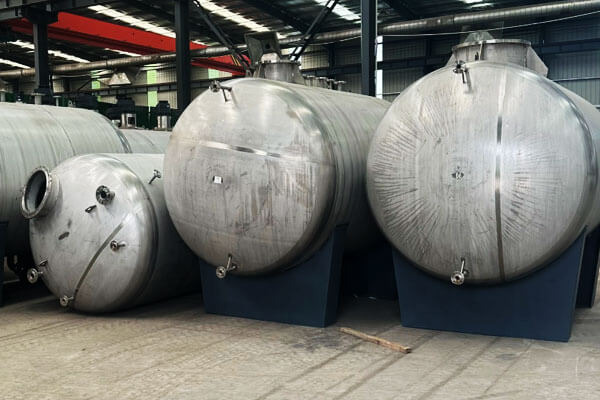
Прамысловасць харчавання і напояў
Food processing is one of the most important application areas for 1.4307 з нержавеючай сталі.
Its corrosion resistance and ease of cleaning make it suitable for equipment that comes into contact with water, прадукты харчавання, cleaning solutions, and atmospheric moisture.
Тыповыя кампаненты ўключаюць:
- Processing tanks and vessels.
- Машыны для харчовай прамысловасці.
- Conveyors and structural components.
- Hoppers and chutes.
- Piping and fittings.
- Абсталяванне для змешвання.
- Storage containers.
- Kitchen and catering equipment.
Architectural and Building Applications
1.4307 stainless steel is also widely used in architectural applications where a combination of corrosion resistance, знешнасць, and fabrication flexibility is required.
Тыповыя прадукты ўключаюць:
- Дэкаратыўныя панэлі.
- Interior wall cladding.
- Elevator components.
- Поручні.
- Architectural trim.
- Door and window components.
- Stainless steel fixtures.
- Decorative structural elements.
Chemical and Process Equipment
1.4307 stainless steel can be used in many chemical-processing environments where the combination of corrosion resistance and weldability is sufficient.
Прыклады ўключаюць:
- Process tanks.
- Судна для захоўвання.
- Pipework.
- Pumps and fittings.
- Heat-transfer equipment.
- Industrial manifolds.
- Chemical handling equipment.
Аўтамабільная прамысловасць
1.4307 stainless steel can be used in аўтамабільны and transportation applications requiring corrosion resistance and good fabrication characteristics.
Applications may include:
- Exhaust-related components.
- Brackets and supports.
- Heat shields.
- Дэкаратыўная аздабленне.
- Structural fabricated components.
- Fluid-handling components.
Pharmaceutical and Medical Equipment
Спалучэнне ўстойлівасці да карозіі, ачышчальнасць, and weldability makes 1.4307 stainless steel suitable for selected pharmaceutical and medical equipment.
Applications can include:
- Processing vessels.
- Лабараторнае абсталяванне.
- Fluid-handling systems.
- Equipment frames.
- Pharmaceutical processing components.
- Sanitary piping assemblies.
Змазваць, Бензін, and Industrial Equipment
1.4307 stainless steel is used in selected oil, бензін, энэргія, and general industrial applications where environmental conditions fall within its corrosion-resistance capabilities.
Тыповыя кампаненты ўключаюць:
- Трубавыя фітынгі.
- Кранштэды.
- Equipment housings.
- Клапаны and manifolds.
- Storage equipment.
- Структурныя кампаненты.
- Instrumentation hardware.
10. Перавагі і абмежаванні
У 1.4307 stainless steel is best understood as a low-carbon, fabrication-oriented member of the 18Cr–8Ni austenitic stainless steel family.
Key Advantages of 1.4307 З нержавеючай сталі
Excellent resistance to intergranular corrosion in welded conditions
The carbon content of EN 1.4307 is typically limited to ≤0.030%, substantially reducing the tendency for chromium carbide precipitation at grain boundaries during welding.
У выніку, properly fabricated 1.4307 components generally have good resistance to weld-related intergranular corrosion without requiring post-weld solution annealing in many conventional applications.
This characteristic makes the grade particularly attractive for welded tanks, трубы, харчовае абсталяванне, архітэктурныя збудаванні, and fabricated machinery.
Excellent ductility and cold-forming capability
The austenitic microstructure provides high ductility and allows 1.4307 to undergo substantial plastic deformation without cracking.
It is therefore well suited to выгін, глыбокі малюнак, марнаванне, скрутка, and other cold-forming operations.
This combination of ductility and corrosion resistance makes it particularly useful for thin-walled components and geometrically complex sheet-metal products.
Good low-temperature toughness
Як аустенитная нержавеючая сталь, У 1.4307 does not exhibit the pronounced ductile-to-brittle transition characteristic of ferritic and many carbon steels.
Properly produced austenitic 304L-type material can retain useful toughness at cryogenic temperatures, with applications extending toward approximately −196°C (77 К) when the relevant product form, стан, standard, and design requirements are satisfied.
Гэта робіць 1.4307 a candidate for selected low-temperature vessels, лабараторнае абсталяванне, cryogenic auxiliaries, and fluid-handling systems.
Actual cryogenic qualification should always be based on the applicable material specification and testing requirements.
Strong general-purpose corrosion resistance
У 1.4307 provides corrosion performance broadly comparable to conventional 1.4301/304 stainless steel in many atmospheric, food-processing, and moderately corrosive environments.
Its approximately 18% хром content supports formation of a protective passive film, while nickel stabilizes the austenitic structure and contributes to its ductility and corrosion performance.
Такім чынам, 1.4307 offers an effective balance between Каразія супраціву, тэхналагічнасць, і кошт матэрыялаў for general-purpose stainless steel applications.
Excellent hygienic and cleanability characteristics
When appropriately finished, У 1.4307 provides a smooth, non-porous metallic surface that can be readily cleaned and maintained.
Механічная паліроўка, пасівацыя, and electropolishing can further improve surface cleanliness and reduce sites where contaminants or process residues can accumulate.
This makes the grade widely applicable to food-processing, напой, фармацэўтычны, laboratory, and sanitary equipment, provided the selected surface finish and fabrication practices meet the relevant industry requirements.
Broad manufacturing compatibility
У 1.4307 stainless steel can be processed using virtually all conventional stainless steel manufacturing technologies.
This manufacturing flexibility is particularly valuable for custom stainless steel components because the same material can be used across prototypes, вырабленыя вузлы, дэталі з дакладнай апрацоўкай, і складаныя адліўкі.
Inherent Limitations of 1.4307 З нержавеючай сталі
Moderate resistance to pitting and crevice corrosion
Хоць 1.4307 performs well in many general environments, it does not contain the molybdenum addition characteristic of 316L/1.4404 stainless steel.
Такім чынам, its resistance to Індукаваная хларыдам піттынг і шчыліна карозія is significantly more limited than that of molybdenum-alloyed austenitic stainless steels.
Long-term exposure to seawater, concentrated chloride solutions, marine splash zones, or severe salt environments may therefore require 1.4404/316L, дуплекс з нержавеючай сталі, or a higher-alloy material.
Chloride stress corrosion cracking remains a service consideration
Like other austenitic stainless steels, У 1.4307 can be susceptible to chloride-induced stress corrosion cracking under the combined conditions of напружанне расцяжэння, chloride contamination, and elevated temperature. The risk increases as temperature and chloride severity increase.
There is no universal temperature threshold applicable to every service condition; таму, values around 60° С should be regarded only as an engineering warning range rather than a guaranteed safe/unsafe boundary.
Not a preferred grade for heavily loaded high-temperature structures
1.4307 stainless steel is a general-purpose corrosion-resistant grade rather than a specialized creep-resistant alloy.
Пры падвышанай тэмпературы, its long-term mechanical performance and creep resistance may become limiting factors.
For components subjected to sustained mechanical loading at high temperature, dedicated heat-resistant stainless steels or nickel-based alloys may provide a more appropriate solution.
Moderate machinability and significant work hardening
Compared with free-machining steels, з нержавеючай сталі 1.4307 can be more demanding to machine. Its austenitic structure tends to work harden, while its relatively low thermal conductivity can concentrate heat near the cutting zone.
Effective machining therefore requires rigid fixturing, appropriate carbide tooling, кантраляваныя параметры рэзкі, adequate coolant, and good chip evacuation.
Poor machining conditions can accelerate tool wear and degrade surface finish.
Higher material cost than carbon steel and some alternative stainless grades
The presence of chromium and nickel makes 304L stainless steel substantially more expensive than ordinary carbon steel. Its price can also vary considerably with nickel market conditions and product form.
Аднак, comparing material price alone can be misleading.
Longer service life, reduced corrosion-related maintenance, свариваемость, ачышчальнасць, and lower replacement frequency can make 1.4307 economically attractive over the complete life cycle of a component.
11. Параўнальны аналіз: У 1.4307 супраць. У 1.4301 супраць. У 1.4404 З нержавеючай сталі
У 1.4307, У 1.4301, і EN 1.4404 are all widely used austenitic stainless steels, but they are optimized for somewhat different service conditions.
| Маёмасць | У 1.4307 (304L) | У 1.4301 (304) | У 1.4404 (316L) |
| Common designation | X2CrNi18-9 | X5CrNi18-10 | X2crnimo17-12-2 |
| AISI equivalent | 304L | 304 | 316L |
| Нас | S30403 | S30400 | S31603 |
| Typical Cr content | ~17.5–19.5% | ~17.5–19.5% | ~16.5–18.5% |
| Typical Ni content | ~8.0–10.5% | ~8.0–10.5% | ~10.0–13.0% |
| Typical Mo content | Ніводзін | Ніводзін | ~2.0–2.5% |
| Maximum C | ≤0.030% | ≤0.070% | ≤0.030% |
| Мікраструктура | Аўстэніт | Аўстэніт | Аўстэніт |
| Зварачнасць | Выдатны | Добры; greater sensitization risk than 304L | Выдатны |
| Агульная каразійная ўстойлівасць | Добры | Добры | Вельмі добра |
Ўстойлівасць да выязваўлення (Дрэва) |
≈ 19.6 | ≈ 19.6 | ≈ 25.9 |
| Фармальнасць | Выдатны | Выдатны | Выдатны |
| Typical minimum yield strength* | ≥170 MPa | ≥190 MPa, depending on product standard | ≥220 Мпа, depending on product standard |
| Typical tensile strength* | ≥485 MPa | ≥500 MPa | ≥530 MPa |
| Тыповыя прыкладанні | Зварныя вырабы, харчовае абсталяванне, танкі, architectural parts | General-purpose stainless components, тэхніка, архітэктуры | Хімічны, марская, фармацэўтычны, food-processing and chloride-exposed equipment |
| Best selection when… | Extensive welding and low sensitization risk are priorities | Агульнага прызначэння 304 performance is sufficient | Chlorides and localized corrosion are major concerns |
*Mechanical-property requirements vary with product form, таўшчыня, delivery condition, and governing standard.
Values should therefore be verified against the applicable EN product specification rather than treated as universal material constants.
12. Custom Precision Stainless Steel Parts from DEZE
Ліцейны завод DEZE забяспечвае custom stainless steel casting and precision machining solutions for components manufactured from EN 1.4307 (304L) and other austenitic and heat-resistant stainless steel grades.
The manufacturing approach is selected according to part geometry, габарытныя патрабаванні, аб'ём вытворчасці, material specification, і ўмовы абслугоўвання.
For complex stainless steel components, Інвестыцыйнае ліццё can reproduce intricate contours, тонкія зрэзы, Унутраныя функцыі, and integrated mounting structures while reducing the amount of subsequent machining.
Where tighter dimensional requirements apply, cast components can undergo CNC turning, фрэзы, свідраванне, драба, and other secondary operations.
| Магчымасць | Падрабязная інфармацыя |
| Materials | У 1.4307 (304L), 1.4301 (304), 1.4404 (316L), 1.4541 (321), 1.4845 (310S). |
| Casting process | Інвестыцыйнае ліццё (Страчаны воск), пясчанае ліццё. |
| Частковая вага | 0.05 кг да 1000 кг. |
| Памеры | Да 6000 дыяметр мм. |
| Даноснасць | ±0,1-0,3 мм (CT6‑CT9 per ISO 8062). |
| Аздабленне паверхні | Ra 1,6-6,3 мкм у адліваным выглядзе; электрапаліроўка даступная. |
| Тэрмічная апрацоўка | Адпал раствора, Стрэс дапамогі. |
| Апрацоўванне | ЧПУ павароту, фрэзы, свідраванне, і шліфаванне. |
| Якасць | ISO 9001:2015 сертыфікаваны; 100% NDT and dimensional inspection. |
| Час выканання | 8‑12 weeks for tooling; 2-4 тыдні для паўторных заказаў. |
13. Conclusion
У 1.4307 stainless steel is far more than simply a “low-carbon version of 304”.
It is a purpose-engineered austenitic stainless steel grade that solves one of the most persistent practical problems of standard 18/10 з нержавеючай сталі: intergranular corrosion in welded heat-affected zones.
By limiting carbon to 0.03% максімум, the grade retains nearly identical mechanical properties and general corrosion performance as 1.4301, while adding the critical benefit of full corrosion integrity in the as-welded condition.
For food processing equipment, хімічныя ёмістасці, architectural structures and water systems — all applications where welded fabrication is the norm and post-weld annealing is impractical — 1.4307 is the technically correct and cost-optimal material choice.
It occupies an essential niche between general-purpose 1.4301 and higher-alloy 1.4404, providing reliable, cost-effective corrosion performance for the vast majority of moderately corrosive industrial environments.
FAQ
ёсць 1.4307 магніт з нержавеючай сталі?
У отожженном стане, У 1.4307 stainless steel is generally essentially non-magnetic or only very weakly magnetic.
Аднак, cold forming can induce some martensitic transformation, resulting in measurable magnetic response.
ёсць 1.4307 equivalent to 316L stainless steel?
Ніякі. 1.4307 is a 304L-type stainless steel, дзе 1.4404 is the European designation commonly associated with 316L.
The key distinction is that 1.4404 contains molybdenum, giving it substantially better resistance to chloride-induced pitting and crevice corrosion.
What is the maximum operating temperature for 1.4307?
Up to 800°C for continuous service and 850°C for intermittent service. Above 850°C, oxidation scaling increases significantly.
Is EN 1.4307 the same as 304L stainless steel?
Так. У 1.4307 corresponds to X2CrNi18-9 and is commonly associated with AISI 304L / ЗША S30403.
The exact equivalence should nevertheless be confirmed against the applicable product standard because chemical and mechanical requirements can vary between specifications.
У чым розніца паміж 1.4307 і 1.4301 з нержавеючай сталі?
The principal difference is carbon content. 1.4307 has a maximum carbon content of approximately 0.030%, дзе 1.4301 permits up to approximately 0.070%.
The lower carbon content of 1.4307 stainless steel improves resistance to weld-related sensitization and makes it particularly suitable for welded fabrication.