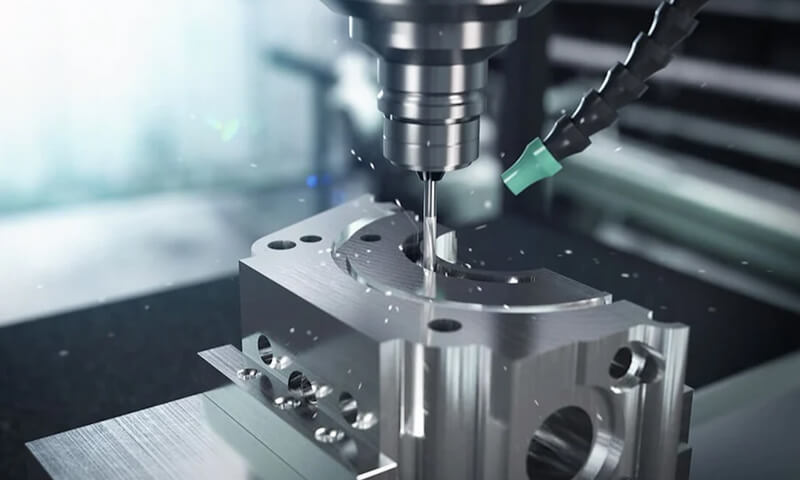
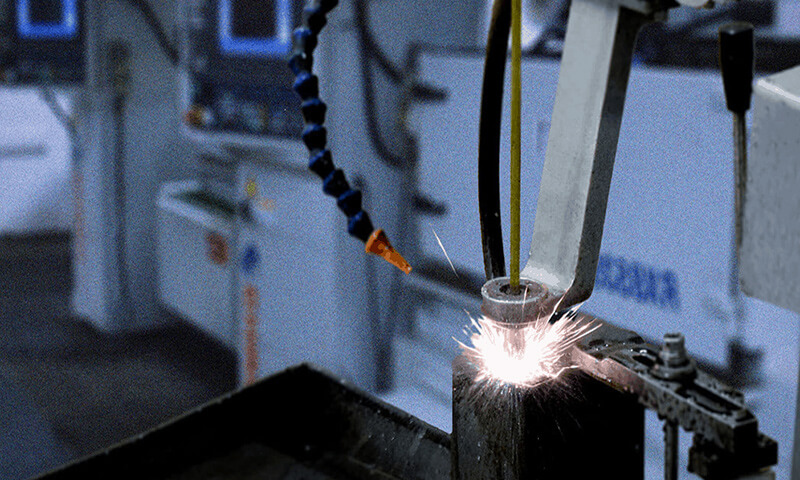
1. Уводзіны
1.4021 is a martensitic stainless steel widely known by the designation X20Cr13 and commonly cross-referenced to Асі 420 in supplier literature.
It belongs to the family of chromium stainless steels that can be hardened by heat treatment, which makes it fundamentally different from the more familiar austenitic grades used for general corrosion resistance.
На практыцы, 1.4021 is chosen when a designer needs a combination of moderate corrosion resistance, high hardness potential, and useful wear resistance rather than maximum corrosion performance.
The material is especially important in cutlery, ляза, валы помпаў, гідраўлічныя кампаненты, тэхніка, і дэкаратыўныя часткі, because its property balance is well suited to parts that must be strong, паліруюцца, and serviceable in moderately corrosive environments.
That is the central idea behind 1.4021: it is not a universal stainless steel, but a technically targeted one.
2. What Is 1.4021 З нержавеючай сталі?
1.4021 гэта а martensitic chromium з нержавеючай сталі with a chromium content in the 12–14% range and carbon in the 0.16–0,25% дыяпазон.
Supplier datasheets describe it as a hardenable steel used in the quenched-and-tempered condition for constructional and fastener applications where Умераная ўстойлівасць да карозіі патрэбна.
It is also described as a cutlery and blade steel, which reflects its ability to achieve relatively high hardness after heat treatment.
This grade is ferromagnetic, has good machinability and forgeability, and is suitable for use up to about 550-600°C depending on the property being considered.
One datasheet states that it is “scale resistant up to 1100 ° F,” which is about 593° С, while another notes good resistance to oxidizing atmospheres up to about 600° С.
Those values are consistent with the idea that 1.4021 is a serviceable hot-working stainless, but not a high-temperature corrosion alloy.
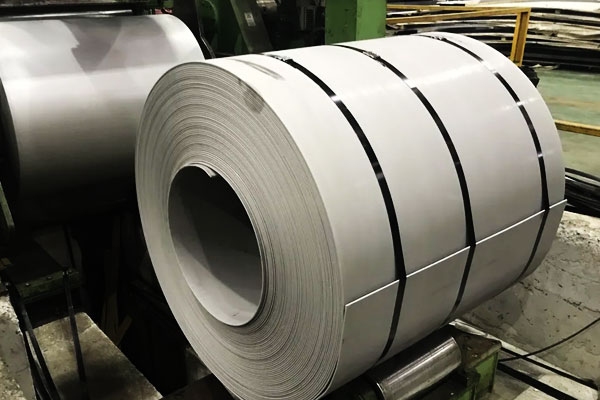
Core characteristics
At a practical level, 1.4021 is valued for four things:
- Гэта можа быць загартаваны to high strength and hardness,
- 1.4021 stainless steel has Умераная ўстойлівасць да карозіі in chloride-free media,
- Гэта можа быць polished to a high-gloss finish,
- Гэта так магнітныя, which may be useful or undesirable depending on the application.
3. Chemical Composition and Material Identity
| Элемент | Typical Range in 1.4021 | Role in the Alloy |
| Вуглярод (C) | 0.16–0,25% | Enables hardening and higher final hardness. |
| Хром (Кр) | 12.0–14.0% | Provides stainless character and oxidation resistance. |
| Марганец (Мн) | ≤ 1.50% | Supports deoxidation and processing balance. |
| Крэмнім (І) | ≤ 1.00% | Assists steelmaking and contributes modestly to strength. |
| Фосфар (P) | ≤ 0.040% | Kept low to avoid brittleness. |
| Серы (S) | ≤ 0.030% | Kept low; controlled sulfur may be used for machinability in some product forms. |
| Жалеза (F) | Сальда | Matrix element of the steel. |
4. Фізічныя і механічныя ўласцівасці 1.4021 З нержавеючай сталі
The properties of 1.4021 depend strongly on heat treatment condition. In the annealed state it is relatively workable; after quenching and tempering it becomes much harder and stronger.
The tables below summarize representative room-temperature values from published datasheets.
Фізічныя ўласцівасці
| Маёмасць | Тыповае значэнне | Ноты |
| Шчыльнасць | 7.70–7.73 g/cm³ | Dense martensitic stainless steel, typical of chromium steels. |
| Модуль пругкасці | 215–216 GPa | Relatively stiff compared with austenitic stainless steels. |
| Цеплаправоднасць | 30 W/m · k | Moderate heat conduction for a stainless steel. |
| Удзельная цеплаёмістасць | 460 J/kg · k | Typical thermal capacity for this grade family. |
| Каэфіцыент цеплавога пашырэння | пра 10.5 × 10⁻⁶/° C (20-100°C) | Lower than austenitic stainless steels, helping dimensional stability. |
| Magnetic response | Так | Ferromagnetic in the standard condition. |
Механічныя ўласцівасці
| Condition | Сіла выхаду | Трываласць на расцяжэнне | Падаўжэнне | Цяжкасць | Ноты |
| Адпачываў / soft condition | —— | Up to about 760 MPa max | —— | Up to about 230 HB max | Suitable for machining and forming before final hardening. |
| +QT700 | ≥ 500 МПА | 700–850 Мпа | ≥ 13% | —— | Balanced hardened condition with good toughness. |
| +QT800 | ≥ 600 МПА | 800–950 МПа | ≥ 12% | —— | Higher strength/hardness, slightly lower ductility. |
5. Тэрмічная апрацоўка, Уцвярджанне, і мікраструктура
Тэрмічная апрацоўка
1.4021 гэта а мартенситная нержавеючая сталь, so its performance is governed by a heat-treatment cycle rather than by the as-received condition alone.
У отожженном стане, it is softer and more workable; пасля загартоўкі і адпуску, it transforms into a much harder and stronger material.
That hardenability is the core reason the grade is used for blades, шахты, зашпількі, and other wear-prone components.
Published datasheets describe the soft-annealed condition as obtained by holding at 745–825°C followed by slow air cooling, while hardening is performed by heating to about 950–1050°C and cooling in air or oil.
Уцвярджанне
The resulting microstructure is fundamentally martensitic after quenching, and the tempering step is used to tune the balance between hardness and toughness.
For practical production, the tempering range is selected according to the target property set: one source gives QT700 каля 650-750°C і QT800 каля 600-700°C, while another notes that the desired strength determines the tempering temperature.
This is not a “one-size-fits-all” alloy; it is a material whose final behavior is deliberately engineered through thermal processing.
Мікраструктура
A critical metallurgical detail is the embrittlement window. The datasheet warns that the range between 400°C і 600 °C should be avoided because undesirable phases may precipitate and embrittlement can occur.
That means the alloy can be made very hard, but it must also be handled with thermal discipline.
Іншымі словамі, the same heat-treatment sensitivity that makes 1.4021 useful also makes it unforgiving if the process is poorly controlled.
The welding-related microstructural behavior follows the same logic. Пасля зваркі, the workpiece should be cooled to below the martensite start region, прыблізна 120° С, before tempering.
This reduces the risk of cracking and helps restore a more stable property balance in the heat-affected zone.
A second source notes that the grade is not commonly welded because of its air-hardening behavior, which is another way of saying that heat input and cooling history strongly affect final performance.
Heat-treatment summary
| Processing state | Тыповы стан | Metallurgical effect | Engineering consequence |
| Soft-annealed | 745–825°C, slow air cooling | Softer martensitic precursor structure | Better machinability and formability. |
| Уцвярджанне | 950–1050°C, then air/oil quench | Martensite formation | Large rise in hardness and strength. |
| Tempering for QT700 | 650-750°C | Reduces brittleness, sets final strength level | Balanced strength and toughness. |
| Tempering for QT800 | 600-700°C | Higher strength/hardness, slightly less ductility | Stronger but more demanding service condition. |
6. Corrosion Performance in Different Environments
1.4021 stainless steel offers умераны Каразія супраціву, not the broad corrosion immunity associated with austenitic grades such as 304 або 316.
One datasheet says it performs well in moderately corrosive, chloride-free environments such as soaps, detergents, and organic acids, while another notes resistance to the atmosphere, прэсная вада, разбаўленыя кіслоты, and alkalis.
That makes it useful, but not universal. The alloy also has clear limitations.
Swiss Steel states that it is not resistant to intergranular corrosion in the as-delivered or as-welded condition, і 1.4021 should therefore not be treated like a corrosion-specialist stainless steel in welded chemical service.
Its corrosion performance is best when the surface is finely ground or polished, and one source explicitly notes that optimal corrosion resistance is attained when the surface is finely ground or polished.
Corrosion perspective
- Good for atmosphere, прэсная вада, разбаўленыя кіслоты, шчолачы, soaps, detergents, and organic acids.
- Not a good choice for chloride-heavy or strongly corrosive service.
- Surface finish matters: polished surfaces perform better.
- Welding and delivery condition can reduce corrosion resistance unless properly managed.
7. Выдумка, Вінжаванне, and Machining Considerations
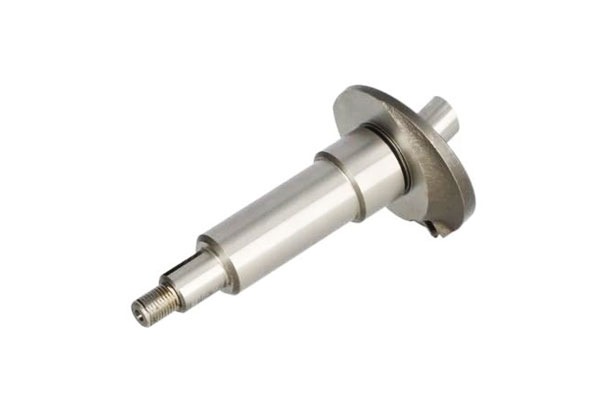
Fabrication behavior
1.4021 is a martensitic stainless steel, so its fabrication behavior is tied closely to its hardness level and thermal history.
У отожженном стане, it is relatively workable, and supplier data describe its forgeability as good, its cold forming as feasible, and its machinability as good.
The same datasheets also note that it can be used in hot- and cold-rolled sheet, strip, палоны, дрот, раздзелы, and bright products, which reflects a fairly broad industrial processing window.
A practical way to think about 1.4021 is this: it is not a “difficult” stainless steel in the fabrication sense, but it is also not a soft austenitic grade.
Its workability changes meaningfully with hardness, and the final property target should be decided before forming or machining begins.
Па гэтай прычыне, fabrication planning and heat-treatment planning should be treated as one combined problem rather than two separate steps.
Forging and hot working
Hot working is well established for this grade. One datasheet recommends gradual heating to about 850° С, then faster heating to 1150–1180°C, with forging carried out between 1100°C і 900 °C, followed by slow cooling to promote controlled structure development.
Another source notes that the grade is used successfully in constructional and fastener applications and has good forgeability.
These details show that 1.4021 responds well to forging, but only when temperature control is disciplined.
Вінжаванне
This is not a grade that rewards casual welding practice.
The reason is structural: as a martensitic steel, it can harden during cooling, which raises the risk of brittle weld zones and property imbalance unless preheat and tempering are used correctly.
A separate datasheet is even more blunt, stating that 1.4021 is “not commonly welded” because of its air-hardening behavior.
The practical takeaway is clear: welding is feasible, but it should be planned as a controlled metallurgical operation, not just a joining step.
Апрацоўванне
Machinability is one of the more favorable features of 1.4021. Swiss Steel describes the grade as having good machinability, and thyssenkrupp notes that it machines similarly to carbon steels of the same hardness.
That means the machining burden is largely governed by hardness level rather than by unusual stainless-steel behavior.
На практыцы, that makes the alloy especially attractive for parts that are expected to be machined before final hardening or used in a tempered condition where dimensional control still matters.
Surface finishing and polishability
Аздабленне паверхні is more than cosmetic for 1.4021; it also affects corrosion performance.
Supplier documentation says the knife-blade variant can be polished to high-gloss finishes and that optimal corrosion resistance is attained when the surface is finely ground or polished.
That makes surface finishing a functional part of the design rather than a final decorative step.
This is particularly relevant for cutlery, decorative parts, and visible mechanical components.
A smoother surface does not turn 1.4021 into a corrosion-specialist stainless steel, but it does help the alloy perform closer to its best possible level within its intended service envelope.
8. Advantages and Disadvantages of 1.4021 З нержавеючай сталі
Перавагі
1.4021 stainless steel is attractive because it combines загартоўвальнасць, Добрая апрацоўка, and a finishable surface.
As a martensitic stainless steel, it can be heat treated to much higher hardness and strength than austenitic grades, making it suitable for blades, шахты, зашпількі, and wear-prone parts.
Published data show hardened conditions in the QT700–QT800 range with tensile strength up to roughly 700–950 МПа, depending on temper.
Stainless steel is also relatively easy to machine and can be polished to a high-gloss finish, which is why it is used in cutlery, decorative parts, and precision mechanical components.
Its magnetic response can also be useful in some applications. In moderately aggressive, chloride-free environments, it offers acceptable corrosion resistance.
Недахопы
Its main limitation is only moderate corrosion resistance. It is not a substitute for austenitic grades such as 304 або 316 in chloride-rich or strongly corrosive service.
It is also not resistant to intergranular corrosion in the as-delivered or as-welded condition, so welding and heat history must be managed carefully.
The alloy is therefore better viewed as a hardenable stainless steel for mechanical performance, not a general corrosion-resistant stainless.
9. Прамысловае прымяненне 1.4021 З нержавеючай сталі
1.4021 stainless steel is not selected primarily because it is the most corrosion-resistant stainless steel.
It is selected because it can be hardened, паліраваны, and machined into components that need strength, насіць супраціў, and a decent stainless surface in moderately aggressive environments.
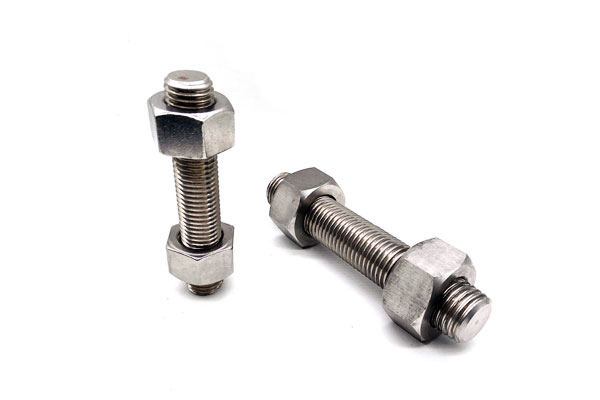
Тыповыя выпадкі выкарыстання
- knives and cutlery
- surgical and dental instruments
- помпа shafts and hydraulic parts
- fasteners and mechanical components
- формы, памірае, and tooling elements
- decorative stainless parts
- automotive and petrochemical hardware
10. Equivalent Grades in International Standards
| Стандартная сістэма | Эквівалентны клас | Ноты |
| У / Ад | 1.4021 / X20Cr13 | Primary European designation |
| Асі / Астм | 420 (Type 420A / 420Б) | Closest equivalent; composition overlap varies slightly |
| Нас | S42000 | Unified numbering system designation |
| Ён (Японія) | SUS420J1 / SUS420J2 | J2 has higher carbon, closer to higher-hardness variants |
| Gb (Кітай) | 20CR13 | Direct equivalent in Chinese standard system |
| ISO | X20Cr13 | Harmonized international designation |
11. Параўнанне з іншымі нержавеючымі сталямі
| Маёмасць | 1.4021 (X20Cr13 / 420 тыпу) | 304 (1.4301) | 316 (1.4401) | 430 (1.4016) |
| Stainless steel family | Мартэнічны | Аўстэніт | Аўстэніт | Ферытныя |
| Key alloying / структура | About 12–14% Cr, 0.16–0.25% C; magnetic and heat-treatable | Прыкладна 18% Кр / 8% У; non-hardenable in the usual sense | Chromium-nickel stainless with molybdenum for better chloride resistance | Straight chromium stainless with about 16–18% Cr; non-hardenable ferritic structure |
| Hardening behavior | Hardenable by quenching and tempering | Not hardenable by heat treatment; strengthened mainly by cold work | Not hardenable by quenching; strength mainly from cold work and product form | Not hardenable by heat treatment |
Ўстойлівасць да карозіі |
Умераны; suitable for atmosphere, прэсная вада, dilute acids/alkalis, soaps, detergents, and organic acids | Добрая агульная ўстойлівасць да карозіі; лепш чым 1.4021 in most aqueous service | Stronger chloride resistance than 304 and far better than 1.4021 for wet/corrosive service | Ўмераная ўстойлівасць да карозіі; ніжэй 304/316 у агрэсіўных асяроддзях |
| Выдумка / вінжаванне | Machinable and forgeable; welding is less forgiving and often needs preheat/post-temper control | Excellent formability and weldability | Readily formed, зварвалі, спайваюць, and cut | Добрая формуемость, but less robust than austenitic grades in severe fabrication and welding service |
| Typical positioning | Wear-oriented stainless for blades, шахты, інструменты, and moderately corrosive mechanical parts | General-purpose corrosion stainless | Chloride-resistant corrosion stainless | Lower-cost ferritic stainless for moderate corrosion and decorative/appliance uses |
12. Conclusion
1.4021 з нержавеючай сталі, or X20Cr13, is a martensitic chromium stainless steel with a very clear technical purpose: to combine hardenability, Умераная ўстойлівасць да карозіі, насіць супраціў, and good polishability in a single grade.
Its density, модуль, and magnetic response make it a robust engineering metal, while its heat-treatment response lets it be tuned from relatively workable annealed stock to a much harder quenched-and-tempered condition.
The alloy’s limits are equally important. It is not a universal corrosion stainless; it is better understood as a stainless steel for moderately corrosive environments where hardness, геаметрыя, and service performance matter.
Once that framing is understood, the material becomes easy to place: 1.4021 is the kind of stainless steel you choose when you need more edge, more wear resistance, and more hardenability than an austenitic grade can provide.
FAQ
Што ёсць 1.4021 з нержавеючай сталі?
1.4021 is a martensitic stainless steel also known as X20Cr13, and it is commonly cross-referenced to Асі 420 in supplier literature.
ёсць 1.4021 магніт з нержавеючай сталі?
Так. Supplier datasheets describe it as a ferromagnetic grade with magnetizability так.
ёсць 1.4021 stainless steel good for welding?
It can be welded, but it is not the easiest welding stainless.
Datasheets recommend preheating and post-weld tempering, and one source notes that it is not commonly welded because of its air-hardening behavior.
робіць 1.4021 stainless steel resist corrosion well?
It has умераны Каразія супраціву, especially in chloride-free media such as soaps, detergents, organic acids, прэсная вада, and dilute acids/alkalis. It is not a high-chloride stainless grade.
Бляшанка 1.4021 stainless steel be hardened?
Так. It is a hardenable martensitic stainless steel, typically quenched from about 950–1050°C and then tempered.