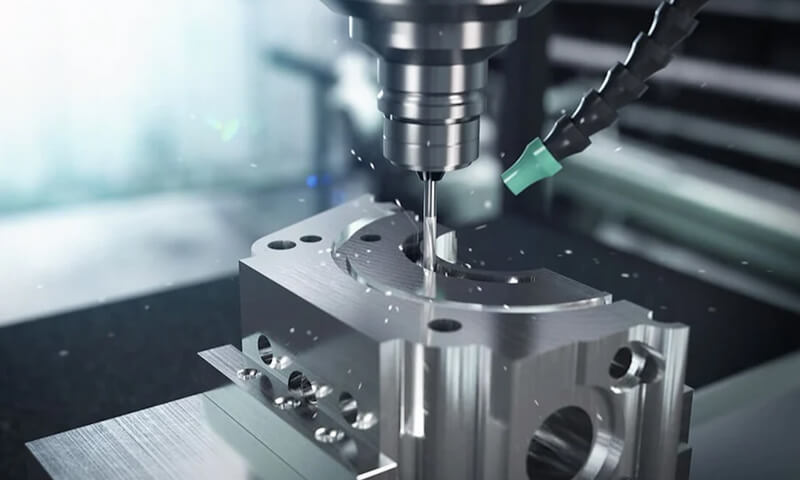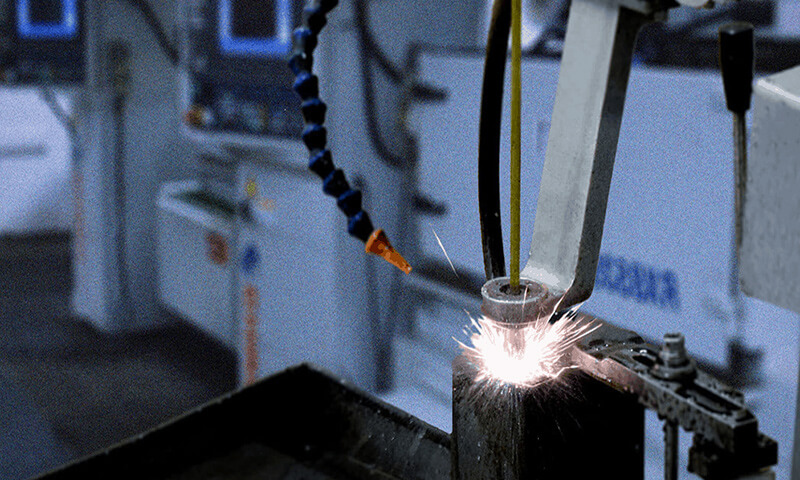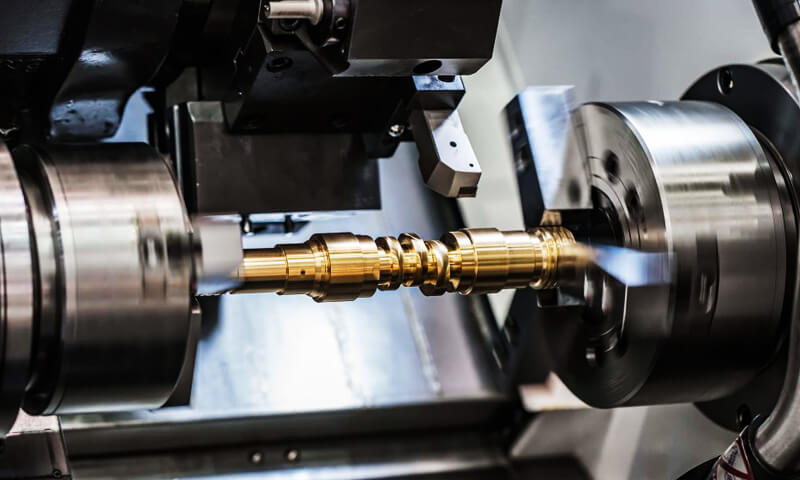
1. Bekendstelling
Dikwels na verwys as die "moeder van alle masjiengereedskap".,” die draaibank is al eeue lank 'n hoeksteen van vervaardiging.
Sy vermoë om materiaal met presisie te vorm, het 'n rewolusie in nywerhede wat wissel van motor tot lugvaart verander.
Hierdie blog sal delf in die grondbeginsels van draaibanke, hul tipes te verken, bedrywighede, en diverse toepassings in moderne vervaardiging.
2. Wat is 'n draaibank?
'n Draaibank is 'n veelsydige masjiengereedskap wat gebruik word om verskillende materiale te vorm, metale ingesluit, plastiek, en hout, deur die werkstuk teen snygereedskap te draai.
Dit staan bekend as die "moeder van alle masjiengereedskap" as gevolg van sy fundamentele rol in bewerking en sy vermoë om veelvuldige bewerkings met presisie uit te voer.
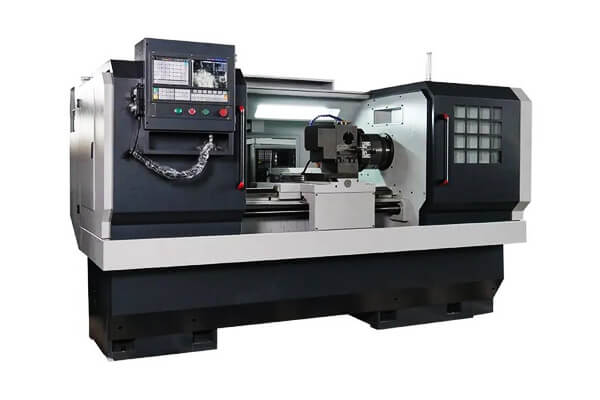
Basiese funksionaliteit
Die primêre funksie van 'n draaibank is om 'n werkstuk langs sy as te draai terwyl stilstaande of bewegende gereedskap gesny word, sand, boor, of vervorm die materiaal om die gewenste vorm te bereik.
Die rotasiebeweging verseker simmetrie en akkuraatheid in silindriese en koniese dele.
Belangrike kenmerke van 'n draaibank
- Rotasie-presisie: Maak voorsiening vir die skepping van eenvormige vorms, soos silinders, keëls, en drade.
- Aanpasbaarheid: In staat om take te hanteer wat wissel van eenvoudige snitte tot ingewikkelde ontwerpe.
- Gereedskapversoenbaarheid: Werk met 'n wye verskeidenheid snywerk, boor, en vormgereedskap vir verskeie toepassings.
Historiese Perspektief
Die draaibank se oorsprong dateer terug na antieke Egipte, waar eenvoudige houtdraaidraaibanke met die hand aangedryf is.
Oor eeue heen, draaibanke het ontwikkel met vooruitgang in kragbronne, presiesheid, en outomatisering.
Vandag, CNC (Rekenaar numeriese beheer) draaibanke verteenwoordig die snykant, bied ongeëwenaarde akkuraatheid en doeltreffendheid.
3. Hoe werk 'n draaibank?
'n Draaibank werk op die beginsel om 'n werkstuk om 'n sentrale as te draai terwyl snygereedskap toegepas word om die materiaal te vorm.
Die proses is gebaseer op presiese beheer oor die beweging en interaksie tussen die roterende werkstuk en stilstaande snygereedskap.
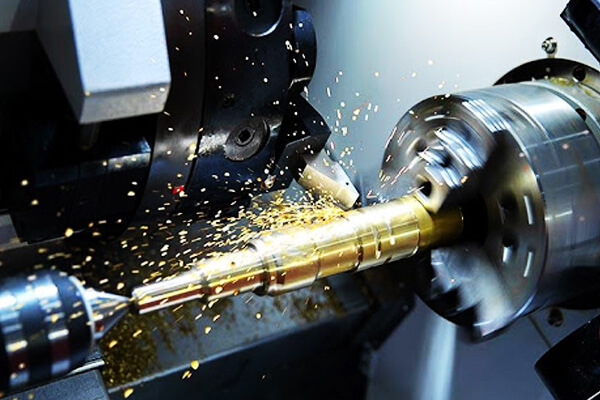
Hier is 'n in-diepte blik op hoe 'n draaibank funksioneer:
Basiese werking
- Werkstuk Opstelling:
-
- Die materiaal wat gemasjineer moet word, bekend as die werkstuk, word stewig vasgeklem in 'n toestel wat 'n chuck genoem word of tussen middelpunte gehou word (punte) op die kop en stertstok.
Dit verseker dat die werkstuk stabiel bly tydens rotasie.
- Die materiaal wat gemasjineer moet word, bekend as die werkstuk, word stewig vasgeklem in 'n toestel wat 'n chuck genoem word of tussen middelpunte gehou word (punte) op die kop en stertstok.
- Rotasie:
-
- Die kophuis huisves die hoofspil, wat die werkstuk roteer. Krag word verskaf deur 'n elektriese motor wat met ratte of bande aan die spil gekoppel is.
Die spoed van rotasie kan aangepas word na gelang van die tipe bewerking en materiaal waaraan gewerk word.
- Die kophuis huisves die hoofspil, wat die werkstuk roteer. Krag word verskaf deur 'n elektriese motor wat met ratte of bande aan die spil gekoppel is.
- Gereedskap betrokkenheid:
-
- Snygereedskap is op die wa gemonteer, wat langs die bed van die draaibank beweeg. Die gereedskappaal hou die snygereedskap in posisie relatief tot die werkstuk.
Soos die werkstuk draai, die snywerktuig word daarmee in aanraking gebring om materiaal te verwyder.
- Snygereedskap is op die wa gemonteer, wat langs die bed van die draaibank beweeg. Die gereedskappaal hou die snygereedskap in posisie relatief tot die werkstuk.
- Materiaal verwydering:
-
- Die snyaksie vind plaas wanneer die werktuig lae materiaal van die oppervlak van die roterende werkstuk afskraap.
Die diepte en hoek van die sny word deur die operateur of outomatiese stelsel beheer, wat voorsiening maak vir presiese vorming volgens ontwerpspesifikasies.
- Die snyaksie vind plaas wanneer die werktuig lae materiaal van die oppervlak van die roterende werkstuk afskraap.
- Bewegingsbeheer:
-
- Die wa en dwarsskuif stel die snygereedskap in staat om parallel te beweeg (longitudinaal) en loodreg (dwars) na die rotasie-as.
Hierdie bewegings maak voorsiening vir verskeie bewerkings soos draai, in die gesig staar, draad, boor, en gekartel.
- Die wa en dwarsskuif stel die snygereedskap in staat om parallel te beweeg (longitudinaal) en loodreg (dwars) na die rotasie-as.
- Koelmiddel Aansoek:
-
- Tydens bewerking, koelmiddel of smeermiddel kan toegedien word om hitte en wrywing te verminder, Brei gereedskaplewe uit, en verbeter die afwerkingskwaliteit van die bewerkte oppervlak.
Gevorderde kenmerke in CNC-draaibanke
In Rekenaar Numeriese Beheer (CNC) draaiboek, die hele proses word geoutomatiseer deur gebruik te maak van voorafgeprogrammeerde sagteware-instruksies. Sleutel kenmerke sluit in:
- Outomatiese gereedskapwisselaars: Laat toe vir vinnige veranderinge tussen verskillende snygereedskap sonder om die masjien te stop.
- Multi-as bewerking: Maak gelyktydige beweging langs veelvuldige asse moontlik vir komplekse geometrieë.
- Live gereedskap: Bevat aangedrewe spilpunte binne die rewolwer, wat voorsiening maak vir frees- en boorbewerkings saam met tradisionele draaiwerk.
- Presisie en herhaalbaarheid: CNC-stelsels verseker hoë akkuraatheid en konsekwentheid oor identiese dele, menslike foute te verminder en produktiwiteit te verhoog.
4. Tipes draaibanke
Draaibanke is beskikbaar in verskeie ontwerpe, elkeen aangepas om aan spesifieke bewerkingsbehoeftes te voldoen.
Die keuse van 'n draaibank hang af van die akkuraatheid, volume, en kompleksiteit van die onderdele wat vervaardig word.
Hieronder is 'n gedetailleerde blik op die hooftipes draaibanke en hul unieke eienskappe:
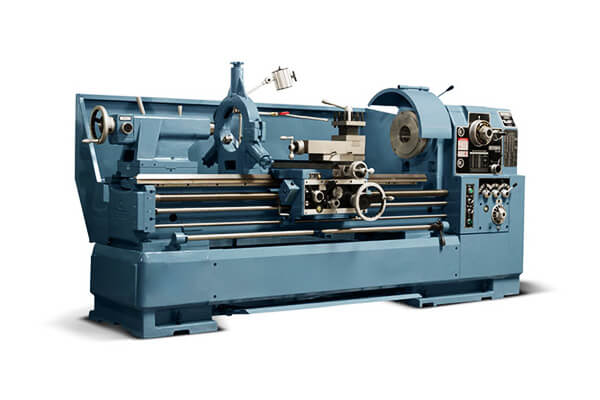
Enjin draaibank
- Kenmerke: Enjin draaibanke is een van die mees veelsydige en algemeen gebruikte tipes draaibanke.
Hulle is toegerus met handkontroles wat operateurs in staat stel om spoed aan te pas, voer, en snydiepte vir 'n wye reeks bewerkingstake. - Aansoeke: Word algemeen gebruik om te draai, in die gesig staar, draad, en booroperasies, maak dit 'n go-to-masjien in herstelwinkels, opvoedkundige instellings, en kleinskaalse produksie-eenhede.
- Vermoë: Enjin draaibanke kan verskeie materiale hanteer, metale ingesluit, plastiek, en komposiete. Hulle is geskik vir die bewerking van beide eenvoudige en matig komplekse dele.
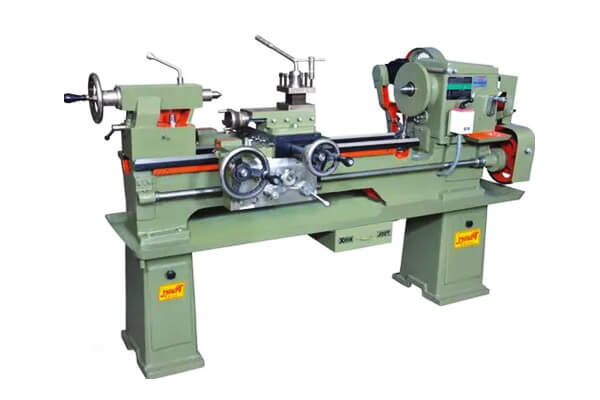
Rewolwer Draaibank
- Kenmerke: Rewolwer draaibanke is toegerus met 'n multi-gereedskap rewolwer kop wat dit moontlik maak vir vinnige gereedskap veranderinge sonder dat die behoefte om die masjien te stop.
Hierdie kenmerk verhoog doeltreffendheid, veral in multi-stap bewerking prosesse. - Aansoeke: Ideaal vir herhalende vervaardigingstake, veral in medium tot hoë volume produksie omgewings.
- Voordele: Deur stilstand tussen bedrywighede te minimaliseer, rewolwer-draaibanke verhoog produktiwiteit aansienlik.
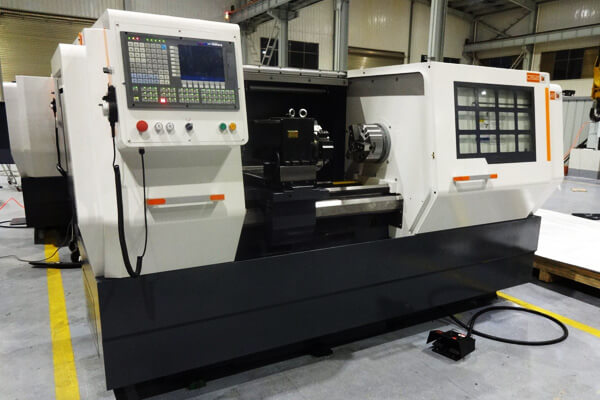
CNC Draaibank (Rekenaar numeriese beheer)
- Kenmerke: CNC-draaibanke verteenwoordig die toppunt van outomatisering en presisie in bewerking.
Hulle werk met behulp van rekenaargesteunde ontwerp (CAD) en rekenaargesteunde vervaardiging (Nok) programme om ingewikkelde bewerkingsoperasies uit te voer met minimale menslike ingryping. - Aansoeke: Word wyd gebruik in nywerhede soos lugvaart, medies, en motor vir die vervaardiging van hoë-presisie komponente met komplekse geometrieë.
- Voordele: CNC-draaibanke lewer uitsonderlike herhaalbaarheid, akkuraatheid, en doeltreffendheid, maak hulle geskik vir massaproduksie en prototipering.
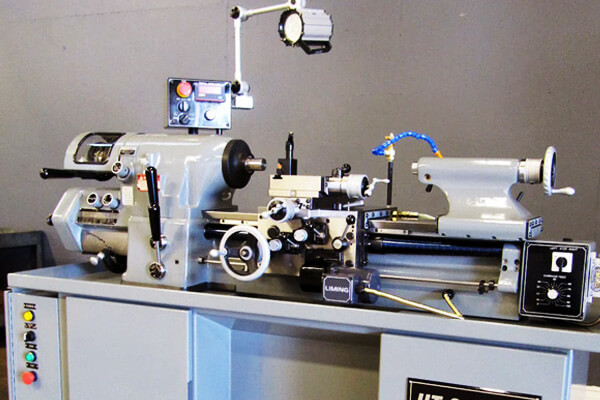
Gereedskapkamer Draaibank
- Kenmerke: Gereedskapkamer draaibanke is ontwerp vir presisie en beheer, bied hoër akkuraatheid as standaard draaibanke.
Hulle word tipies gebruik vir die vervaardiging van klein hoeveelhede onderdele of vir die vervaardiging van gereedskap. - Aansoeke: Algemeen in werkswinkels waar prototipe ontwikkeling of herstelwerk uitgevoer word. Hierdie draaibanke blink uit in die vervaardiging van ingewikkelde komponente wat streng toleransies vereis.
- Voordele: Hul fyn beheer en aanpasbaarheid maak hulle van onskatbare waarde vir lae volume, hoë-presisie-take.
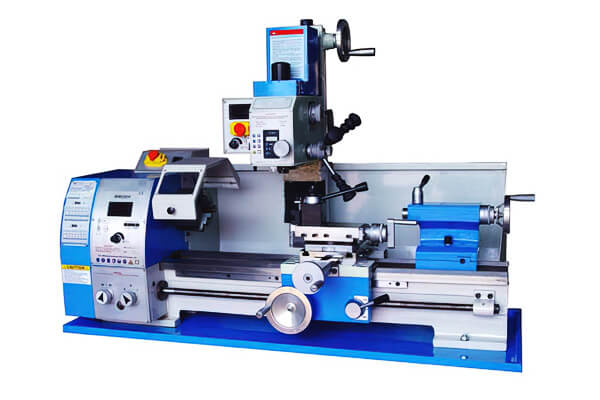
Spesiale Doel Draaibanke
Spesiale-doel draaibanke is ontwerp vir nis toepassings, om optimale prestasie vir spesifieke take te verseker. Sommige noemenswaardige tipes sluit in:
- Houtwerk Draaibanke: Word gebruik om hout te vorm vir toepassings soos meubelmaak, beeldhouwerk, en dekoratiewe werk.
- Vertikale draaibanke: Gebou vir die bewerking van groot en swaar dele, soos industriële ratte of enjinhuise, met 'n vertikale werkstukoriëntasie.
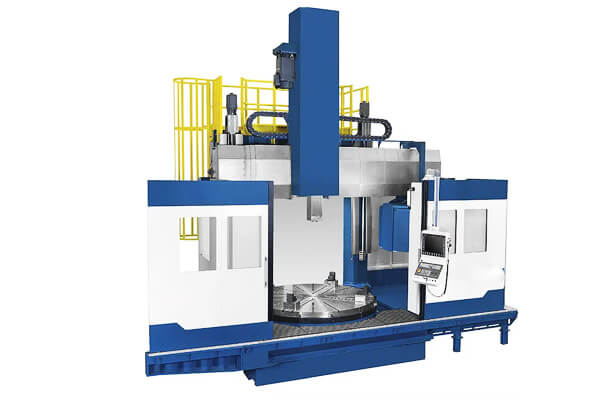
- Outomatiese draaibanke: Ten volle outomaties en in staat tot hoë spoed, herhalende operasies, word dikwels gebruik in nywerhede wat massaproduksie van klein onderdele benodig.
- Voordele: Elke tipe is geoptimaliseer vir sy beoogde gebruik, wat doeltreffendheid en akkuraatheid in gespesialiseerde toepassings bied.
Vergelyking van tipes draaibank
| Draaibank tipe | Sleutel kenmerk | Beste vir | Voorbeelde |
|---|---|---|---|
| Enjin draaibank | Handmatige veelsydigheid | Algemene bewerkingstake | Vervangingsonderdele, klein herstelwerk |
| Rewolwer Draaibank | Multi-gereedskap rewolwer | Medium tot hoë volume produksie | Motor bevestigingsmiddels, bossies |
| CNC Draaibank | Outomatisering en presisie | Massaproduksie en komplekse geometrieë | Mediese inplantings, lugvaartonderdele |
| Gereedskapkamer Draaibank | Verbeterde beheer en akkuraatheid | Prototipe en lae-volume produksie | Pasgemaakte sterf, presisie gereedskap |
| Spesiale Doel Draaibanke | Spesifieke taak-georiënteerde ontwerp | Unieke of grootskaalse vervaardiging | Meubelkomponente, turbine omhulsels |
5. Sleutelkomponente van 'n draaibank
Om die sleutelkomponente van 'n draaibank te verstaan, is noodsaaklik vir die doeltreffende bedryf en instandhouding van hierdie veelsydige masjiengereedskap.
Elke onderdeel speel 'n deurslaggewende rol in die versekering van presiese en doeltreffende bewerkingsoperasies. Onder, ons beskryf die hoofkomponente waaruit 'n tipiese draaibank bestaan:
Bed
- Werkverrigting: Die bed dien as die fondament van die draaibank, ondersteun alle ander komponente en verseker stabiliteit tydens werking.
- Struktuur: Dit word tipies gemaak van gietyster of soortgelyke swaar materiale om 'n stewige basis te bied. Die bed het presisie-grond maniere (leidrade) waarlangs die koets beweeg.
Kopstok
- Werkverrigting: Die kophuis huisves die spil, motor, en dryfmeganisme wat verantwoordelik is vir die draai van die werkstuk.
- Komponente:
-
- Spil: ’n Presies gemasjineerde as wat die werkstuk vashou en roteer. Dit kan deur 'n elektriese motor deur ratte of bande aangedryf word.
- Chuck of Collet: Toestelle wat gebruik word om die werkstuk veilig vas te klem.
Chucks het kake wat verstel kan word om verskillende diameters te hou, terwyl spantange vaste deursnee klampe vir spesifieke groottes is. - Spoedbeheermeganisme: Laat verstelling van die spilspoed toe om by verskillende materiale en bewerkings te pas.
Stootstok
- Werkverrigting: Bied ondersteuning aan die teenoorgestelde kant van die werkstuk van die kop, veral vir langer stukke.
- Komponente:
-
- Regstreekse sentrum: 'n Roterende punt wat die einde van die werkstuk ondersteun sonder om die rotasie daarvan te belemmer.
- Dooie sentrum: ’n Stilstaande punt wat die werkstuk ondersteun, maar nie roteer nie.
- veerpen: 'n Mou wat die stertstok-middelpunt toelaat om in en uit te beweeg, fasilitering van belyning met die werkstuk.
Waentjie
- Werkverrigting: Hou die snygereedskap vas en vergemaklik hul beweging langs die lengte en oor die deursnee van die werkstuk.
- Komponente:
-
- Saal: Ondersteun die dwarsskuif en verseker dat dit parallel met die as van die werkstuk beweeg.
- Dwarsgly: Beweeg loodreg op die werkstuk, wat kant-tot-kant aanpassings van die snygereedskap moontlik maak.
- Gereedskap pos: Bevestig die snygereedskap in plek.
- Voorskoot: Bevat die ratkas en meganismes wat die beweging van die wa beheer.
Chuck
- Werkverrigting: Klem die werkstuk aan die spil vas vir veilige rotasie.
- Tipes:
-
- Drie-kaak Chuck: Sentreer die werkstuk outomaties tussen drie beweegbare kake.
- Vierkake Chuck: Bied onafhanklike aanpassing van elke kakebeen, bied buigsaamheid vir onreëlmatige vorms.
- Collet Chuck: Word gebruik om werkstukke van kleiner deursnee met hoë presisie vas te hou.
Loodskroef en voerstang
- Werkverrigting: Hierdie draadstawe dryf die wa en dwarsgly vir outomatiese toevoer tydens bewerkings soos inryg of draai.
- Loodskroef: Spesifiek gebruik vir draadbewerkings, verskaf presiese toonhoogtebeheer.
- Voerstang: Ry die wa vir algemene doeleindes voeding bewegings.
Verkoelingstelsel
- Werkverrigting: Lewer koelmiddel of smeermiddel na die snyarea om hitte en wrywing te verminder, die lewensduur van die gereedskap verleng en oppervlakafwerking verbeter.
- Komponente: Sluit 'n pomp in, mondstuk, en reservoir vir koelmiddelberging.
Beheerpaneel
- Werkverrigting: Behuis die kontroles en aanwysers wat nodig is vir die gebruik van die draaibank, insluitend kragskakelaars, spoedkiesers, en noodstopknoppies.
- Kenmerke: In CNC draaibanke, hierdie paneel bevat ook 'n rekenaarkoppelvlak vir programmering en monitering van outomatiese bewerkings.
6. Algemene draaibankbewerkings
Draaibanke is veelsydige masjiene wat in staat is om verskeie bewerkings op verskillende materiale uit te voer.
Hierdie operasies dien uiteenlopende doeleindes, van die vorming van 'n werkstuk tot die verbetering van sy funksionaliteit of voorkoms.
Hieronder is die mees algemene draaibankbewerkings, saam met hul toepassings en voordele:
Draai
- Definisie: Draai behels die vermindering van die deursnee van 'n werkstuk deur materiaal te verwyder terwyl dit teen 'n stilstaande snywerktuig roteer.
- Doel: Om silindriese vorms te skep of om 'n eenvormige deursnee oor die lengte van 'n deel te bereik.
- Aansoeke: Word gebruik om skagte te vervaardig, penne, en spindels.
- Voorbeeld: Maak 'n presisie-as vir 'n industriële masjien.
Gesig
- Definisie: Gesig is die proses om 'n plat oppervlak loodreg op die as van die werkstuk te skep.
- Doel: Om gladde punte op silindriese werkstukke te produseer of om die onderdeel voor te berei vir daaropvolgende bewerkings soos boor of skroefwerk.
- Aansoeke: Algemeen in die voorbereiding van werkstukke vir montering of estetiese doeleindes.
- Voorbeeld: Om die einde van 'n pyp of staaf plat te maak.
Ryg
- Definisie: Skroefwerk skep heliese groewe op 'n werkstuk, wat dit in staat stel om in te skroef of ander komponente te ontvang.
- Tipes: Interne drade (binne gate) en eksterne drade (op skagte of stawe).
- Aansoeke: Gebruik in boute, skroewe, en skroefdraadpype.
- Voorbeeld: Die vervaardiging van 'n pasgemaakte skroef vir meganiese toerusting.
Boor
- Definisie: Boor behels die gebruik van 'n boorpunt om 'n gat langs die werkstuk se as te skep.
- Doel: Om gate vir boute voor te berei, skroewe, of penne in samestelling.
- Aansoeke: Word gereeld in die motor- en lugvaartindustrie gebruik vir presiese gateplasing.
- Voorbeeld: Die skep van monteringsgate in 'n masjienonderdeel.
Vervelig
- Definisie: Boring vergroot en verfyn reeds bestaande gate in 'n werkstuk met behulp van 'n enkelpuntsnywerktuig.
- Doel: Om 'n spesifieke deursnee te bereik of die afwerking van interne gate te verbeter.
- Aansoeke: Algemeen in presisie-ingenieurswese en pyppassing.
- Voorbeeld: Vergroting van 'n gat in 'n silindriese komponent om 'n laer te pas.
Groef
- Definisie: Groefwerk skep nou holtes of gleuwe op die oppervlak van 'n werkstuk.
- Doel: Om onderdele inmekaar te laat pas of funksionaliteit te verbeter, soos behuising van O-ringe of vashouklemme.
- Aansoeke: Word gebruik in hidrouliese stelsels en seëls.
- Voorbeeld: Voeg 'n groef vir 'n O-ring in 'n hidrouliese silinder by.
Afskeid
- Definisie: Skei skei 'n voltooide deel van die res van die werkstuk met 'n dun snygereedskap.
- Doel: Om 'n gemasjineerde deel van die oorblywende materiaal af te sny.
- Aansoeke: Geskik vir die vervaardiging van diskrete komponente van stawe of stawe.
- Voorbeeld: Sny 'n gemasjineerde ring van 'n metaalstaaf.
Knurling
- Definisie: Knurling behels die druk van 'n patroonwerktuig in 'n roterende werkstuk om 'n tekstuuroppervlak te skep.
- Doel: Om greep of estetika te verbeter.
- Aansoeke: Algemeen in gereedskaphandvatsels, knoppe, en skroewe.
- Voorbeeld: Voeg 'n greeppatroon by 'n skroewedraaierhandvatsel.
Sferiese draai
- Definisie: Sferiese draaiing vorm 'n geronde oppervlak, skep sfere of hemisfere op 'n werkstuk.
- Doel: Om komponente met 'n geboë of balagtige geometrie te vervaardig.
- Aansoeke: Gebruik in kogellagers, dekoratiewe items, en gespesialiseerde ingenieurskomponente.
- Voorbeeld: Maak 'n kogelgewrig vir motorveringstelsels.
Taps draai
- Definisie: Tapsdraai skep 'n koniese vorm op die werkstuk deur die deursnee daarvan geleidelik langs sy lengte te verminder.
- Doel: Om tapse komponente vir spesifieke toebehore of samestellings te skep.
- Aansoeke: Algemeen in skagte, Pyp toebehore, en gereedskap.
- Voorbeeld: Die vervaardiging van 'n boorpunt met 'n tapse skag.
Opsommingstabel van Draaibankbewerkings
| Operasie | Doel | Aansoeke | Voorbeeld |
|---|---|---|---|
| Draai | Verminder deursnee | Asse, spindels | Asse vir industriële masjiene |
| Gesig | Skep plat oppervlaktes | Berei ente voor vir samestelling | Maak pyppunte plat |
| Ryg | Voeg heliese groewe by | Boute, skroewe, pype | Pasgemaakte skroewe |
| Boor | Skep gate | Monteer- of monteergate | Masjien deel gate |
| Vervelig | Vergroot/verfyn voorafbestaande gate | Rigting, presisie ingenieurswese | Hidrouliese silinder borings |
| Groef | Voeg gleuwe of holtes by | Seëls, O-ring omhulsels | Hidrouliese silindergroewe |
| Afskeid | Skei voltooide dele | Staaf of staaf vervaardiging | Sny metaalringe |
| Knurling | Voeg tekstuurpatrone by | Handvatsels, knoppe, skroewe | Skroewedraaier grepe |
| Sferiese draai | Skep afgeronde oppervlaktes | Rigting, kogelgewrigte | Motorveringkomponente |
| Taps draai | Skep koniese vorms | Asse, toebehore | Taps boorpunte |
7. Hoe verskil handmatige en outomatiese draaibanke?
Wanneer handmatige en outomatiese draaibanke vergelyk word, dit is belangrik om te verstaan hoe elke tipe werk, hul onderskeie voordele, en die kontekste waarin hulle uitblink.
Die verskille tussen hierdie twee kategorieë draaibanke strek oor bedryfsmetodes, presiesheid, produktiwiteit, en aanpasbaarheid.
Kom ons ondersoek hierdie onderskeidings in detail.
Operasie metode
Handmatige draaibanke:
- Hande-aan beheer: Operateurs pas instellings handmatig aan, beheer gereedskapbewegings, en monitor die bewerkingsproses. Dit vereis 'n hoë vlak van vaardigheid en ervaring.
- Buigsaamheid: Handdraaibanke bied groter buigsaamheid vir eenmalige projekte of pasgemaakte take waar aanpassings gereeld tydens die operasie gemaak word.
- Gereedskapveranderings: Om gereedskap op 'n handdraaibank te verander, behels gewoonlik om die masjien te stop en aanpassings met die hand te maak, wat tydrowend kan wees.
Outomatiese draaibanke (CNC):
- Rekenaarbeheerde bedrywighede: CNC (Rekenaar numeriese beheer) draaibanke gebruik vooraf geprogrammeerde sagteware-instruksies om die bewerkingsproses te outomatiseer.
Sodra opgestel, die masjien loop met minimale menslike ingryping. - Presisie Gereedskap Hantering: Baie CNC-draaibanke het outomatiese gereedskapwisselaars wat gereedskap naatloos oorskakel tydens werking, doeltreffendheid te handhaaf sonder om produksie te staak.
- Herhaalbaarheid: Programme kan gestoor en hergebruik word, verseker konsekwente resultate vir identiese dele oor verskeie lopies.
Presisie en akkuraatheid
Handmatige draaibanke:
- Afhanklik van operateurvaardigheid: Die akkuraatheid van handdraaibanke berus grootliks op die operateur se kundigheid.
Terwyl vaardige operateurs hoë akkuraatheid kan bereik, daar is altyd potensiaal vir menslike foute. - Aanpassings: Fyn aanpassings vereis noukeurige kalibrasie en kan van een bewerking na 'n ander verskil.
Outomatiese draaibanke:
- Hoë akkuraatheid: CNC-draaibanke kan uiters streng toleransies handhaaf, dikwels binne ±0,0005 duim (±0,0127 millimeter).
Hierdie vlak van akkuraatheid is van kardinale belang vir nywerhede soos lugvaart en die vervaardiging van mediese toestelle. - Konsekwentheid: Outomatiese prosesse verseker dat elke onderdeel wat vervaardig word, feitlik identies is, die vermindering van veranderlikheid en die verbetering van gehaltebeheer.
Produktiwiteit en doeltreffendheid
Handmatige draaibanke:
- Stadiger produksiekoerse: As gevolg van die behoefte aan handmatige opstelling en gereedskapveranderings, handdraaibanke het oor die algemeen stadiger produksietempo's in vergelyking met outomatiese eweknieë.
- Operator Moegheid: Verlengde tydperke van operasie kan lei tot operateur moegheid, potensieel beide spoed en akkuraatheid beïnvloed.
Outomatiese draaibanke:
- Vinniger omkeertye: CNC-draaibanke kan siklustye aansienlik verminder, deurvloei en doeltreffendheid te verhoog.
Byvoorbeeld, 'n CNC-draaibank kan 'n taak in die helfte van die tyd voltooi wat dit 'n handdraaibank sal neem. - Onbeheerde operasie: In staat om voortdurend te hardloop sonder konstante toesig, wat verlengde produksie-ure moontlik maak, insluitend oornag en naweke.
Kosteoorwegings
Handmatige draaibanke:
- Laer aanvanklike belegging: Oor die algemeen goedkoper om te koop en op te stel, wat hulle geskik maak vir klein werkswinkels of besighede met beperkte begrotings.
- Arbeidskoste: Hoër arbeidskoste as gevolg van die behoefte aan geskoolde operateurs en meer tyd-intensiewe bedrywighede.
Outomatiese draaibanke:
- Hoër aanvanklike koste: CNC-draaibanke het 'n hoër voorafkoste as gevolg van gevorderde tegnologie en sagtewarevereistes.
- Langtermyn Spaar: Laer arbeidskoste en verhoogde produktiwiteit kan tot aansienlike langtermynbesparings lei, veral vir grootskaalse produksie.
Aanpasbaarheid en leerkurwe
Handmatige draaibanke:
- Makliker om te leer: Operateurs kan vinnig basiese bedrywighede leer, maak handdraaibanke toeganklik vir beginners.
- Aanpassing: Beter geskik vir unieke of klein groepprojekte waar gereelde aanpassings nodig is.
Outomatiese draaibanke:
- Steiler leerkurwe: Vereis opleiding in programmering en sagteware werking, maar een keer bemeester, bied ongeëwenaarde veelsydigheid.
- Komplekse projekte: Ideaal vir komplekse geometrieë en herhalende take wat hoë akkuraatheid en konsekwentheid vereis.
8. Materiaal verwerk op 'n draaibank
Draaibanke is hoogs veelsydige masjiene wat 'n wye verskeidenheid materiale kan verwerk, metale ingesluit, plastiek, en selfs hout.
Die vermoë om verskillende materiale met presisie te bewerk, maak draaibanke noodsaaklik vir verskeie industrieë, van lugvaart tot mediese toestelle.
Hieronder is 'n oorsig van die mees algemene materiale wat op 'n draaibank verwerk word, hul kenmerke en tipiese toepassings uit te lig.
Metale
Metale is een van die mees algemeen gemasjineerde materiale op 'n draaibank as gevolg van hul sterkte, duursaamheid, en veelsydigheid.
Draaibanke kan verskeie metaaltipes effektief verwerk, elk met unieke eienskappe wat bewerkingstegnieke en gereedskapkeuse beïnvloed.
- Staal: Staal, insluitend koolstofstaal, legeringsstaal, en vlekvrye staal, word wyd gebruik in industriële toepassings.
Staal is hoogs duursaam en kan met hoë presisie gemasjineer word. Vlekvrye staal, bekend vir sy weerstand teen korrosie, word dikwels in mediese en voedselindustrieë gebruik.
-
- Aansoeke: Asse, masjienonderdele, motoronderdele, gereedskap.
- Oorwegings bewerk: Staal vereis hoë snyspoed, maar gereedskapslytasie kan 'n bekommernis wees as gevolg van sy hardheid.
- Aluminium: Aluminium is liggewig, korrosiebestand, en relatief sag, maak dit ideaal vir hoëspoed bewerking.
Dit word dikwels in nywerhede soos lugvaart gebruik, motorvoertuig, en elektronika.
-
- Aansoeke: Vliegtuig komponente, motoronderdele, elektriese omhulsels.
- Oorwegings bewerk: Aluminium benodig minder snykrag en is makliker om te masjineer in vergelyking met harder metale.
- Brons: Geelkoper is 'n legering van koper en sink, bekend vir sy bewerkbaarheid en weerstand teen korrosie. Dit is 'n gewilde keuse vir presisieonderdele.
-
- Aansoeke: Toebehore, kleedke, musiekinstrumente, juweliersware.
- Oorwegings bewerk: Geelkoper produseer minimale spaanderopbou, maak dit makliker om te masjineer met fyn afwerkings.
- Titaan: Titaanlegerings is bekend vir hul hoë sterkte-tot-gewig-verhouding en uitstekende korrosiebestandheid.
Alhoewel dit uitdagend is om te masjien, titanium is van kritieke belang in nywerhede soos lugvaart en die vervaardiging van mediese toestelle.
-
- Aansoeke: Vliegtuig onderdele, Mediese inplantings, en hoëprestasie-komponente.
- Oorwegings bewerk: Titaan vereis stadiger snyspoed en gespesialiseerde gereedskap as gevolg van sy hardheid.
- Koper: Koper is 'n uitstekende geleier van elektrisiteit en hitte, maak dit ideaal vir elektriese komponente. Dit is ook korrosiebestand, Veral in mariene omgewings.
-
- Aansoeke: Elektriese verbindings, hitteruilers, pype.
- Oorwegings bewerk: Koper kan teen hoër snelhede gemasjineer word en bied 'n gladde afwerking.
Plastiek
Plastiek word wyd gebruik in CNC-draai vanweë hul gemak van bewerking en uiteenlopende reeks eienskappe.
Hulle word dikwels vir prototipes gebruik, lae volume lopies, en dele waar liggewig en korrosiebestandheid noodsaaklik is.
- Polikarbonaat (PC): Bekend vir sy taaiheid, optiese helderheid, en hoë impakweerstand, polikarbonaat word gebruik in toepassings waar sterkte en deursigtigheid vereis word.
-
- Aansoeke: Lense, motoronderdele, veiligheidstoerusting.
- Oorwegings bewerk: Polikarbonaat kan sensitief wees vir hitte, lae snelhede en hoë verkoeling word dus vereis.
- Akriel (PMMA): Akriel is deursigtig, liggewig, en het goeie weerbestandheid, maak dit geskik vir buitelug- en dekoratiewe toepassings.
-
- Aansoeke: Uitstalkaste, tekens, motoronderdele.
- Oorwegings bewerk: Akriel is maklik om te bewerk, maar kan kraak of afbreek as dit nie versigtig hanteer word nie.
- Nylon: Nylon is sterk, skuurbestand, en het lae wrywing-eienskappe, maak dit ideaal vir die vervaardiging van ratte en laers.
-
- Aansoeke: Ratte, bossies, rigting.
- Oorwegings bewerk: Nylon masjiene goed met 'n gladde afwerking, maar sorg moet gedra word om te voorkom dat dit oorverhit word.
- Polipropileen (Pp): Polipropileen is bekend vir sy chemiese weerstand en word algemeen gebruik in toepassings wat plastiekonderdele vereis wat bestand is teen harde chemikalieë.
-
- Aansoeke: Chemiese tenks, mediese toestelle, motoronderdele.
- Oorwegings bewerk: Polipropileen is maklik om te bewerk, maar vereis skerp gereedskap om vervorming te voorkom.
Hout
Houtwerkdraaibanke word gebruik om hout in ingewikkelde ontwerpe te vorm en af te werk.
Alhoewel meer algemeen in skrynwerk, sommige presisiedraaibanke is in staat om hout te hanteer, veral vir dekoratiewe stukke of klein produksielopies.
- Hardehout: Hardehout soos eikehout, esdoorn, en okkerneut is dig en duursaam, word dikwels in meubels en kabinette gebruik.
-
- Aansoeke: Meubels, dekoratiewe stukke, musiekinstrumente.
- Oorwegings bewerk: Hardehout benodig stadiger spoed en behoorlike gereedskap om versplintering te voorkom.
- Sagtehout: Sagtehoutsoorte soos denne en sederhout is makliker om te bewerk en word dikwels vir groter items soos meubelrame gebruik.
-
- Aansoeke: Meubels, huis konstruksie, en lyswerk.
- Oorwegings bewerk: Sagter en meer geneig om uit te skeur, sagtehout vereis noukeurige keuse van gereedskap.
Komposiete
Saamgestelde materiale kombineer verskillende materiale om spesifieke eienskappe soos hoë sterkte te bereik, liggewig, of hittebestandheid.
Terwyl dit uitdagend is om te masjien, komposiete word dikwels in gevorderde toepassings gebruik.
- Koolstofvesel: Bekend vir sy sterkte en liggewig, koolstofvesel word in lugvaart gebruik, motorvoertuig, en sportgoedere.
-
- Aansoeke: Lugvaartonderdele, hoëprestasie-motorkomponente, en sporttoerusting.
- Oorwegings bewerk: Koolstofvesel benodig gespesialiseerde gereedskap, en sorg moet gedra word om te verhoed dat die vesels tydens bewerking beskadig word.
- Veselglas: Veselglas word wyd gebruik in nywerhede waar sterkte-tot-gewig-verhouding belangrik is. Dit kan soortgelyk aan plastiek gemasjineer word, maar is meer skuur op gereedskap.
-
- Aansoeke: Mariene dele, konstruksie materiaal, motoronderdele.
- Oorwegings bewerk: Veselglas kan baie stof skep en vereis 'n vakuum- of lugstelsel om die werkspasie skoon te hou.
Opsommingstabel: Materiaal verwerk op 'n draaibank
| Materiaal | Eienskappe | Aansoeke | Oorwegings bewerk |
|---|---|---|---|
| Staal | Sterk, duursaam, korrosiebestand | Asse, masjienonderdele, motorvoertuig | Vereis hoë snyspoed, vatbaar vir gereedskapslytasie |
| Aluminium | Liggewig, korrosiebestand | Lugvaart, motorvoertuig, elektries | Maklik gemasjineer, minder snykrag benodig |
| Brons | Uitstekende bewegbaarheid, korrosiebestand | Toebehore, juweliersware | Minimale chip opbou, Gladde afwerking |
| Titaan | Hoë sterkte, korrosiebestand | Lugvaart, Mediese inplantings | Stadiger snyspoed, en gespesialiseerde gereedskap benodig |
| Koper | Uitstekende geleidingsvermoë | Elektriese verbindings, hitteruilers | Gladde afwerking, hoë snelheid bewerking |
| Polikarbonaat | Moeilik, impakbestand, duidelik | Lense, motoronderdele | Sensitief vir hitte, vereis verkoeling |
| Akriel | Deursigtig, liggewig, weerbestand | Tekens, vertoonkaste | Kan kraak of chip, versigtige hantering vereis |
| Nylon | Sterk, lae wrywing, skuurbestand | Ratte, rigting, bossies | Gladde afwerking, voorkom oorverhitting |
| Polipropileen | Chemies-bestand | Tenks, mediese toestelle | Skerp gereedskap word benodig om vervorming te voorkom |
| Hout (Hardehout) | Dig, duursaam, fyn tekstuur | Meubels, dekoratiewe stukke | Stadiger spoed, gereedskap seleksie krities |
| Koolstofvesel | Liggewig, hoë sterkte | Lugvaart, motorvoertuig, sport | Vereis gespesialiseerde gereedskap, delikate vesels |
| Veselglas | Sterk, liggewig | Mariene dele, motorvoertuig | Skep stof, en vereis 'n lugstelsel |
9. Voordele van die gebruik van 'n draaibank
Draaibanke is onontbeerlike gereedskap in die vervaardiging en bewerking, bied 'n wye reeks voordele wat voorsiening maak vir diverse industrieë.
Van presisie-ingenieurswese tot artistieke houtdraaiwerk, draaibanke bied ongeëwenaarde veelsydigheid en doeltreffendheid.
Onder, ons ondersoek die belangrikste voordele van die gebruik van 'n draaibank:
Presisie en akkuraatheid
- Stywe toleransies: Draaibanke, veral CNC (Rekenaar numeriese beheer) modelle, kan uiters streng toleransies bereik, dikwels binne ±0,0005 duim (±0,0127 millimeter).
Hierdie vlak van akkuraatheid is van kardinale belang vir nywerhede soos lugvaart, motorvoertuig, en vervaardiging van mediese toestelle. - Konsekwente resultate: Outomatiese prosesse verseker dat elke onderdeel wat vervaardig word, feitlik identies is, die vermindering van veranderlikheid en die verbetering van gehaltebeheer.
Vir herhalende take, hierdie konsekwentheid is van onskatbare waarde.
Veelsydigheid
- Wye reeks bedrywighede: Draaibanke kan 'n menigte bewerkings uitvoer, insluitend draai, in die gesig staar, boor, draad, gekartel, en meer.
Hierdie veelsydigheid maak hulle geskik vir verskeie materiale soos metale, plastiek, en hout. - Aanpasbare gereedskap: Met uitruilbare gereedskapstelsels, operateurs kan draaibanke vinnig vir verskillende take aanpas, hul buigsaamheid en doeltreffendheid te verbeter.
Doeltreffendheid en produktiwiteit
- Hoë snelheidsproduksie: CNC-draaibanke verminder siklustye aansienlik, deurvloei en doeltreffendheid te verhoog.
Byvoorbeeld, 'n CNC-draaibank kan 'n taak in die helfte van die tyd voltooi wat dit 'n handdraaibank sal neem, lei tot hoër produksiekoerse. - Onbeheerde operasie: Baie outomatiese draaibanke kan sonder konstante toesig deurlopend loop, wat verlengde produksie-ure moontlik maak, insluitend oornag en naweke.
Hierdie vermoë maksimeer masjien se tyd en produktiwiteit.
Koste-effektiwiteit
- Verlaagde arbeidskoste: Outomatisering verminder die behoefte aan deurlopende operateurtoesig, arbeidskoste met verloop van tyd te verlaag.
Terwyl die aanvanklike belegging in CNC-tegnologie hoër kan wees, langtermyn besparings van verhoogde produktiwiteit en laer bedryfskoste kan hierdie uitgawes verreken. - Geminimaliseerde materiaalafval: Presiese sny en doeltreffende materiaalverwydering verminder vermorsing, bydra tot kostebesparings en omgewingsvolhoubaarheid.
Veiligheid
- Operateursveiligheid: Moderne draaibanke is toegerus met veiligheidskenmerke soos noodstopknoppies, beskermende skilde, en outomatiese voermeganismes.
Hierdie verbeterings beskerm operateurs teen potensiële gevare wat verband hou met hoëspoed bewerkings. - Afstandmonitering: Sommige gevorderde draaibanke bied afgeleë monitering vermoëns, wat operateurs toelaat om toesig te hou oor bedrywighede vanaf 'n veilige afstand of selfs 'n ander plek.
Oppervlakafwerking kwaliteit
- Uitstekende afwerkings: Die beheerde omgewing en presiese bewegings van 'n draaibank lei tot uitstekende oppervlakafwerkings.
Fyn aanpassings en stabiele opstellings dra by tot gladde bereiking, gepoleerde oppervlaktes op gemasjineerde dele. - Verminderde nabewerkingswerk: Hoëgehalte-afwerkings skakel dikwels die behoefte aan uitgebreide na-bewerkingswerk soos skuur of poleer uit, tyd en hulpbronne te bespaar.
Aanpasbaarheid
- Klein bondel en prototipering: Handdraaibanke blink uit in klein bondelproduksie en prototipering, waar buigsaamheid en aanpassing noodsaaklik is.
Operateurs kan maklik aanpassings maak om unieke of eenmalige projekte te akkommodeer. - Grootskaalse vervaardiging: Outomatiese draaibanke is perfek vir grootskaalse vervaardiging, hantering van hoë volumes identiese onderdele met konstante kwaliteit en spoed.
Innovasie en aanpassing
- Komplekse meetkunde: Gevorderde draaibanke ondersteun multi-as bewerking, wat die skepping van komplekse geometrieë en ingewikkelde ontwerpe moontlik maak.
Hierdie vermoë is veral voordelig vir nywerhede wat pasgemaakte komponente of innoverende produkontwikkeling benodig. - Gereedskapkamertoepassings: Gereedskapsdraaibanke vergemaklik die skep van vorms, skei, en ander presisie komponente, dien gespesialiseerde vervaardigingsbehoeftes.
10. Toepassings van draaibanke
Draaibanke is een van die mees veelsydige en fundamentele masjiengereedskap, gebruik in 'n wye verskeidenheid toepassings in verskeie industrieë.
Hier is 'n paar sleuteltoepassings waar draaibanke 'n deurslaggewende rol speel:
Vervaardiging en Ingenieurswese:
- Draaibewerkings: Draaibanke word gebruik om die deursnee van silindriese werkstukke te verminder, skep kontoere, en produseer simmetriese vorms.
-
- Aansoeke: Asse, asse, bossies, penne, en enige silindriese of koniese komponente.
- Ryg: Sny interne en eksterne drade op dele.
-
- Aansoeke: Boute, skroewe, neute, draadstawe, en komponente wat skroefdrade benodig.
- Gesig: Skep plat oppervlaktes loodreg op die werkstuk se as.
-
- Aansoeke: Flense, wassers, en enige deel wat 'n plat gesig vereis.
- Afskeid: Sny 'n gedeelte van die werkstuk af.
-
- Aansoeke: Produseer individuele onderdele uit langer voorraad.
- Vervelig: Vergroting van bestaande gate of skep presiese interne afmetings.
-
- Aansoeke: Enjin silinders, rigting, bossies.
Motorbedryf:
- Bewerking van enjinkomponente: Draaibanke word gebruik om suiers te bewerk, silinders, krukas, en nokasse.
-
- Aansoeke: Enjinblokke, Klepliggame, verbindingsstawe.
- Remkomponente: Draai remrotors of dromme om egalige slytasie te verseker en remverrigting te herstel.
- Transmissie onderdele: Rat sny, spline sny, en bewerking van rat-asse.
Lugvaart:
- Presisie onderdele: Draaibanke is van kritieke belang vir die vervaardiging van hoogs presiese komponente waar gewig, krag, en toleransies is deurslaggewend.
-
- Aansoeke: Turbine lemme, landingsgestel komponente, bevestigingsmiddels, en enjinonderdele.
- Saamgestelde bewerking: Vir die vorming van saamgestelde materiale wat in vliegtuigstrukture gebruik word.
Vervaardiging van mediese toestelle:
- Chirurgiese instrumente: Draaibanke produseer ingewikkelde dele met hoë presisie vir chirurgiese gereedskap.
-
- Aansoeke: Skalpels, tang, en ander chirurgiese instrumente.
- Inplantings: Presiese skep, bioversoenbare dele vir mediese inplantings.
-
- Aansoeke: Beenskroewe, Tandheelkundige inplantings, prostetiese komponente.
Plastiek- en polimeerbewerking:
- Prototipering: Vinnig vervaardiging van prototipes uit plastiekvoorraad.
- Produksie van plastiekonderdele: Vir toepassings waar plastiek verkies word vir hul eienskappe of kostedoeltreffendheid.
-
- Aansoeke: Behuisings, toebehore, isoleerders, en komponente vir verbruikerselektronika.
Herstel en herstel:
- Antieke restourasie: Draai onderdele om beskadigde komponente in antieke masjinerie of meubels te vervang of te herstel.
- Herstel van motors en masjinerie: Skep pasgemaakte onderdele of herstel verslete komponente.
Pasgemaakte vervaardiging:
- Spesiale onderdele: Die vervaardiging van unieke of moeilik om te vind onderdele vir persoonlike masjinerie of toerusting.
- Kunsmatige produksie: Klein-batch produksie van persoonlike items soos handvatsels, knoppe, of dekoratiewe stukke.
Olie- en gasbedryf:
- Klepkomponente: Draai en skroef dele vir kleppe wat in pypleidings en raffinaderye gebruik word.
- Boortoerusting: Die vervaardiging van boorpunte, koppelings, en ander boorkomponente.
Elektronika:
- Draai-isoleerders: Die skep van isolators vir elektriese komponente.
- Bewerkingsverbindings: Presisie bewerking van verbindings vir elektroniese toestelle.
11. Draaibank vs. Ander bewerkingsgereedskap
Wanneer draaibanke met ander bewerkingsgereedskap vergelyk word, dit is belangrik om die unieke vermoëns en beperkings van elkeen te verstaan.
Elke instrument het sy sterk punte, maak hulle geskik vir verskillende toepassings binne vervaardiging en bewerking.
Onder, ons delf in 'n gedetailleerde vergelyking tussen draaibanke en ander algemene bewerkingsgereedskap soos freesmasjiene, slypmasjiene, boorperse, en CNC routers.
Draaibanke
- Primêre funksie: Draai die werkstuk om 'n as terwyl jy snygereedskap toepas.
- Bedrywighede: Draai, in die gesig staar, boor, draad, gekartel.
- Sterkpunte:
-
- Presiesheid: In staat om uiters streng toleransies te bereik, veral met CNC-modelle.
- Veelsydigheid: Hanteer 'n wye reeks bewerkings op silindriese of simmetriese dele.
- Doeltreffendheid: Hoëspoedproduksie en onbewaakte werking in outomatiese opstellings.
- Aansoeke: Ideaal vir die bewerking van silindriese komponente soos asse, boute, en bussies.
Meulmasjiene
- Primêre funksie: Gebruik roterende snyers om materiaal van 'n werkstuk te verwyder deur 'n snyer in een of meer werkstukke te laat beweeg.
- Bedrywighede: Beplanning, gleuf, kontoere, en komplekse vormskepping.
- Sterkpunte:
-
- Komplekse vorms: Uitstekend vir die skep van ingewikkelde en nie-silindriese vorms.
- Multi-as vermoë: Gevorderde modelle kan op verskeie asse werk, wat hoogs komplekse geometrieë moontlik maak.
- Veelsydigheid: Geskik vir verskeie materiale insluitend metale, plastiek, en komposiete.
- Aansoeke: Word algemeen gebruik vir die vervaardiging van vorms, skei, en masjienonderdele wat presiese afmetings en vorms benodig.
Slypers
- Primêre funksie: Verwydering van materiaal deur skuur sny om baie fyn afwerkings en stywe toleransies te verkry.
- Bedrywighede: Oppervlakslyp, silindriese slyp, middellose maal.
- Sterkpunte:
-
- Oppervlakafwerking: Produseer buitengewone gladde oppervlaktes met minimale grofheid.
- Hoë akkuraatheid: Kan akkuraatheid tot mikrometer bereik.
- Harde materiale: Effektief om met geharde staal en ander taai materiale te werk.
- Aansoeke: Afwerking bedrywighede, presisie grootte, en harde materiaal verwerking.
Boorperse
- Primêre funksie: Boor gate in werkstukke met 'n stilstaande boorpunt.
- Bedrywighede: Boor, nader, versinking.
- Sterkpunte:
-
- Spoed: Vinnig en doeltreffend vir herhalende boortake.
- Akkuraatheid: Verseker konsekwente gatplasing en -diepte.
- Gebruiksgemak: Relatief eenvoudige operasie, geskik vir beide handmatige en semi-outomatiese opstellings.
- Aansoeke: Ideaal vir die boor van gate in metaal, hout, plasties, en saamgestelde materiale.
CNC -routers
- Primêre funksie: Sny sagter materiale soos hout, plasties, en aluminium deur rekenaarbeheerde bewegings te gebruik.
- Bedrywighede: Sny, houtsnywerk, gravure.
- Sterkpunte:
-
- Materiële veelsydigheid: Werk goed met 'n verskeidenheid sagte materiale.
- Outomatisasie: Ten volle outomatiese prosesse verminder arbeidskoste en verhoog produktiwiteit.
- Aanpassing: Maklik programmeerbaar vir pasgemaakte ontwerpe en patrone.
- Aansoeke: Meubel maak, tekens, dekoratiewe items, en kleinskaalse vervaardiging.
Vergelykingstabel
| Tipe gereedskap | Primêre funksie | Sleutelbedrywighede | Sterkpunte | Aansoeke |
|---|---|---|---|---|
| Draaibank | Roterende werkstuk | Draai, in die gesig staar, boor | Presiesheid, veelsydigheid, doeltreffendheid | Silindriese komponente, asse, boute |
| Meulmasjien | Roterende sny in werkstuk | Beplanning, gleuf, kontoere | Komplekse vorms, multi-as vermoë | Vorms, skei, masjienonderdele |
| Grinder | Skuur sny vir fyn afwerkings | Maalwerk, poleer | Oppervlakafwerking, hoë akkuraatheid, harde materiale | Afwerking, presisie grootte |
| Boorpers | Stilstaande boorpunt vir die boor van gate | Boor, nader | Spoed, akkuraatheid, gemak van gebruik | Metaal, hout, plasties, saamgestelde boorwerk |
| CNC router | Sny sagte materiale | Sny, houtsnywerk, gravure | Materiële veelsydigheid, outomatisasie, aanpassing | Meubels, tekens, dekoratiewe items |
12. Hoe akkuraat is 'n draaibank?
Die akkuraatheid van 'n draaibank kan aansienlik verskil op grond van verskeie faktore:
- Masjien kwaliteit: Hoë-end draaibanke met presisie komponente en konstruksie kan toleransies bereik so styf as 0.0001 duim (2.5 mikrometer) of selfs beter.
Laer-end modelle is dalk nie so presies nie. - Gereedskap: Die kwaliteit van die snygereedskap, gereedskaphouers, en werkhoutoestelle (soos chucks) akkuraatheid grootliks beïnvloed.
Presisie grondgereedskap en hoë kwaliteit gereedskaphouers dra by tot beter toleransies. - Opstelling: Behoorlike opstelling insluitend werkstukbelyning, gereedskap instelling, en masjien nivellering is van kardinale belang. Foute in die opstelling kan lei tot onakkuraathede.
- Operateursvaardigheid: Die ervaring en vaardigheid van die operateur in die opstel, bedryf, en die aanpassing van die draaibank speel 'n belangrike rol in die bereiking van akkuraatheid.
- Masjien Onderhoud: Gereelde instandhouding verseker dat alle bewegende dele glad en akkuraat werk, die kans op slytasieverwante onakkuraathede te verminder.
- Meting en inspeksie: Die gebruik van presisie meetinstrumente soos mikrometers, kalipers, en skakelaanwysers tydens die proses help om akkuraatheid te handhaaf.
13. Wat is die noodsaaklike bykomstighede en aanhegsels vir draaibanke?
- Gereedskap Pos: Hou snygereedskap veilig vas. Gereedskapplasings vir vinnige verandering is gewild vir doeltreffendheid.
- Draaibank Chuck: Om werkstukke vas te hou. Daar is verskeie tipes soos 3-kaak selfsentrering, 4-kakebeen onafhanklik, en spantange.
- Regstreekse Sentrum en Dooie Sentrum: Word in die stertstok gebruik om die werkstuk te ondersteun.
- Voorblad: Vir die montering van onreëlmatige gevormde werkstukke.
- Bestendige Rus: Ondersteun lang werkstukke om buiging te voorkom.
- Volg Rest: Beweeg saam met die wa om skraal werkstukke te ondersteun.
- Vervelige bars: Vir interne snybewerkings soos om gate te vergroot.
- Draaigereedskap: Verskeie vorms en groottes vir verskillende draaibewerkings.
- Rygsterftes en taps: Vir die sny van drade.
- Digitale uitlees (DRO): Verbeter akkuraatheid deur presiese posisies te vertoon.
- Verkoelingstelsel: Vir smering en verkoeling tydens sny.
- Draaibank honde: Word gebruik met 'n voorplaat om onreëlmatige vorms te draai.
- Knurling Tool: Skep 'n tekstuuroppervlak op die werkstuk.
- Draaibankbedverlengings: Om langer werkstukke te akkommodeer.
14. Wat is die noodsaaklike instandhoudingspraktyke vir 'n draaibank?
- Reiniging: Verwyder gereeld skyfies, stof, en puin van die masjien, insluitend die maniere, loodskroewe, en gereedskaphouers.
- Smeer: Smeer bewegende dele volgens die vervaardiger se skedule om wrywing en slytasie te verminder.
- Belyning: Kontroleer en pas die belyning van die kopstok aan, stertstok, en vervoer periodiek.
- Kyk vir slytasie: Inspekteer gordels, ratte, rigting, en skyfies vir tekens van slytasie of skade.
- Gereedskap Onderhoud: Skerp of vervang snygereedskap soos nodig om skoon snitte te verseker.
- Kalibrasie: Verifieer en herkalibreer die masjien se skale of digitale uitlesings vir akkuraatheid.
- Elektriese inspeksies: Maak seker dat alle elektriese komponente in 'n goeie toestand is, kyk vir los verbindings of beskadigde kabels.
- Verkoelingstelsel: Maak die koelmiddelstelsel skoon en onderhou dit om kontaminasie te voorkom en verseker behoorlike verkoeling.
- Veiligheidskontroles: Toets gereeld noodstops, wagte, en ander veiligheidskenmerke.
15. Wat is die algemene probleme en oplossings in draaibankbewerkings?
- Vibrasie:
-
- Oplossing: Kyk vir los komponente, verseker dat die gereedskap en werkstuk behoorlik vasgeklem word, balanseer die werkstuk, en pas snyspoed en voer aan.
- Swak oppervlakafwerking:
-
- Oplossing: Skerp of vervang snygereedskap, pas snyparameters aan, verseker behoorlike gereedskapbelyning, en kyk vir gereedskapslytasie.
- Oormatige slytasie van gereedskap:
-
- Oplossing: Gebruik toepaslike gereedskapmateriaal, pas spoed en voer aan, verseker behoorlike koelmiddelgebruik, en oorweeg gereedskapbedekkings.
- Onakkurate snitte:
-
- Oplossing: Verifieer masjienopstelling, kyk vir slytasie in leibane of loodskroewe, verseker behoorlike gereedskaphoogte, en gebruik presisie meetinstrumente.
- Gesels:
-
- Oplossing: Verminder voertempo, kyk vir gereedskapstyfheid, verseker dat die werkstuk stewig vasgeklem is, en pas snydiepte aan.
- Oorverhitting:
-
- Oplossing: Gebruik koelmiddel doeltreffend, sny spoed verminder, verseker behoorlike chip ontruiming, en oorweeg om koelmiddel deur die gereedskap te gebruik.
16. Hoe om die regte draaibank te kies?
- Grootte en kapasiteit: Oorweeg die grootste deursnee en lengte van werkstukke wat jy sal bewerk.
- Soort werk: Besluit of jy 'n handleiding nodig het, CNC, of gespesialiseerde draaibank soos 'n rewolwer of vertikale draaibank gebaseer op jou bedrywighede.
- Presisievereistes: Hoër presisie kan dalk 'n hoër kwaliteit draaibank met beter komponente en konstruksie vereis.
- Begroting: Balans tussen koste en die funksies wat jy nodig het.
- Ruimte: Maak seker dat jou werkspasie die draaibank kan akkommodeer, met inagneming van nie net sy voetspoor nie, maar ook ruimte vir bedryf en instandhouding.
- Krag: Gaan die motor se perdekrag na om te verseker dat dit jou materiaaltipes en -groottes kan hanteer.
- Toebehore en gereedskap: Oorweeg watter aanhegsels en gereedskap beskikbaar is of by die draaibank ingesluit is.
- Na-verkope ondersteuning: Soek vervaardigers met goeie kliëntediens, waarborg, en beskikbaarheid van onderdele.
- Operateursvaardigheid: Oorweeg die vaardigheidsvlak van die gebruikers; CNC-draaibanke benodig dalk meer opleiding, maar bied outomatisering.
17. Wat is alternatiewe tegnologieë vir draaibank?
- CNC Mills met 4de of 5de As: Kan 'n paar draaibankagtige bewerkings uitvoer deur die werkstuk te draai.
- Toevoegingsvervaardiging (3D Drukwerk): Vir die skep van komplekse vorms sonder die behoefte aan uitgebreide materiaalverwydering.
- Elektriese ontladingsbewerking (EDM): Vir die sny van harde materiale of ingewikkelde vorms wat moeilik is met tradisionele draaibanke.
- Waterstraal sny: Kan materiaal met hoë presisie deursny, veral nuttig vir nie-metaalmateriaal of wanneer hittevervorming 'n bekommernis is.
- Lasersny: Vir sny, gravure, of merk met hoë presisie en minimale materiaalvermorsing.
- Skuurvloeibewerking (AGS): Vir ontbraming, poleer, en oppervlakafwerking komplekse interne geometrieë.
- Koue vorming: Tegnieke soos koue kop of koue smee kan dele produseer sonder om materiaal te verwyder, dikwels vinniger as draaibank.
18. Konklusie
Van sy antieke oorsprong tot sy rol in moderne tegnologiese vooruitgang, die draaibank se evolusie weerspieël die vindingrykheid en aanpasbaarheid van vervaardiging.
Sy vermoë om materiale met presisie te vorm, het dit 'n hoeksteen van nywerhede wêreldwyd gemaak.
Die draaibank se veelsydigheid, tesame met opkomende tegnologieë, verseker die voortgesette belangrikheid daarvan in vervaardiging.
Terwyl alternatiewe tegnologieë gespesialiseerde oplossings kan bied, die draaibank bly ongeëwenaard in sy vermoë om simmetries te produseer, hoë-presisie-komponente.
Die fundamentele rol daarvan in die vervaardiging van kritieke onderdele en produkte oor verskeie industrieë maak dit 'n onontbeerlike hulpmiddel in moderne vervaardiging.
19. HIERDIE Draaibank Dienste
DEZE bied CNC-draaibankdienste van hoë gehalte vir metaal- en plastiekonderdele. Met gevorderde CNC-draaibanke, ons verskaf presiese bewerking vir prototipes, lae volume lopies, en massaproduksie.
Ons dienste sluit draaiwerk in, draad, boor, en hantering van materiale soos staal, aluminium, brons, en plastiek.
Ons lewer mededingende pryse, vinnige deurlooptye, en uitsonderlike akkuraatheid, verseker dat jou onderdele aan die hoogste standaarde voldoen.
Kontak ons vandag om te ontdek hoe ons draaibankdienste aan u vervaardigingsbehoeftes kan voldoen.