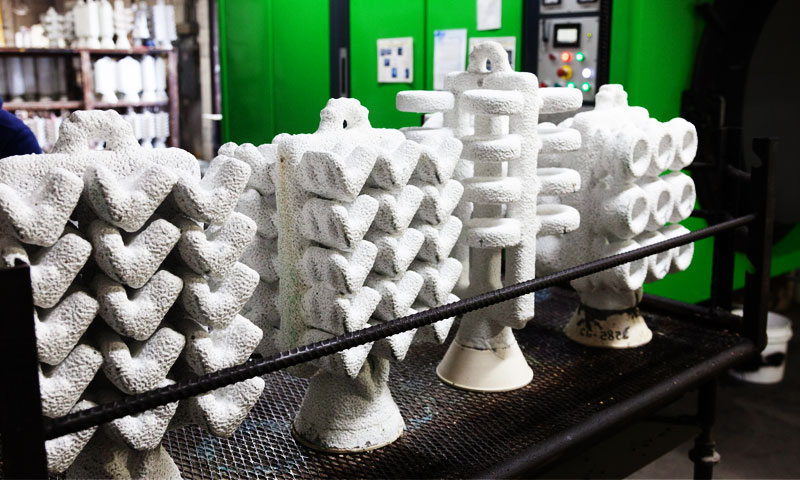
Shell-vervaardiging is 'n kernstap in vlekvrye staal presisie giet (Beleggingsgooi), dimensie akkuraatheid direk bepaal, oppervlak kwaliteit, en strukturele integriteit van die finale komponent.
Anders as konvensionele sandgietwerk, vlekvrye staal presisie gietstukke vereis uiters streng toleransies, stabiele vormgeometrie by verhoogde temperature, en konsekwente dopsterkte tydens metaalgiet en stolling.
Onder alle beïnvloedende faktore—soos legeringskrimping, stollingsgedrag, en termiese vervorming—die keramiek dop stelsel speel 'n deurslaggewende rol.
Hierdie artikel verskaf 'n omvattende en tegnies begronde ontleding van hoe doppe vir vlekvrye staal presisie gietstukke vervaardig word, met 'n besondere fokus op die drie dominante nywerheidsroetes: water glas skulpe, silika sol doppe, en hibriede dopstelsels.
1. Rol van die keramiekdop in presisiegietwerk
In vlekvrye staal presisie giet, die keramiek dop dien as beide a vorm en a strukturele ondersteuningstelsel, die bepaling van die finale gietwerk se dimensionele akkuraatheid, oppervlak kwaliteit, en strukturele integriteit.
Die rol daarvan kan vanuit verskeie tegniese perspektiewe ontleed word:
Dimensionele Reproduksie
Die dop moet herhaal die meetkunde akkuraat van die waspatroon, insluitend fyn besonderhede soos filette, gate, drade, en dun mure.
Enige krimping of vervorming in die dop vertaal direk in dimensionele foute in die finale giet.
Termiese stabiliteit
Vlekvrye staal giet teen hoë temperature (≈1550–1650°C). Die dop moet in stand hou meganiese sterkte en styfheid tydens verhitting en metaalvul. Onvoldoende termiese weerstand kan lei tot krom, krake, of ineenstort van die vorm.
Beheerde hitte-oordrag
Die dop dien as 'n termiese versperring, beheer van die afkoeltempo van die metaal.
Behoorlike hitte-oordrag verseker eenvormige stolling, verminder interne spanning, en verminder defekte soos poreusheid of warm skeur.
Gasdeurlaatbaarheid
Tydens skink, vasgevang gasse moet deur die dop ontsnap om gasporositeit te voorkom.
Goed gemanipuleerde skulpe balanseer digtheid en deurlaatbaarheid om gasventilasie moontlik te maak sonder om vormsterkte te benadeel.
Versagting van gebreke
Die keramiekdop voorkom algemene gietfoute deur:
- Die vermindering van die vorming van sand insluitings
- Minimalisering oksidasie by die metaal-vorm-koppelvlak
- Beperk oppervlak ruwheid en krimping onreëlmatighede
2. Drie hoof-dop-vervaardigingsprosesse vir vlekvrye staal presisie gietstukke
Gebaseer op die tipe bindmiddel wat gebruik word, Dop-vervaardiging prosesse vir vlekvrye staal presisie gietstukke word geklassifiseer in drie kategorieë, elk met duidelike tegniese eienskappe, kwaliteit prestasie, en koste voordele.
2.1 Waterglasdop-maakproses
Die waterglas proses is die mees gebruikte dop-maak tegnologie in vlekvrye staal presisie giet, gekenmerk deur lae koste en eenvoudige werking.
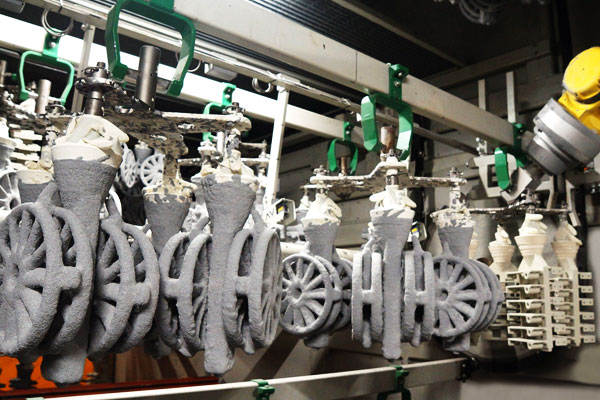
Kernbeginsels:
Natriumsilikaat (water glas) dien as die bindmiddel, gemeng met vuurvaste sand (silika sand, sirkoon sand) om 'n deklaag te vorm.
Ammoniumchloried (NH₄Cl) of ammoniumsulfaat word as verharder gebruik; die verharder reageer met waterglas om silisiumsuurgel te genereer, wat die vuurvaste sand stol en bind om die dop te vorm.
Proses Kenmerke:
Die dop word gevorm deur 3-5 lae bedekking en skuur, met 'n totale dikte van 5–8 mm.
Na bedek elke laag, die dop word vir 1–2 minute in verharder gedompel, dan lugdroog vir 2–4 uur by kamertemperatuur.
Verrigting & Kwaliteit voor- en nadele
Voordele: Lae grondstofkoste (waterglas is 1/3 die prys van silika sol); eenvoudige proses, geen spesiale droogtoerusting nodig nie;
hoë produksiedoeltreffendheid, geskik vir massaproduksie van medium-presisie gietstukke.
Beperkings: In vergelyking met silika sol doppe, waterglasdoppies behou oorblywende natriumsilikaat, wat lei tot laer hoë-temperatuur sterkte (≤15 MPa by 1000℃ vs. silika sol se ≥25 MPa) en swak weerstand teen vervorming.
Gietstukke wat vervaardig word, het growwe oppervlaktes (Ra 12,5–25 μm), met algemene defekte soos sandinsluitings en krimpporositeit; dimensionele akkuraatheid is relatief laag (toleransie ±0,15–0,3 mm).
Toepaslike scenario's:
Algemene vlekvrye staal presisie gietstukke met lae vereistes vir oppervlakafwerking en akkuraatheid, soos gewone masjinerieonderdele, hardeware bykomstighede, en laedruk pypleiding komponente.
Die meeste klein en medium-grootte gieterye prioritiseer hierdie proses vir kostebeheer.
2.2 Silica Sol Shell-maak proses
Die silika sol proses is 'n hoë-end dopmaak-tegnologie wat aangepas is vir hoë kwaliteit vlekvrye staal presisie gietstukke, bekend vir sy uitstekende dimensionele akkuraatheid en oppervlakkwaliteit.

Kernbeginsels:
Kolloïdale silika (Silika sol, deeltjiegrootte 10–20 nm) dien as die bindmiddel, met vuurvaste sand (hoë-suiwer sirkoon sand, saamgesmelte silika sand) as die totaal.
Anders as waterglas, silikasol benodig nie chemiese verharders nie; dit verhard deur dehidrasie en kondensasie in 'n konstante temperatuur en humiditeit omgewing.
Proses Kenmerke:
Die dop benodig 5–7 lae bedekking en skuur, totale dikte 7–10 mm. Elke laag moet in 'n konstante temperatuur gedroog word (20–25℃) en konstante humiditeit (40–60%) kamer vir 8-12 uur.
Die droogproses is krities: stadig, eenvormige droging verseker dat die dop 'n digte vorm vorm, eenvormige struktuur sonder krake.
Verrigting & Kwaliteit voor- en nadele
Voordele: Die silika-sol-dop het 'n hoë suiwerheid (geen residuele alkaliese stowwe nie) en uitstekende hoë-temperatuur werkverrigting:
hoë-temperatuur sterkte ≥25 MPa by 1000 ℃, goeie termiese skokweerstand, en minimale lineêre verandering (≤0,15%) tydens verhitting en verkoeling.
Gietstukke het 'n hoë dimensionele akkuraatheid (toleransie ±0,05–0,1 mm) en gladde oppervlaktes (Ra 3,2–6,3 μm),
met byna geen sandinsluitingsdefekte nie; interne struktuur is dig, voldoen aan die vereistes van hoë-end toepassings.
Beperkings: Hoë koste—silika sol bindmiddel is 3× duurder as waterglas; die konstante temperatuur en humiditeit droogkamer verhoog toerusting belegging;
lang droogtyd (totale droogtyd 48–72 uur) verminder produksiedoeltreffendheid, algehele vervaardigingskoste opstoot.
Toepaslike scenario's:
Hoë-end vlekvrye staal presisie gietstukke met streng vereistes vir akkuraatheid, oppervlakafwerking, en interne kwaliteit,
soos lugvaartkomponente, Mediese instrumente, motormotoronderdele, en mariene presisie kleppe.
Dit is die voorkeurproses vir vervaardigers wat hoë produkgrade nastreef.
2.3 Silica Sol Saamgestelde Shell-Making Proses
Die silika sol saamgestelde proses integreer die voordele van waterglas en silika sol prosesse, balans tussen kwaliteit en koste,
en het die hoofstroom keuse geword vir bondelproduksie van medium-tot-hoë-end vlekvrye staal presisie gietstukke.
Kernbeginsels:
Dit neem 'n "baster bindmiddel"-ontwerp aan: die binneste 2–3 lae (kontak met die waspatroon) gebruik silikasol as die bindmiddel om oppervlak gladheid en dimensionele akkuraatheid te verseker;
die buitenste 2–3 lae gebruik waterglas as die bindmiddel om dopsterkte te verbeter en koste te verminder.
Die binneste lae word gedroog in 'n konstante temperatuur en humiditeit omgewing, terwyl die buitenste lae chemiese verharders gebruik vir vinnige uitharding.
Proses Kenmerke:
Kombineer die hoë kwaliteit binnelaag van silika sol proses en die laekoste buitenste laag waterglas proses;
totale dopdikte 6–9 mm, totale produksiesiklus 24–36 uur—vinniger as suiwer silika sol proses en meer presies as suiwer water glas proses.
Verrigting & Kwaliteit voor- en nadele
Voordele: Kwaliteitstabiliteit is beter as waterglasproses, maar effens minderwaardig as suiwer silikasol-proses; gietstukke het oppervlakafwerking Ra 6,3–12,5 μm en dimensionele akkuraatheid ±0,1–0,2 mm, voldoen aan die vereistes van die meeste medium-tot-hoë-end meganiese produkte.
Produksiekoste is 40–50% laer as suiwer silikasol-proses, met 'n hoër doeltreffendheid as waterglas-proses vir hoë kwaliteit gietstukke.
Beperkings: Prosesbeheer is meer kompleks as enkel-proses dop maak; die koppelvlak tussen silika-sol binneste laag en waterglas buitenste laag vereis streng parameter passing om delaminering te vermy;
dit kan nie die presisievlak van suiwer silikasol-proses bereik nie.
Toepaslike scenario's:
Batch produksie van medium-tot-hoë-end vlekvrye staal meganiese produkte, soos hidrouliese komponente, presisie ratte, pomp waaiers, en konstruksie masjinerie onderdele.
Dit is die optimale keuse vir vervaardigers wat beide kwaliteit en koste-effektiwiteit nastreef.
3. Kritiese beheerpunte vir hoë kwaliteit vlekvrye staal gietskulpe
Ongeag die dopmaakproses wat aangeneem is, verskeie sleutelbeheerpunte moet streng gevolg word om dopkwaliteit en gietwerkverrigting te verseker:
- Bindmiddel Konsentrasie Beheer: Vir waterglas, modulus 2,8–3,2 en digtheid 1,26–1,30 g/cm³ is optimaal;
vir silika sol, vastestofinhoud 30–32% en pH 9–10 verseker deklaagstabiliteit en bindingsterkte. - Vuurvaste sandpassing: Binne lae gebruik fynkorrelige sand (100-200 maas) vir gladheid; buitenste lae gebruik grofkorrelige sand (40-80 maas) vir krag.
Hoë-suiwer sirkoonsand word verkies vir vlekvrye staal gietstukke om chemiese reaksie met gesmelte staal te vermy. - Droging & Verhardingsparameters: Vir waterglasdoppies, verharder konsentrasie 20–25% verseker eenvormige uitharding;
vir silika sol doppe, konstante temperatuur 22±2℃ en humiditeit 50±5% voorkom krake en delaminering. - Skulplaagontwerp: Die aantal lae en dikte word bepaal deur gietgrootte: klein gietstukke (≤50 mm) benodig 3-4 lae,
medium gietstukke (50–200 mm) 5-6 lae, groot gietstukke (>200 mm) 7–8 lae om gesmelte staal impak te weerstaan. - Ontwaking & Braai beheer: Na dopmaak, ontwaking by 100–120℃ verwyder waspatrone heeltemal;
rooster by 900–1050 ℃ vir 2–4 uur elimineer oorblywende organiese materiaal, verbeter dopsterkte, en verminder gasdefekte in gietstukke.
4. Vergelykende evaluering van dopstelsels
| Kenmerk / Eiendom | Waterglas (Natriumsilikaat) | Silika Sol | Hibried (Waterglas + Silika Sol) |
| Binder / Verhardingsmetode | Verharding met ammoniumchloried of CO₂ | Kolloïdale silika + suur katalisator, gedroog in beheerde temperatuur/humiditeit | Kombinasie van beide metodes |
| Dimensionele akkuraatheid | Medium | Hoog | Medium-Hoog |
| Oppervlakafwerking | Medium tot Laag | Hoog | Medium-Hoog |
| Termies & Meganiese krag | Gematig | Hoog | Matig-hoog |
| Koste bereken | Laag | Hoog | Medium |
| Tipiese toepassings | Algemene masjinerie, lae-presisie gietstukke | Hoë-presisie komponente, lugvaart, kleedke, pompe | Massavervaardigde meganiese komponente met verbeterde gehalte |
Belangrike voordele |
Lae koste, eenvoudige proses | Uitstekende dimensionele beheer, superieure oppervlakafwerking, lae defekkoers | Beter stabiliteit as waterglas, laer koste as suiwer silikasol |
| Sleutelbeperkings | Laer sterkte by hoë temperatuur, geneig tot vervorming, growwer oppervlak, meer gebreke | Hoër koste, langer verwerkingstyd, streng omgewingsbeheer vereis | Oppervlakafwerking en akkuraatheid nie so hoog soos suiwer silikasol nie, prosesbeheer nog nodig |
5. Konklusie
Shell-vervaardiging is 'n deurslaggewende tegnologie in vlekvrye staal presisie giet, akkuraatheid direk beïnvloed, oppervlakintegriteit, en defekvorming.
Terwyl water glas, Silika sol, en saamgestelde dopstelsels het elk inherente voordele en beperkings, geen enkele proses is universeel optimaal nie.
Moderne presisiegietwerk bevoordeel toenemend prosesoptimalisering en hibriede dopstrategieë, balanseer prestasie en koste terwyl stabiele kwaliteit verseker word.
Deur behoorlike dopstelselkeuse en streng prosesbeheer, vervaardigers kan konsekwent hoë kwaliteit vlekvrye staal presisie gietstukke vervaardig wat aan veeleisende industriële standaarde voldoen.