Кіріспе
Кастинг, as one of the earliest mastered metal hot working processes for humans, boasts a history of approximately 6,000 жылға.
China entered the heyday of bronze castings between 1700 BC and 1000 BC, with casting craftsmanship reaching a fairly advanced level.
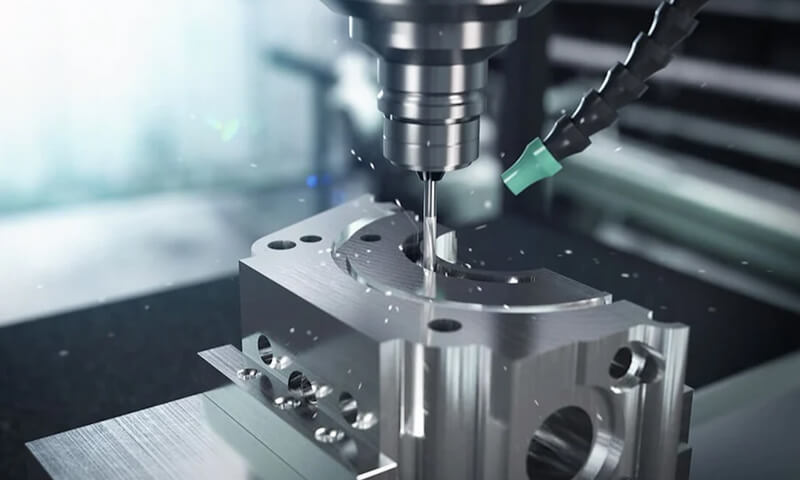
As a core process in modern manufacturing, casting enables the formation of complex-shaped metal components that are difficult to produce via forging or machining, and it is widely applied in aerospace, автомобиль, машиналар, and precision instrument industries.
The selection of casting methods directly determines casting quality, Өндірістік тиімділік, and manufacturing costs.
1. Жасыл құмды құю (Conventional Sand Casting)
Негізгі анықтама & Process Principle
Жасыл Құмның құюы is the most traditional and widely used casting method globally.
Its core raw materials are foundry sand (predominantly silica sand; special sands like zircon sand and corundum sand are adopted when silica sand fails to meet high-temperature requirements) and sand binders (clay is the most common; dry oil, water-soluble silicate, фосфат, and synthetic resins are alternative options).
The external sand molds are classified into three types based on binders and strength-forming mechanisms: green clay sand mold, dry clay sand mold, and chemically bonded sand mold.
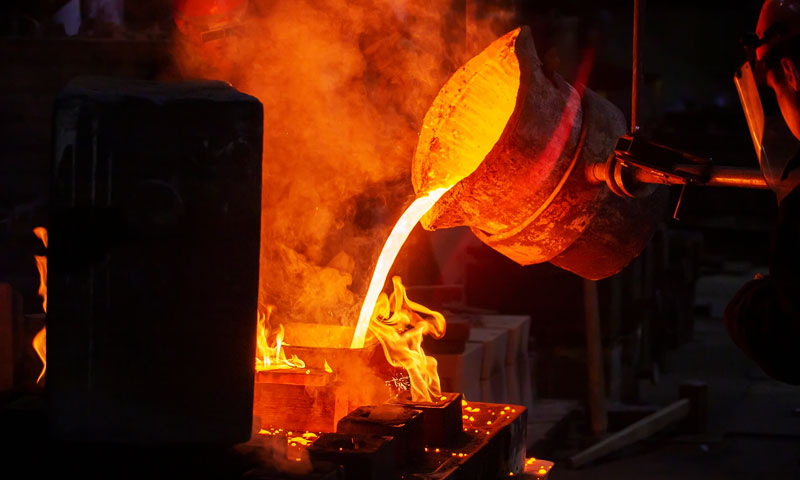
Molten metal is poured into the sand mold, which solidifies to form castings, and the mold is damaged after a single pouring and cannot be reused.

Артықшылықтары
- Cost-effective raw materials: Clay is abundant in resources and low-priced; үстінде 90% of used green clay sand can be recycled and reused after sand treatment, reducing material waste.
- High process flexibility: Short mold-making cycle and high efficiency; mixed molding sand has a long service life; it is adaptable to small, ірі, қарапайым, and complex castings, as well as single-piece, small-batch, and mass production scenarios.
- Low equipment threshold: Does not require high-end specialized equipment, suitable for small and medium-sized foundries.
Кемшіліктері & Шектеулер
- Low production efficiency: Each sand mold can only be used once and must be remolded for subsequent castings, leading to low continuous production efficiency.
- Poor dimensional accuracy: The rigidity of sand molds is low, resulting in casting dimensional tolerance grades of CT10–CT13, which cannot meet high-precision requirements.
- High defect risk: Castings are prone to typical defects such as sand washing, sand inclusion, Газ кеуектілігі, and shrinkage porosity due to the loose structure of sand molds.
- Inferior surface quality: The casting surface is relatively rough, requiring additional machining to improve finish.
2. Инвестициялық құю (Жоғалған балауыз құю)
Негізгі анықтама & Process Principle
Инвестициялық құю, commonly known as lost-wax casting, features a sophisticated process flow:
fabricate wax patterns using fusible materials, coat multiple layers of refractory materials on the pattern surface to form a ceramic shell, melt and remove the wax pattern to obtain a mold without parting surfaces, and perform high-temperature roasting before pouring molten metal.
It is applicable to a wide range of alloys, Соның ішінде көміртекті болат, легірленген болат, heat-resistant alloy, Тот баспайтын болат, copper alloy, алюминий қорытпасы, titanium alloy, және икемді темір, especially for materials difficult to process by forging or cutting.

Артықшылықтары
- Тамаша өлшемді дәлдік: Casting tolerance grades reach CT4–CT6, much higher than green sand casting (CT10-CT13) and comparable to die casting (CT5–CT7), minimizing post-casting machining.
- High material utilization: Reduces machining volume of formed and mating surfaces significantly, saving machining time and cutting tool consumption, with material utilization rate exceeding 90%.
- Strong shape adaptability: Can cast extremely complex components, Жіңішке қабырғалы бөліктер (minimum wall thickness 0.5mm), and micro-sized castings (minimum weight 1g);
it also supports integrated casting of assembled parts, simplifying subsequent assembly processes. - Wide alloy compatibility: Suitable for almost all metal materials, including high-temperature alloys, magnesium alloys, титан қорытпалары, and precious metals that are difficult to process by other methods.
- Flexible production scale: Adapts to mass production, small-batch production, and even single-piece customization, with strong scalability.
Кемшіліктері & Шектеулер
- Complex process flow: It has the most intricate process among all casting methods, involving wax pattern making, shell coating, Дезавакс, қуыру, and pouring, requiring strict process control.
- Limited casting size: Not suitable for large castings; the maximum weight of conventional investment castings is generally within 50kg, as large shells are prone to cracking during roasting and pouring.
- Slow cooling rate: The ceramic shell has low thermal conductivity, leading to slow solidification of molten metal, which may cause coarse grain structures in some alloys.
- High manufacturing cost: The cost of wax patterns, refractory materials, and process control is relatively high; it is economically viable only when combined with reduced machining and material savings.
3. Кастинг өледі
Негізгі анықтама & Process Principle
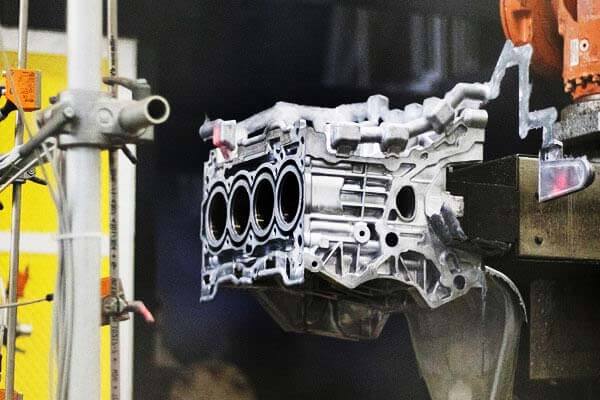
Кастинг өледі is a high-pressure casting method that involves injecting molten metal into a precision metal mold cavity at high speed (10–50m/s) Жоғары қысыммен (20–150MPa), and solidifying the metal under pressure to form castings.
It has two basic processes: Ыстық камера қайтыс болған (molten metal automatically flows into the pressure chamber) and cold-chamber die casting (molten metal is manually or automatically poured into the pressure chamber).
The mold is made of high-strength die steel, ensuring repeated use.
Артықшылықтары
- Superior product quality: Casting dimensional accuracy reaches grade 6–7 (even grade 4 for precision products) with surface roughness Ra 5–8μm;
the strength and hardness are 25–30% higher than green sand castings due to pressure solidification, though elongation decreases by about 70%. - Ultra-high production efficiency: A horizontal cold-chamber die casting machine can complete 600–700 cycles per 8 сағат,
while a small hot-chamber die casting machine can achieve 3,000–7,000 cycles, far exceeding other casting methods. - Long mold life: Molds for zinc alloy die casting can last hundreds of thousands or even millions of times, reducing long-term production costs.
- Easy automation: The process is highly compatible with mechanization and automation, reducing labor costs and improving production stability.
- Excellent economic benefits: Castings require minimal or no machining, improving metal utilization and reducing processing equipment investment;
combined die casting of metal and non-metal materials saves assembly time and raw materials.
Кемшіліктері & Шектеулер
- High defect risk of gas porosity: High-speed filling leads to unstable flow of molten metal,
easily trapping gas to form internal porosity, which makes castings unable to undergo heat treatment (heat treatment causes gas expansion and cracking). - Poor adaptability to complex inner concave parts: It is difficult to demold inner concave complex structures, limiting the design of casting shapes.
- Short mold life for high-melting-point alloys: For high-melting-point alloys such as copper alloys and ferrous metals, the mold is prone to thermal fatigue and wear, significantly reducing service life.
- Not suitable for small-batch production: The mold manufacturing cost is high, and the high efficiency of die casting machines makes small-batch production economically unviable.
4. Тұрақты қалыптарды құю (Hard Mold Casting)
Негізгі анықтама & Process Principle
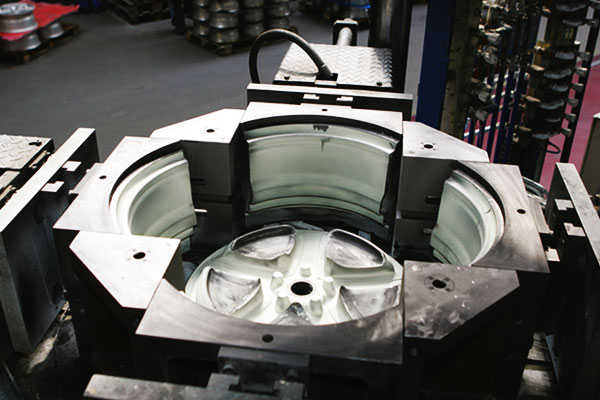
Тұрақты қалыптарды құю, also called hard mold casting, involves pouring molten metal into a metal mold to form castings.
The mold is made of cast iron or cast steel and can be reused hundreds to thousands of times, hence the name “permanent mold”.
The inner cavity of castings can use metal cores or sand cores, and the mold structures are divided into horizontal parting, vertical parting, and composite parting to adapt to different casting shapes:
vertical parting facilitates gating and demolding, horizontal parting is for thin-walled wheel-shaped parts, and composite parting is for complex components.
Артықшылықтары
- Excellent mold reusability: “One mold for multiple castings” eliminates the need for repeated mold making, saving molding materials and time, and improving production efficiency.
- High casting performance: The metal mold has strong cooling capacity, leading to dense casting structure and superior mechanical properties compared to sand castings.
- Good dimensional accuracy and surface quality: Casting tolerance grades reach IT12–IT14, surface roughness Ra ≤6.3μm, reducing post-processing workload.
- Improved working conditions: It uses little or no sand, avoiding dust pollution and optimizing the operating environment for workers.
Кемшіліктері & Шектеулер
- High mold cost and long manufacturing cycle: The metal mold requires high-strength materials and precision processing,
with high upfront investment and long lead time, unsuitable for single-piece and small-batch production. - Limited applicable alloys and casting sizes: Mainly suitable for mass production of non-ferrous alloy castings (aluminum pistons, cylinder blocks, Цилиндр бастары, copper alloy bushings, т.б.) for automobiles, ұшақ, and internal combustion engines;
for ferrous alloy castings, it is only applicable to small and medium-sized parts with simple shapes. - Strict process requirements: The mold needs preheating and temperature control to avoid cold shuts and mold cracking; it is prone to thermal fatigue after long-term use, affecting casting quality.
5. Low-Pressure Casting
Негізгі анықтама & Process Principle
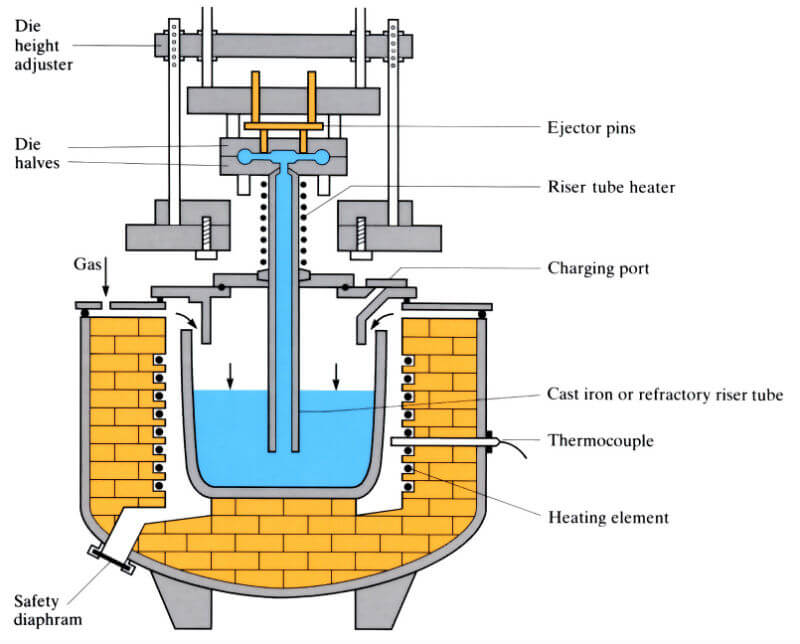
Low-pressure casting is a casting method that fills the mold and solidifies molten metal under low pressure (0.02–0.06MPa).
The core process includes: pouring molten metal into an insulated crucible, sealing the crucible, connecting the riser tube to the mold, introducing dry compressed air into the crucible to drive molten metal upward through the riser tube to fill the mold cavity,
solidifying the metal under constant pressure, releasing the pressure to let residual molten metal flow back to the crucible, and finally opening the mold to take out the casting.
Артықшылықтары
- Flexible process control: The molten metal rising speed and solidification pressure are adjustable, suitable for various molds (металл қалыптар, Құмдық қалыптар) және қорытпалар, as well as castings of different sizes.
- Stable filling and low defect rate: Bottom-up filling ensures smooth flow of molten metal without splashing, avoiding gas entrapment and erosion of mold walls and cores;
casting defects such as gas porosity and slag inclusion are significantly reduced, with qualification rate over 95%. - High-quality castings: Pressure solidification realizes directional solidification from outside to inside, resulting in dense casting structure,
clear contours, Тегіс беттер, және керемет механикалық қасиеттері, especially suitable for large thin-walled parts. - High material utilization: No feeding riser is required, with material utilization rate reaching 90–98%, reducing metal waste.
- Friendly working environment: Low labor intensity, қарапайым жабдық, and easy realization of mechanization and automation, conforming to modern production requirements.
Кемшіліктері & Шектеулер
- Short riser tube service life: The riser tube is in direct contact with high-temperature molten metal for a long time, prone to oxidation and wear, requiring regular replacement.
- Molten metal pollution risk: During heat preservation, molten metal is easily oxidized and mixed with slag, requiring strict control of the heat preservation environment and molten metal purification.
- Limited application scope: Mainly used for casting high-quality aluminum alloy and magnesium alloy castings, such as cylinder blocks, Цилиндр бастары, crankcases, and high-speed internal combustion engine aluminum pistons; it is rarely used for ferrous alloys due to high temperature requirements.
6. Центрифугалық құю
Негізгі анықтама & Process Principle
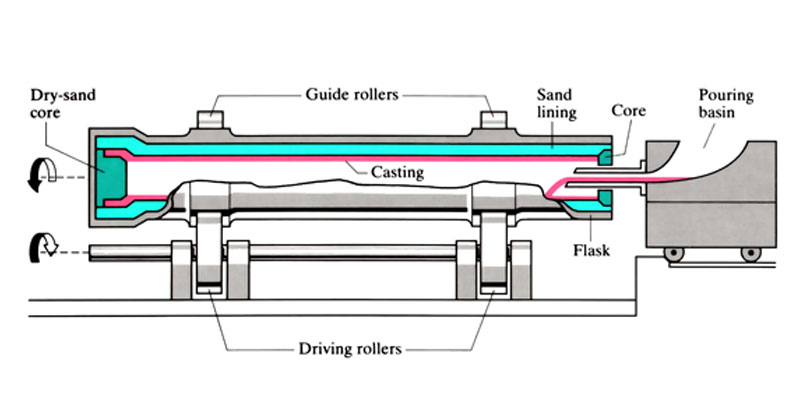
Centrifugal casting involves pouring molten metal into a rotating mold, where the metal fills the mold and solidifies under centrifugal force.
According to the orientation of the mold’s rotating axis, it is divided into three types: horizontal centrifugal casting (axis horizontal or <4° to horizontal, suitable for long cylindrical parts),
vertical centrifugal casting (axis vertical, suitable for short cylindrical or annular parts), and inclined-axis centrifugal casting (rarely used due to complex operation).
Centrifugal force drives the directional movement of molten metal, optimizing casting structure.
Артықшылықтары
- Simplified mold structure: For hollow rotating parts, no core, Gating System, or riser is needed, simplifying mold design and reducing manufacturing costs.
- High-quality castings: Centrifugal force separates low-density gases and slags to the inner surface,
and promotes directional solidification from outside to inside, resulting in dense casting structure, few defects, және керемет механикалық қасиеттері. - Cost-saving for bimetallic parts: Easy to cast bimetallic components such as bushings and bearings (E.Г., steel sleeves with a thin copper lining), saving expensive non-ferrous metals while ensuring performance.
- Strong filling capacity: Centrifugal force enhances the fluidity of molten metal, suitable for casting thin-walled parts and alloys with poor fluidity.
- Reduced material waste: Eliminates gating systems and risers, further improving material utilization.
Кемшіліктері & Шектеулер
- Poor inner surface quality: The inner free surface of castings is rough, with large dimensional errors and poor uniformity, requiring subsequent machining to meet dimensional requirements.
- Unsuitable for certain alloys: Not applicable to alloys with severe density segregation (E.Г., lead bronze), as centrifugal force will exacerbate segregation;
also not suitable for aluminum and magnesium alloys due to their low density and poor centrifugal separation effect. - Limited casting shapes: Only suitable for rotating symmetric parts (цилиндрлер, сақиналар, жеңдер); cannot cast complex-shaped parts with irregular contours.
- High equipment requirements: Requires specialized centrifugal casting machines with stable rotation speed control, increasing equipment investment.
7. Comparison table of commonly used casting methods
| Кастинг әдісі | Артықшылықтары | Шектеулер | Типтік қосымшалар |
| Құмның құюы | Төмен баға, flexible for small/large parts, simple and complex shapes, recyclable sand | Single-use molds → low efficiency, lower dimensional accuracy, Беттік ақаулар | Қозғалтқыш блоктары, Сорғы корпустары, large structural parts |
| Салым (Жоғалған балауыз) Кастинг | Жоғары дәлдік (CT4–6), Тамаша бетті аяқтау, Күрделі пішіндер, Жіңішке қабырғалар, broad material compatibility | Жоғары құны, complex process, not suitable for very large parts | Аэроғарыш компоненттері, Медициналық импланттар, precision automotive parts |
| Кастинг өледі | Жоғары өлшемді дәлдік (CT6–7), Тамаша бетті аяқтау, Жіңішке қабырғалы бөліктер, high production efficiency, automation-friendly | Жоғары құрал-сайманның құны, төмен балқымалы қорытпалармен шектелген, porosity risk, not ideal for small batches | Automotive engine parts, корпустар, Тұтынушы электроника |
Тұрақты көгеру (Metal Mold) Кастинг |
Reusable molds reduce cost, dense microstructure, Жоғары беріктігі, Жақсы бетті аяқтау | High mold cost, Технологиялық процесті қатаң бақылау, limited to medium complexity, mainly non-ferrous alloys | Aluminum pistons, Цилиндр бастары, Автомобильдер |
| Low-Pressure Casting | Smooth filling, minimal porosity, high-quality dense structure, high metal utilization (90-98%), suitable for thin-walled parts | Limited riser/conduit life, oxidation risk, mainly for non-ferrous alloys | Aluminum engine blocks, Цилиндр бастары, поршеньдер, magnesium parts |
| Центрифугалық құю | Dense structure, Бағытталған қатайту, eliminates cores, enables bimetallic castings, reduced gating | Inner free surface rough, dimensional accuracy limited, unsuitable for segregation-prone alloys, limited to cylindrical/rotational geometries | Құбырлар, бұталар, бағдарлау, cylinder liners |
8. Қорытынды
Each casting method offers unique advantages and limitations that make it suitable for specific applications.
Sand casting remains the most versatile and economical method for large, Кешенді құю, while investment casting provides exceptional precision for high-value components.
Die casting excels in high-volume production of thin-walled parts, and permanent mold casting delivers consistent quality for medium-volume non-ferrous production.
Low-pressure casting is ideal for high-integrity aluminum and magnesium components, and centrifugal casting is unmatched for hollow symmetrical parts.
The selection of an appropriate casting method depends on factors including part geometry, required dimensional accuracy, Бетті аяқтау, Материал түрі, Өндіріс көлемі, және шығындарды ескеру.
Modern manufacturing increasingly combines these techniques to leverage their complementary advantages, driving innovation in complex component production across aerospace, автомобиль, және өнеркәсіптік секторлар.