1. Кіріспе
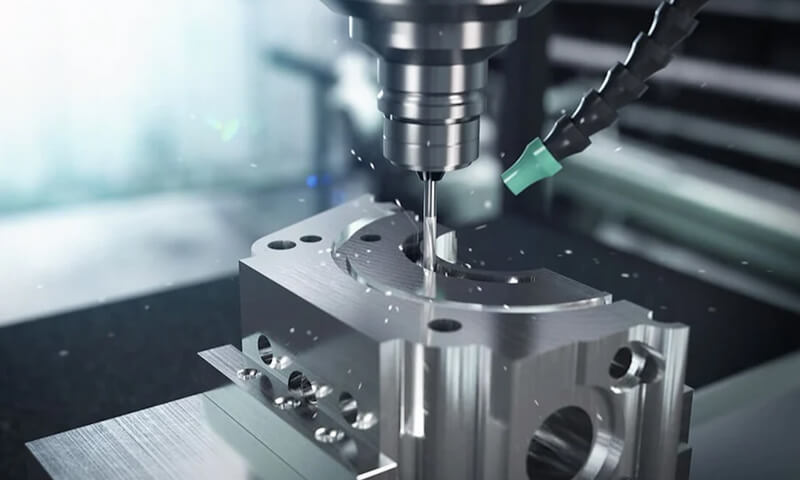
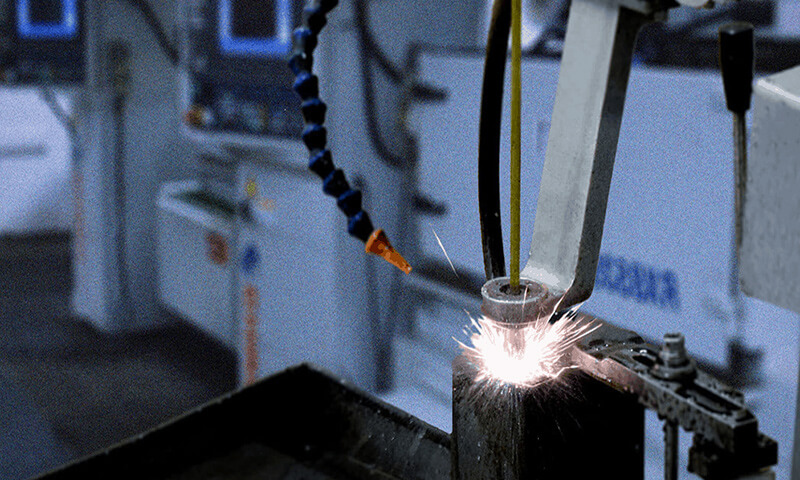
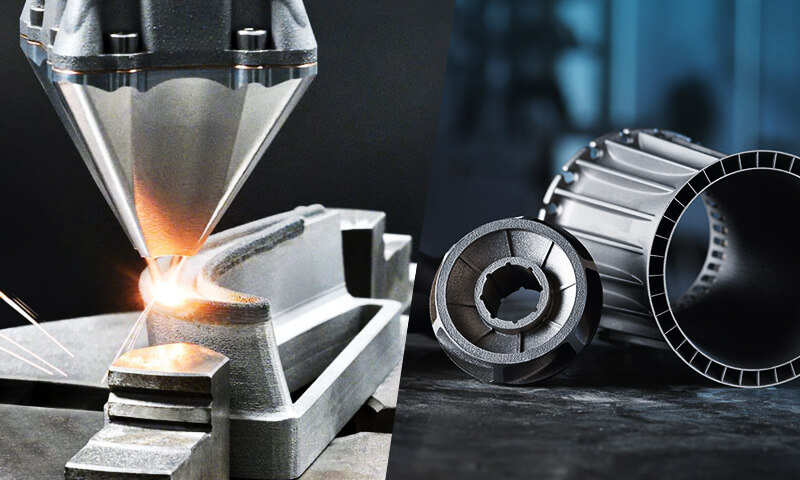
Metal 3D printing, also known as metal additive manufacturing, is revolutionizing the way products are designed, prototyped, and manufactured.
This technology allows for the creation of complex, high-performance parts directly from digital models, offering unprecedented design freedom and material efficiency.
Here’s why metal 3D printing is gaining traction:
- Теңшеу: It enables the production of highly customized parts for niche applications.
- Жылдам прототиптеу: Speeds up the design iteration process significantly.
- Қайта қалдықтар: Produces parts with minimal material waste compared to traditional manufacturing.
- Күрделі геометриялар: Allows for the creation of intricate shapes that are impossible or very costly to produce with conventional methods.
Бұл блогта, we’ll delve into the process, Жамандық, Қиартшалар, and applications of metal 3D printing, exploring how this technology is reshaping the manufacturing landscape.
2. What is Metal 3D Printing?
Metal 3D printing is a form of additive manufacturing where layers of material, typically in the form of powder or wire, are fused to create a three-dimensional object.
Unlike traditional subtractive manufacturing, which involves cutting away material from a solid block, additive manufacturing builds up the object layer by layer.
This process offers significant advantages in terms of design flexibility, material efficiency, және өндіріс жылдамдығы.
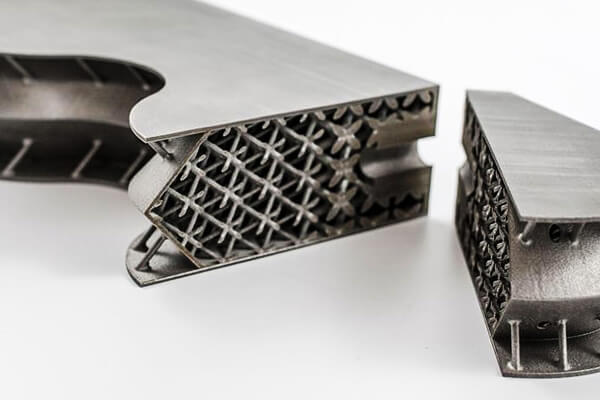
The history of metal 3D printing dates back to the 1980s, with the development of Selective Laser Sintering (Sls) and Direct Metal Laser Sintering (DMLS).
Жылдар ішінде, advancements in laser technology, материалдар, and software have led to the evolution of various metal 3D printing technologies, each with its own set of capabilities and applications.
3. Metal 3D Printing Technologies
Metal 3D printing, сонымен қатар белгілі Қоспа өндірісі, utilizes various techniques to produce complex and functional metal parts layer by layer, directly from a digital file.
Each metal 3D printing technology has its unique process and benefits, making it suitable for different applications across industries like aerospace, автомобиль, денсаулық сақтау, және энергия.
Астында, we’ll explore the most common metal 3D printing technologies, their features, және идеалды қосымшалар.
Direct Metal Laser Sintering (DMLS) & Селективті лазерлік балқыту (Шелек)
Қайта қарау:
Both DMLS and SLM are powder bed fusion technologies that use high-powered lasers to melt and fuse metal powder into solid parts.
The difference lies primarily in their approach to the metal powder and material properties.
- DMLS typically uses metal alloys (Тот баспайтын болат сияқты, титан, немесе алюминий) and works with a variety of metal powders, including alloys like Жұқпалы жіне Кобальт-хром.
- Шелек uses a similar process but focuses more on pure metals Тот баспайтын болат сияқты, титан, және алюминий. The laser completely melts the metal powder, fusing it to form a solid part.

Әдепті:
- High Resolution: Capable of producing parts with fine details and complex geometries.
- Тамаша бетті аяқтау: Can achieve a good surface finish directly from the printer, though post-processing might still be required for the highest quality.
- Wide Material Range: Works with a variety of metals including stainless steel, титан, алюминий, және одан да көп.
Тыныш:
- Slow for Large Parts: The layer-by-layer process can be time-consuming for larger parts.
- Support Structures: Requires support structures for overhanging features, which must be removed post-printing.
- High Thermal Stresses: The high-temperature gradients can induce thermal stresses in the parts.
Идеал қосымшалар: Аэроғарыш компоненттері, Медициналық импланттар, complex tooling, және жоғары сапалы автомобиль бөлшектері.
Электронды сәуле балқыту (Ebm)
Қайта қарау:
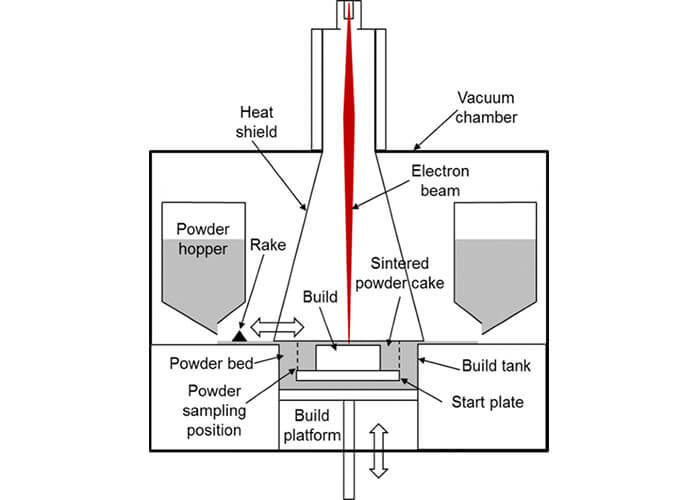
EBM is a powder bed fusion process that uses an electron beam instead of a laser to melt and fuse metal powders. It is performed in a vacuum environment to ensure optimal conditions for melting.
EBM is typically used for high-performance materials like титан қорытпалар, Кобальт-хром, жіне Жұқпалы.
- The process operates at Жоғары температура, offering advantages in Жоғары температуралы жұмыс жіне дәлдік for specific alloys.
Әдепті:
- No Need for Support Structures: EBM can produce parts without support due to the preheating of the powder bed, which reduces thermal stresses.
- High-Temperature Capability: Suitable for materials that require high temperatures for melting, like titanium.
Тыныш:
- Материалдық шектеулер: Limited to materials that are compatible with a vacuum environment, which excludes some alloys.
- Бетті аяқтау: The surface finish might not be as smooth as with SLM/DMLS due to the larger beam spot size.
Идеал қосымшалар: Медициналық импланттар (especially titanium), Аэроғарыш компоненттері, and parts where the absence of support structures is beneficial.
Binder Jetting
Қайта қарау:
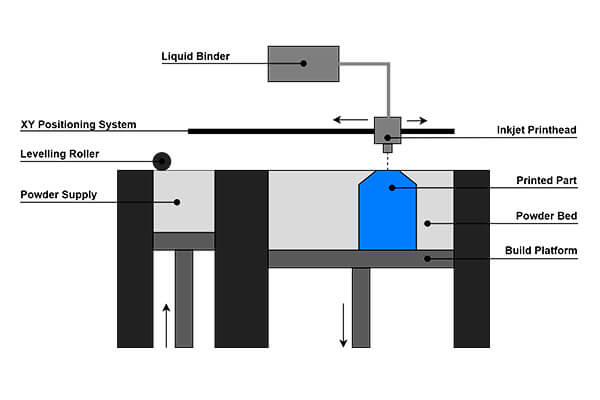
Binder jetting involves spraying a liquid binder onto layers of metal powder, which are then fused to form a solid part.
The powder used in binder jetting is typically metal powder, сияқты Тот баспайтын болат, алюминий, немесе қола.
After the part is printed, it undergoes sintering, where the binder is removed, and the part is fused to its final density.
Әдепті:
- Fast Printing: Can print parts quickly due to the lower energy requirement for binding.
- Full-Color Printing: Allows for full-color printing, which is unique among metal 3D printing technologies.
- No Thermal Stresses: Since the process doesn’t involve melting, there are fewer thermal stresses.
Тыныш:
- Lower Part Density: Initial parts have lower density due to the binder; sintering or infiltration is required to increase density.
- Requires Post-Processing: Extensive post-processing is necessary, including sintering, infiltration, and often machining.
Идеал қосымшалар: Құралдар, қалыптар, sand casting cores, and applications where speed and color are more important than the final part’s density.
Directed Energy Deposition (Жөн)
Қайта қарау:
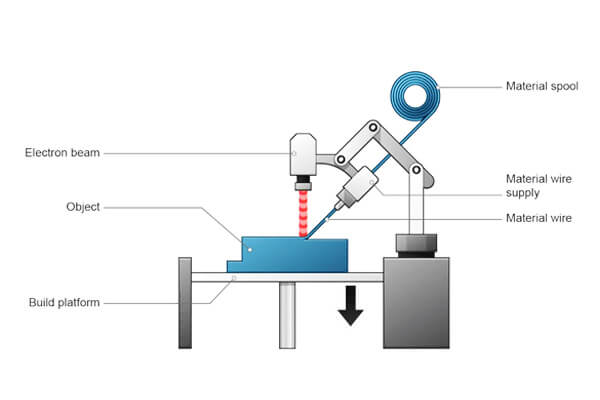
DED is a 3D printing process where material is melted and deposited onto a surface by a laser, electron beam, or plasma arc.
DED allows for material to be deposited while also adding or repairing parts.
Unlike other methods, DED uses a continuous feed of material (powder or wire), and the material is fused by the energy source as it’s deposited.
Әдепті:
- Үлкен бөліктер: Suitable for producing or repairing large parts.
- Repair and Coating: This Can be used to add material to existing parts or for surface cladding.
- Қолайлы: Can work with a wide range of materials and can switch between different materials during printing.
Тыныш:
- Lower Resolution: Compared to powder bed fusion methods, DED typically has a lower resolution.
- Бетті аяқтау: Parts often require extensive post-processing for a smooth finish.
Идеал қосымшалар: Аэроғарыш компоненттері, үлкен құрылымдық бөліктер, repair of existing components, and adding features to existing parts.
Metal Fused Deposition Modeling (Metal FDM)
Қайта қарау:
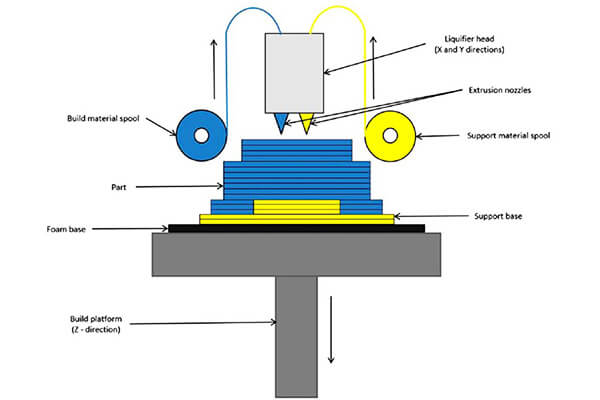
Metal FDM is a variation of the traditional Fused Deposition Modeling (Fdm) өңдеу, where metal filaments are heated and extruded layer by layer to create 3D parts.
The filaments used are typically a combination of metal powder and a polymer binder, which is later removed during the post-processing stage.
The parts are then sintered in a furnace to fuse the metal particles into a solid structure.
Әдепті:
- Төмен құны: Often less expensive than other metal 3D printing methods, especially for entry-level systems.
- Пайдаланудың қарапайымдылығы: Leverages the simplicity of FDM technology, making it accessible for those familiar with plastic printing.
Тыныш:
- Requires Sintering: The part must be sintered post-printing to achieve full density, which adds time and cost.
- Lower Precision: Less precise than powder bed fusion methods, requiring more post-processing for tight tolerances.
Идеал қосымшалар: Small parts, Прототиптеу, educational purposes, and applications where cost and ease of use are more critical than high precision.
4. Materials Used in Metal 3D Printing
Негізгі артықшылықтардың бірі Металл 3D басып шығару is the wide range of materials it supports, offering unique properties suited to various applications.
The materials used in metal additive manufacturing are typically металл ұнтақтары that are selectively melted layer by layer,
with each material having distinct advantages depending on the specific needs of the project.
Тот баспайтын болат
- Сипаттамасы:
Тот баспайтын болат is one of the most common materials used in metal 3D printing due to its Жоғары беріктігі, Коррозияға төзімділік, жіне ә маяғы. Stainless steel alloys, ерекше 316Өшпін жіне 17-4 Р, are widely used across industries.
-
- Күш: Жоғары созылу және аққыштық беріктігі.
- Коррозияға төзімділік: Excellent protection against rust and staining.
- Айналымдылық: Easily machinable post-printing, making it suitable for a variety of post-processing methods.
Титан қорытпалары (E.Г., TI-6AL-4V)
- Сипаттамасы:
Титан қорытпалары, ерекше TI-6AL-4V, олармен танымал Салмаққа қарағанда ерекше күшті, Коррозияға төзімділік, Жоғары температураға төтеп беру мүмкіндігі.
-
- Күш-салмаққа қатынасы: Excellent mechanical properties with lower density.
- Жоғары температуралы жұмыс: Withstands higher temperatures than most other metals.
- Биокомпания: Safe for use in medical implants due to non-toxicity.
Алюминий қорытпалары (E.Г., AlSi10Mg)
- Сипаттамасы:
Алюминий is lightweight and offers excellent Жылу өткізгіштік жіне Коррозияға төзімділік. Қорытпалар сияқты AlSi10Mg are commonly used in 3D printing because of their Жоғары күш-салмаққа қатынасы жіне Жақсы техникалар.
-
- Low Density: Ideal for applications requiring lightweight components.
- Жылу өткізгіштік: High thermal conductivity makes it suitable for heat dissipation applications.
- Бетті аяқтау: Aluminium parts can be easily anodized to improve surface hardness and corrosion resistance.
Cobalt-Chrome Alloys
- Сипаттамасы:
Cobalt-chrome alloys are known for their Жоғары беріктігі, тозуға төзімділік, жіне биокомпания, which makes them a popular choice for медициналық қолданбалар.
-
- Коррозияға төзімділік: Excellent resistance to both corrosion and wear.
- Жоғары беріктігі: Particularly useful for heavy-duty industrial applications.
- Биокомпания: Cobalt-chrome is non-reactive in the human body, making it ideal for implants.
Никель негізіндегі қорытпалар (E.Г., Жұқпалы 625, Жұқпалы 718)
- Сипаттамасы:
Никель негізіндегі қорытпалар, сияқты Жұқпалы 625 жіне Жұқпалы 718, are highly resistant to тотықтыру жіне high-temperature corrosion.
These alloys offer superior performance in extreme environments where temperature, қысым, және коррозияға төзімділік өте маңызды.
-
- Жоғары температуралы беріктік: Can withstand extreme heat without losing strength.
- Коррозияға төзімділік: Especially against highly corrosive environments like seawater or acidic media.
- Шаршауға төзімділік: High fatigue strength and resistance to thermal cycling.
Қымбат металдар (E.Г., Алтын, Күміс, Платина)
- Сипаттамасы:
Қымбат металдар, сияқты алтын, күміс, жіне платина, are used for applications where high aesthetic value жіне Коррозияға төзімділік қажет.
-
- Эстетикалық сапа: Ideal for jewelry and luxury items.
- Өткізгіштік: High electrical conductivity makes them suitable for high-precision electrical components.
- Коррозияға төзімділік: Excellent resistance to tarnishing and corrosion.
5. Metal 3D Printing Process
The metal 3D printing process typically involves several key steps:
- Адымдау 1: Design with CAD Software and File Preparation:
-
- Инженерлер мен дизайнерлер компьютерлік дизайнды пайдаланады (Ата-тор) software to create a 3D model of the part.
The file is then prepared for 3D printing, including orientation, support structures, and slicing into layers.
Advanced CAD software, such as Autodesk Fusion 360, enables designers to create complex geometries and optimize the design for 3D printing.
- Инженерлер мен дизайнерлер компьютерлік дизайнды пайдаланады (Ата-тор) software to create a 3D model of the part.
- Адымдау 2: Slicing and Parameter Setting:
-
- The 3D model is sliced into thin layers, and parameters such as layer thickness, laser power, and scan speed are set.
These settings are crucial for achieving the desired quality and properties of the final part.
Slicing software, like Materialise Magics, helps in optimizing these parameters for the best results.
- The 3D model is sliced into thin layers, and parameters such as layer thickness, laser power, and scan speed are set.
- Адымдау 3: Printing Process:
-
- The 3D printer deposits or fuses the metal layer by layer, following the specified parameters. This step can take hours or even days, depending on the complexity and size of the part.
During the printing process, the printer continuously monitors and adjusts the parameters to ensure consistent quality.
- The 3D printer deposits or fuses the metal layer by layer, following the specified parameters. This step can take hours or even days, depending on the complexity and size of the part.
- Адымдау 4: Өңдеуден кейінгі:
-
- After printing, the part may require post-processing steps such as heat treatment, Бетті әрлеу, and removal of support structures.
Термиялық өңдеу, мысалы, can improve the mechanical properties of the part, while surface finishing techniques like sandblasting and polishing can enhance the surface quality.
Quality control is essential at each stage to ensure the part meets the required specifications.
- After printing, the part may require post-processing steps such as heat treatment, Бетті әрлеу, and removal of support structures.
6. Benefits of Metal 3D Printing
Metal 3D printing offers several advantages over traditional manufacturing methods:
Дизайн бостандығы:
- Күрделі геометриялар, Ішкі арналар, and lattice structures can be created, enabling innovative designs that were previously impossible.
Мысалы, the ability to create hollow, lightweight structures with internal cooling channels is a game-changer in aerospace and automotive engineering.
Жылдам прототиптеу:
- Quick iteration and testing of designs, reducing development time and costs.
With metal 3D printing, prototypes can be produced in a matter of days, allowing for rapid feedback and design improvements.
Материалдық тиімділік:
- Минималды қалдықтар, as only the material needed for the part is used, unlike subtractive manufacturing, which can result in significant material loss.
This is particularly beneficial for expensive materials like titanium and precious metals.
Жеңіл:
- Lattice structures and optimized designs can reduce the weight of parts, which is particularly beneficial in aerospace and automotive applications.
Мысалы, Boeing has used metal 3D printing to reduce the weight of aircraft components, leading to significant fuel savings.
Теңшеу:
- Tailored solutions for low-volume or one-off production runs, allowing for personalized and unique products.
Customized medical implants, мысалы, can be designed to fit a patient’s specific anatomy, improving outcomes and recovery times.
7. Қиындықтар мен шектеулер
While metal 3D printing offers many advantages, it also comes with its own set of challenges:
Жоғары бастапқы инвестициялар:
- The cost of metal 3D printers, материалдар, and post-processing equipment can be substantial.
Мысалы, a high-end metal 3D printer can cost upwards of $1 million, and the materials can be several times more expensive than those used in traditional manufacturing.
Limited Build Size:
- Many metal 3D printers have smaller build volumes, limiting the size of parts that can be produced.
Дегенмен, new technologies are emerging that allow for larger build sizes, expanding the range of possible applications.
Бетті аяқтау:
- Parts may require additional post-processing to achieve the desired surface finish, adding to the overall cost and time.
Techniques like chemical etching and electro-polishing can help improve the surface quality, but they add extra steps to the manufacturing process.
Материалдық қол жетімділік:
- Not all metals and alloys are suitable for 3D printing, and some may be difficult to obtain or expensive.
The availability of specialized materials, such as high-temperature alloys, can be limited, affecting the feasibility of certain projects.
Skill and Training:
- Operators and designers need specialized training to effectively use metal 3D printing technology.
The learning curve can be steep, and the need for skilled personnel can be a barrier to adoption, especially for small and medium-sized enterprises.
8. Applications of Metal 3D Printing
Metal 3D printing is finding applications across a wide range of industries:
Аэроғарыш:
- Жайғақ, complex components for aircraft and satellites, reducing weight and improving performance.
Мысалы, Airbus has used metal 3D printing to produce lightweight brackets and fuel nozzles, resulting in significant weight savings and improved fuel efficiency.
Автомобиль:
- Custom and performance parts for motorsports, Прототиптеу, and production, enhancing vehicle performance and efficiency.
BMW, Мысалы, uses metal 3D printing to produce custom parts for their high-performance vehicles, such as the i8 Roadster.
Медициналық:
- Импланттар, Протездер, and dental applications offer precise geometries and biocompatibility.
Stryker, a leading medical technology company, uses metal 3D printing to produce customized spinal implants, improving patient outcomes and reducing recovery times.
Энергия:
- Жылу алмастырғыштар, турбиналар, and power generation components improve efficiency and durability.
Siemens, мысалы, has used metal 3D printing to produce gas turbine blades, which can withstand higher temperatures and pressures, leading to increased efficiency and reduced emissions.
Tooling and Molds:
- Rapid tooling with conformal cooling channels, reducing cycle times and improving part quality.
Conformal cooling channels, which follow the shape of the mold, can significantly reduce cooling times and improve the quality of the final product.
Халқтық қолданыс тауарлары:
- High-end jewelry, custom watches, and electronics enclosures enable unique and personalized products.
Companies like HP and 3DEO are using metal 3D printing to produce high-quality, customized consumer goods, such as luxury watches and electronic cases.
9. Metal 3D Printing vs. Traditional Manufacturing
When comparing metal 3D printing to traditional manufacturing methods, several factors come into play:
Жылдамдық және тиімділік:
- 3D printing excels in rapid prototyping and low-volume production, while traditional methods are more efficient for high-volume manufacturing.
Мысалы, 3D printing can produce a prototype in a few days, whereas traditional methods might take weeks.
Шығындарды салыстыру:
- For low-volume or customized parts, 3D printing can be more cost-effective due to reduced setup and tooling costs.
Дегенмен, for high-volume production, traditional methods may still be more economical. The break-even point varies depending on the specific application and the complexity of the part.
Күртекс:
- 3D printing enables the manufacture of intricate geometries and internal features that are impossible with conventional methods, opening up new design possibilities.
This is particularly valuable in industries where weight reduction and performance optimization are critical, мысалы, аэроғарыштық және автомобиль.
Here’s a comparison table summarizing the key differences between Metal 3D Printing жіне Traditional Manufacturing:
| Белгі | Metal 3D Printing | Traditional Manufacturing |
|---|---|---|
| Тоқтау | Faster for prototyping, Көлемі аз өндіріс. | Longer setup times due to tooling and molds. |
| Өндіріс жылдамдығы | Slower for high-volume production. Ideal for low-volume, Жеке бөлшектер. | Faster for mass production, әсіресе қарапайым бөлшектер үшін. |
| Дизайн күрделілігі | Can create complex geometries with ease. | Limited by tooling constraints; complex designs need extra steps. |
| Теңшеу | Ideal for one-off or customized parts. | Customization is more expensive due to tooling changes. |
| Материалдық қол жетімділік | Limited to common metals (Тот баспайтын болат, титан, т.б.). | Wide range of metals and alloys available for a variety of applications. |
| Material Performance | Slightly lower material strength and uniformity. | Superior strength and more consistent material properties. |
| Бастапқы инвестициялар | High initial cost due to expensive 3D printers and metal powders. | Lower initial investment for basic setups. |
| Per-Unit Cost | High for high-volume production; cost-effective for small runs. | Lower for mass production, especially with simple designs. |
| Күш & Төзімділік | Suitable for many applications; may require post-processing for enhanced strength. | Typically higher strength, Әсіресе жоғары өнімді қорытпалар үшін. |
| Бетті аяқтау | Requires post-processing for smooth finishes. | Typically better surface finishes for simple designs. |
| Өңдеуден кейінгі | Required for enhanced mechanical properties, және бетті аяқтау. | Usually minimal post-processing unless complex or high-precision requirements. |
| Материалдық қалдықтар | Minimal material waste due to additive nature. | Higher material waste in some methods (E.Г., өңдеу). |
| Өте ыңғайлы | Томып, Жеке бөлшектер, Күрделі геометриялар, Прототиптеу. | Жоғары көлем, Қарапайым бөліктер, consistent material properties. |
| Қолданбалар | Аэроғарыш, Медициналық импланттар, автомобиль (Томып, Күрделі бөліктер). | Автомобиль, Ауыр машиналар, industrial parts (Жоғары көлем, Ауқымды өндіріс). |
10. Қорытынды
Metal 3D printing stands at the forefront of manufacturing innovation, offering unique advantages like design freedom, Жедел прототиптеу, және материалдық тиімділік.
While it faces challenges such as high costs and material limitations, its transformative potential across industries is undeniable.
Сіз аэроғарсыз болсаңыз да, автомобиль, немесе тұтыну тауарлары,
exploring how metal 3D printing can fit your specific needs might just be the key to unlocking new possibilities in product development and manufacturing.
DEZE provides 3D printing services. If you have any 3D printing needs, өтінемін бізбен хабарласыңы.