1. Кіріспе
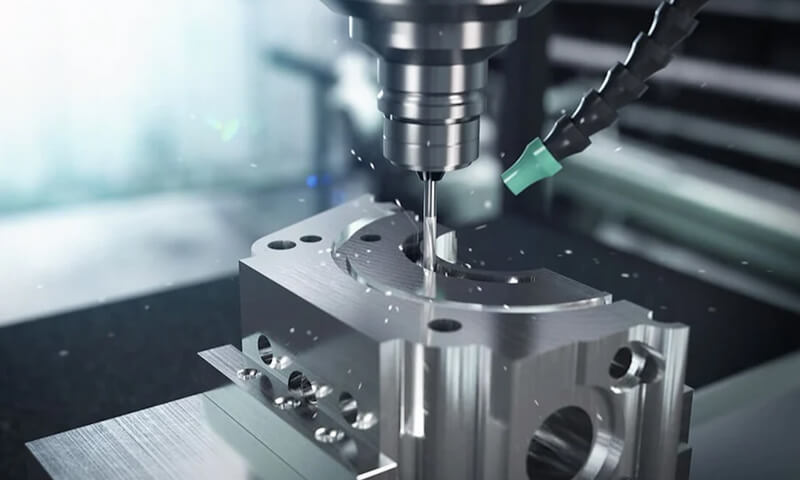
Thin-walled components appear across aerospace, медициналық, автомобиль, electronics and consumer products.
Their low mass and high functional value also bring manufacturing risk: part deformation, chatter, unacceptable geometrical error, poor surface finish and high scrap rates.
Successful production combines design for manufacturability (DFM), robust fixturing, purpose-built tooling and machine setup, жіне advanced machining strategies (E.Г., adaptive roughing, low radial depth-of-cut finishing and in-process measurement).
This article explains the underlying mechanics, provides proven countermeasures and delivers an actionable checklist for shop floor implementation.
2. What “thin-walled” means — definitions and key metrics

“Thin-walled” is context dependent but the following practical metrics are widely used:
- Wall thickness (т): absolute thin: әдетте t ≤ 3 мм for metals in many applications; in plastics/composites t can be even less.
- Aspect ratio (height or cantilever length / қалыңдық): thin-walled parts usually have height/thickness (H/t) > 10 және кейде > 20.
- Span/thickness (unsupported span / т): long unsupported spans amplify deflection.
- Flexibility index: a composite measure combining material modulus, геометрия, and loading conditions — used in simulations.
These numbers are guidelines. Always judge thinness by the effective stiffness in the intended machining setup.
3. Core Challenges in Machining Thin-Walled Parts
The challenges of өңдеу thin-walled parts stem from their intrinsic low rigidity, which amplifies the impact of cutting forces, thermal effects, and tool-path interactions.
Below is a detailed breakdown of key challenges and their technical root causes:
Chatter and Vibration (The Primary Enemy)
Chatter—self-excited vibration between the tool and workpiece—is the most pervasive issue in thin-walled machining, caused by the interplay of three factors:
- Low Workpiece Stiffness: Thin walls have a high aspect ratio (height/thickness) and low flexural rigidity (EI, where E = Young’s modulus, I = moment of inertia).
Мысалы, а 1 mm-thick aluminum wall (E = 70 Gpa) has ~1/16 the stiffness of a 2 mm-thick wall (I ∝ t³, per beam theory). - Regenerative Chatter: Cutting forces leave wavy surface marks on the workpiece; subsequent tool passes interact with these waves, generating periodic forces that reinforce vibration (frequency 100–5,000 Hz).
- Tool and Machine Rigidity Gaps: Flexible tools (E.Г., long endmills) or low-rigidity machine spindles exacerbate vibration, leading to poor surface finish (RA > 1.6 мкм) және құралдар киімі.
Industrial data shows that chatter causes up to 40% of scrapped thin-walled parts, particularly in high-speed machining (HSM) of aluminum and titanium.
Dimensional Inaccuracies: Deflection, Бұрмалау, and Residual Stress
Thin-walled parts are highly susceptible to shape deviations due to:
- Cutting Force-Induced Deflection: Even moderate cutting forces (20–50 N for aluminum) cause elastic/plastic deflection.
For a cantilevered thin wall, deflection (δ) follows beam theory: δ = FL³/(3EI), where F = cutting force, L = wall length.
А 50 N force on a 100 mm-long, 1 mm-thick aluminum wall causes ~0.2 mm deflection—exceeding typical tolerances. - Thermal Distortion: Cutting generates localized heat (up to 600°C for titanium), causing uneven expansion/contraction.
Thin walls have low thermal mass, so temperature gradients (ΔT > 50° °) induce permanent distortion (E.Г., соғысып алу, bowing). - Residual Stress Release: Machining removes material, disrupting residual stresses from prior processes (E.Г., кастинг, соғу).
Мысалы, machined aluminum thin walls often “spring back” by 0.05–0.1 mm after clamping is released, due to residual stress relaxation.
Surface Integrity Degradation
Thin-walled materials (especially ductile metals like aluminum or titanium) are prone to surface defects:
- Tearing and Smearing: Low cutting speeds or dull tools cause material to flow plastically instead of shearing, creating a rough, torn surface.
- Burr Formation: Thin edges lack structural support, leading to burrs (0.1-0.5 мм) that are difficult to remove without damaging the part.
- Жұмыс қатаю: Excessive cutting forces induce plastic deformation, increasing surface hardness by 20–30% (E.Г., titanium thin walls) and reducing fatigue life.
Excessive Tool Wear and Premature Failure
Thin-walled machining accelerates tool wear due to:
- Increased Tool Engagement: To avoid deflection, tools often have large contact areas with the workpiece, increasing flank wear and crater wear.
- Vibration-Induced Impact Loading: Chatter causes cyclic impact between tool and workpiece, leading to micro-fractures in tool edges (especially for brittle carbide tools).
- Thermal Loading: Poor heat dissipation in thin walls (low thermal mass) transfers more heat to the tool, softening tool materials and reducing wear resistance.
Material-Specific Challenges
Different materials pose unique hurdles when machining thin walls:
| Материалдық топ | Key thin-wall challenge | Typical effect |
| Алюминий (6xxx/7xxx) | Very low stiffness, ductility → smearing, Буррлар | Edge tear, high scrap if unsupported |
| Титан (TI-6AL-4V) | Low thermal conductivity, high cutting temps | Thermal distortion, rapid tool wear |
| Тот баспайтын болаттар | Жұмыс қатаю, high cutting forces | Built-up edge, poor surface finish |
| Композиттер (CFRP/GFRP) | Fiber pull-out, delamination | Edge chipping, loss of structural integrity |
| Пластмассалар (PEEK/ABS) | Low Tg/softening, melting on tool | Melt deposits, dimensional collapse |
4. Comprehensive Solutions to Overcome Thin-Walled Machining Challenges
Addressing thin-walled machining challenges requires an integrated approach—combining process optimization, tooling innovation, fixturing precision, machine tool upgrades, and digital validation.

Below are technically validated solutions:
Design-for-Manufacture (DFM)
Design changes cost very little relative to machining time and scrap.
- Increase local stiffness with ribs, фланецтер, beads. Thin ribs of modest height add large section modulus at low mass penalty.
Rule of thumb: adding a flange that increases wall local thickness by 30–50% often reduces deflection by >2×. - Reduce unsupported span and introduce machining pads. Leave sacrificial material islands or machinable pads to be removed after final machining.
- Specify realistic tolerances. Reserve ±0.01 mm tolerances only for critical features; relax non-critical faces.
- Plan split assemblies. If unavoidable thin cantilevers are required, consider multi-piece assemblies that join after machining.
Процестерді оңтайландыру: Cutting Parameters and Toolpath Strategies
The right process parameters minimize cutting forces, діріл, and heat generation:
- High-Speed Machining (HSM): Operating at spindle speeds >10,000 Айдау (алюминий үшін) reduces cutting forces by 30–50% (per Merchant’s circle theory, higher cutting speeds decrease shear angle and force).
Мысалы, өңдеу 6061 aluminum thin walls at 15,000 Айдау (қарсы және. 5,000 Айдау) reduces deflection from 0.2 мм дейін 0.05 мм. - Тритальды фрезерлеу: A circular toolpath that reduces radial engagement (э) to 10–20% of tool diameter, lowering cutting forces and vibration.
Trochoidal milling is 2–3× more stable than conventional slotting for thin walls. - Бейімделгіш өңдеу: Нақты уақыттағы сенсор туралы мәліметтер (діріл, температура, force) adjusts cutting parameters (Беру бағасы, Шпиндель жылдамдығы) dynamically.
AI-driven adaptive systems (E.Г., Siemens Sinumerik Integrate) reduce chatter by 70% and improve dimensional accuracy by 40%. - Climb Milling: Reduces tool-workpiece friction and chip thickness, minimizing heat generation and surface tearing. Climb milling is preferred for thin aluminum and titanium walls.
Жетілдірілген құралдармен жасалған шешімдер
Tool geometry and holder stiffness determine how much cutting force causes deflection.
- Minimise tool overhang: keep length-to-diameter ratio ≤ 3:1; where possible use 2:1 немесе одан аз.
- Use high-core diameter cutters (bigger internal web) for stiffness.
- Variable-helix and variable-pitch tools help detune chatter modes.
- Positive rake, high-helix cutters reduce cutting forces in ductile alloys.
- Жабындар: AlTiN for titanium (high temp resistance), TiAlN/TiCN for steels, DLC for polymer/composite work to reduce adhesion.
Precision Fixturing and Clamping: Minimizing Stress and Deflection
Fixturing must balance secure workpiece holding with minimal clamping-induced stress:
- Low-Pressure Clamping: Hydraulic or pneumatic clamps with pressure sensors (0.5–2 MPa) distribute force evenly, avoiding localized deformation.
Мысалы, clamping 7075 aluminum thin walls at 1 MPa reduces spring-back by 60% қарсы және. 5 MPa clamping. - Vacuum Fixturing: Porous ceramic or aluminum vacuum chucks distribute clamping force over the entire workpiece surface, eliminating point-loading.
Vacuum fixturing is ideal for large, flat thin walls (E.Г., EV battery housings). - Magnetic Fixturing: Permanent or electromagnetic chucks for ferrous materials (E.Г., steel thin walls) provide uniform holding without mechanical clamps.
- Compliant Fixturing: Elastomeric or foam-backed clamps absorb vibration and adapt to workpiece geometry, reducing stress on thin edges.
Machine Tool and Equipment Enhancements
Machine tool rigidity and performance directly impact thin-walled machining stability:
- High-Rigidity Machine Frames: Cast iron or polymer concrete bases reduce machine vibration (damping ratio >0.05).
Мысалы, polymer concrete machines have 2–3× better damping than steel frames. - Жоғары жылдамдықты шпиндельдер: Spindles with high dynamic stiffness (≥100 N/μm) and low runout (<0.001 мм) minimize tool vibration.
Air-bearing spindles are ideal for ultra-precision thin-walled machining (төзімділік <0.005 мм). - 5-Axis Machining Centers: Enable multi-angle machining in a single setup, reducing clamping cycles and residual stress.
5-axis machines also allow shorter tools (improving rigidity) by accessing thin walls from optimal angles. - Coolant Optimization: High-pressure coolant (30–100 bar) removes chips and dissipates heat, reducing thermal distortion.
For titanium thin walls, through-tool coolant (directed at the cutting zone) lowers tool temperature by 40%.
Material Preprocessing and Post-Machining Treatments
- Pre-Machining Stress Relief: Thermal annealing (E.Г., 6061 aluminum at 345°C for 2 сағат) or vibratory stress relief reduces residual stresses, minimizing spring-back after machining.
- Post-Machining Stabilization: Low-temperature baking (100–150°C for 1–2 hours) relieves machining-induced stresses and stabilizes dimensions.
- Deburring and Edge Finishing: Cryogenic deburring (using dry ice pellets) or laser deburring removes burrs from thin edges without damaging the part. For composites, abrasive waterjet deburring prevents fiber fraying.
Digital Simulation and Validation
Simulation reduces trial-and-error and predicts issues before machining:
- Ақырлы элементтерді талдау (Ақиа): Simulates cutting forces, deflection, and thermal distortion.
Мысалы, ANSYS Workbench can predict deflection of a thin titanium wall during machining, allowing adjustments to toolpaths or fixturing. - Machining Simulation Software: Tools like Vericut or Mastercam simulate toolpaths, detect collisions, and optimize cutting parameters.
These tools reduce scrap rates by 30–50% for complex thin-walled parts. - Сандық егіздер: Virtual replicas of the machining process integrate real-time data (spindle vibration, cutting force) to predict and prevent defects.
Digital twins are increasingly used in aerospace for critical thin-walled components (E.Г., engine blades).
Сапаны бақылау және тексеру
Thin-walled parts require non-destructive, non-contact inspection to avoid inducing deflection:
- Лазерлік сканерлеу: 3D laser scanners (accuracy ±0.001 mm) measure dimensional deviations and surface finish without touching the part.
- Координаталық өлшеу машиналары (См) with Non-Contact Probes: Optical or laser probes measure complex geometries (E.Г., curved thin walls) without applying pressure.
- Ультрадыбыстық тестілеу (У): Detects subsurface defects (E.Г., delamination in composite thin walls) that affect structural integrity.
5. Cutting strategies and CAM techniques (roughing → finishing)
Effective cutting strategy is the manufacturing core.
Roughing strategy — remove metal while minimizing force
- Adaptive / trochoidal milling: maintains small radial engagement, high axial depth and constant chip load; reduces instantaneous cutting forces and heat; ideal for thin-walled roughing.
- Zigzag roughing with support: remove material in zones and keep as much supporting stock as possible near thin walls.
Semi-finish and finishing strategy — low force, predictable cuts
- Finish in multiple light passes (low radial depth, small stepdown) to reduce deflection and leave a small stock for a final ultra-light finishing pass.
- Final finishing pass should use the minimum possible axial feed per tooth жіне minimal radial depth—often less than 0.1 mm radial engagement for sensitive walls.
Climb vs conventional milling
- Фрезерлеуге өрмелеу generally produces better surface finish and draws the work into the cutter, but can increase tendency to pull the wall into the cutter if not properly fixtured—use with confidence only on stable setups. Conventional milling may be safer for marginal fixtures.
Entry/exit strategies
- Avoid direct plunges into thin walls; use ramping, helical entry, or approach from the supported side.
Exit chips should flow away from the wall: plan toolpaths to avoid delamination or tearing.
Toolpath smoothing and lead-in/out
- Smooth acceleration/deceleration and ramped lead-ins reduce impact loads. Avoid abrupt changes in feed direction.
Adaptive feed/spindle control and chatter avoidance
- Пайдалану CAM adaptive feeds, limit instantaneous pick-up loads, implement high-frequency spindle speed variation (SSV) немесе variable spindle speeds to avoid resonant chatter frequencies.
6. Cooling and Temperature Control
Effective cooling and temperature control are critical in machining thin-walled parts because these components possess low thermal mass and limited heat dissipation capacity.
Localized temperature rises can rapidly lead to thermal expansion, бұрмалау, residual-stress redistribution, and surface integrity degradation.
High-Pressure Internal Cooling (Through-Tool Coolant)
Қағида
High-pressure internal cooling delivers coolant directly through the tool to the cutting edge, typically at pressures ranging from 30 қарай 100 төр.
This method targets the primary heat-generation zone at the tool–chip interface.
Technical Advantages
- Efficient heat extraction: Direct impingement on the cutting zone reduces peak tool temperatures by up to 30-40%, particularly effective in low-thermal-conductivity materials such as titanium and stainless steel.
- Improved chip evacuation: High-pressure jets break chips and prevent chip re-cutting, which is a major source of localized heating and surface damage in thin walls.
- Enhanced dimensional stability: By limiting thermal gradients across the wall thickness, internal cooling reduces thermally induced bending and warping.
- Extended tool life: Lower tool temperatures delay coating breakdown and reduce flank and crater wear.
Low-Temperature Air Cooling and Minimum Quantity Lubrication (MQL)
Қағида
Low-temperature air cooling and MQL systems use compressed air or air–oil mist (әдетте 5–50 ml/h) to provide lubrication with minimal thermal shock.
In some systems, the air stream is chilled to enhance heat removal without liquid flooding.
Technical Advantages
- Reduced thermal shock: Unlike flood coolant, air-based systems avoid abrupt temperature fluctuations that can cause micro-distortion in thin walls.
- Lower cutting forces: MQL reduces friction at the tool–chip interface, decreasing cutting forces by 10-20%, which directly limits elastic deflection.
- Clean cutting environment: Particularly beneficial for aluminum and magnesium alloys, where coolant contamination or staining must be avoided.
- Improved surface integrity: Reduced adhesion and built-up edge formation lead to smoother surfaces and fewer burrs.
Layered Circumferential Cooling Method
Қағида
Layered circumferential cooling applies coolant in a controlled, staged manner around the periphery of the thin wall as material is progressively removed.
Cooling is synchronized with toolpath sequencing and wall thickness evolution, rather than applied uniformly.
Key Mechanisms
- Layer-by-layer thermal balancing: Each machining layer is followed by localized cooling, preventing heat accumulation in any single circumferential region.
- Circumferential symmetry: Uniform temperature distribution around the wall minimizes asymmetric thermal expansion that leads to ovalization or twisting.
- Dynamic cooling intensity: Coolant flow rate and direction are adjusted as wall thickness decreases, maintaining stable thermal conditions throughout the process.
Technical Benefits
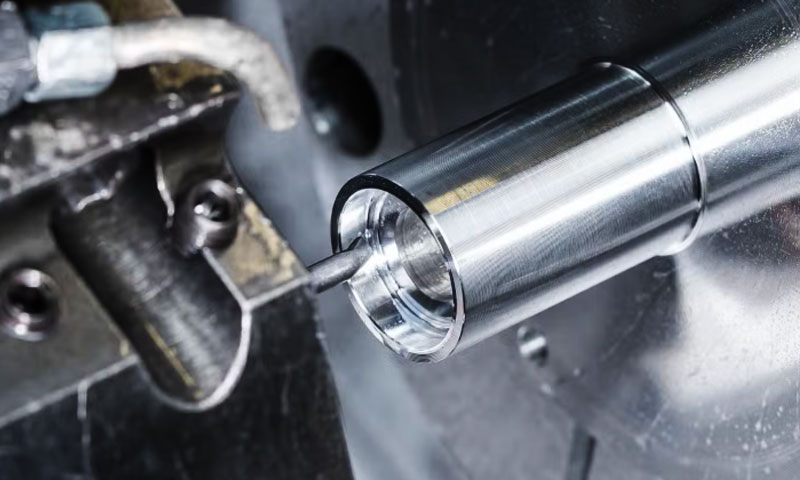
- Significant reduction in thermal distortion: Particularly effective for thin cylindrical shells, сақиналар, және үйлер.
- Improved roundness and flatness control: Temperature uniformity reduces geometry deviation caused by uneven expansion.
- Compatibility with adaptive machining: Can be integrated with sensor-driven systems that adjust cooling based on real-time temperature feedback.
7. Қорытынды
Machining thin-walled parts is a complex engineering challenge that demands a holistic understanding of mechanics, Материалдық ғылым, and process engineering.
The primary hurdles—chatter, deflection, Жылу бұрмалануы, and surface integrity issues—stem from the intrinsic low rigidity of thin-walled structures, which amplifies the impact of cutting forces and heat.
Successful thin-walled machining requires an integrated approach: optimizing cutting parameters and toolpaths, using specialized tooling and fixturing, leveraging high-rigidity machine tools, and validating processes with simulation.
Industry case studies demonstrate that these solutions can drastically reduce scrap rates, improve dimensional accuracy, and enhance productivity.
Қысқаша, thin-walled machining is not just a technical challenge—it is a critical enabler of next-generation engineering innovations, and mastering its complexities is essential for competitiveness in high-tech industries.
Сілтемелер
Machining Science and Technology. (2007). “INFLUENCE OF MATERIAL REMOVAL ON THE DYNAMIC BEHAVIOR OF THIN-WALLED STRUCTURES IN PERIPHERAL MILLING«
Zhang, L., et al. (2022). “Trochoidal Milling Optimization for Thin-Walled Aluminum Parts: A FEA-Based Approach.” Journal of Manufacturing Processes, 78, 456–468.