1. Кіріспе
Ductile iron investment casting merges the high-strength, ductile nature of nodular cast iron with the fine precision of investment (жоғалған балауыз) кастинг.
It’s an advanced manufacturing method ideal for producing dimensionally accurate and structurally demanding parts.
This technique is especially useful when intricate geometries, Қатаң төзімділіктер, and mechanical reliability are essential—such as in automotive, қорғаныш, аэроғарыш, және энергияны қосымшалар.
2. What is Ductile Iron Investment Casting?
Темірге арналған инъекция құю is a precision metal casting process that combines the superior mechanical properties of ductile iron with the high-accuracy and fine detail capability of the investment casting method (жоғалған-балауыз құю деп те аталады).
It is ideal for producing small to medium-sized, intricate parts that require both strength and dimensional precision.
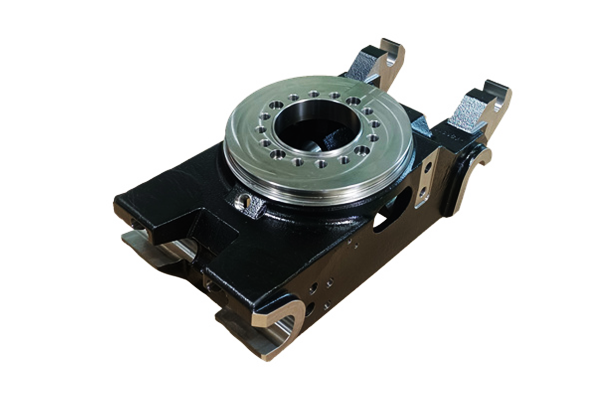
Key Definitions:
- Ішкі үтік (деп атады nodular iron немесе Sg темір) is a type of cast iron known for its Жоғары беріктігі, икемділік, және әсерге төзімділік Оған байланысты сфералық (түйіншекілік) графигі құрылым.
- Инвестициялық құю is a molding process where a wax pattern is coated with refractory ceramic material to form a mold.
After the wax is melted out, molten metal is poured into the cavity to form the part.
3. Why Use Investment Casting for Ductile Iron?
Ішкі үтік investment casting addresses a key gap in metal casting applications: traditional sand casting of ductile iron, while economical and scalable, struggles with fine geometric details, Қатаң төзімділіктер, and thin-wall sections.
These limitations make it unsuitable for precision components or parts with intricate internal structures.
Басқа жақтан, steel investment castings, though capable of achieving high dimensional accuracy, lack ductile iron’s cost-efficiency, superior machinability, and inherent vibration damping properties, which are critical in many dynamic or noise-sensitive environments.
Ductile iron investment casting thus emerges as an optimal solution for applications that demand both precision and mechanical robustness, filling a performance and economics gap between sand casting and steel precision casting.
It enables the production of complex, net-shape components that maintain the desirable traits of ductile iron—Жоғары күш-салмаққа қатынасы, икемділік, әсерге қарсы тұрақтылық, and damping capacity—while achieving near-net shape accuracy.
4. The Ductile Iron Investment Casting Process
Та Ішкі үтік Инвестициялық құю process follows the fundamental stages of traditional lost-wax casting.
But incorporates precise metallurgical controls and specialized techniques to accommodate the unique solidification behavior and graphite structure formation of ductile iron.

4.1 Үлгіні құру
- Wax Patterns: High-precision wax patterns are produced by injection molding or 3D printing, with shrinkage allowances of 0.5–2% to compensate for metal contraction during cooling.
For components with ultra-fine features—such as thin walls down to 0.5 mm or complex internal channels—stereolithography (Соса) 3D-printed patterns are often preferred, offering accuracy up to ±0.02 mm. - Үлгіні жинау: Individual wax patterns are mounted on a central wax sprue to form a tree-like structure.
A single shell (Шамдар. 10 kg capacity) may contain 5–10 parts, optimizing throughput and ceramic material usage.
4.2 Қабық ғимараты
- Slurry Coating: The assembled wax tree is repeatedly dipped into a refractory ceramic slurry composed of alumina, кремний, немесе цирконий.
For ductile iron, zirconia-based slurries are ideal due to their superior refractoriness (>2700° °), required for handling molten iron at 1300–1350°C. - Stuccoing and Drying: After each slurry dip, the wet coating is sprinkled with refractory grains (шұңғыл) such as fused silica or alumina to build shell thickness and strength.
The pattern is then dried in a humidity-controlled chamber.
Әдетте, 6–8 layers are applied, resulting in a robust 5–10 mm shell capable of withstanding the mechanical and thermal loads of iron pouring. - Аяқтау және өртеу: Wax is removed from the shell via autoclaving or flash heating (100–160°C).
Residual wax is eliminated during high-temperature firing at 800–1000°C, which also sinters the shell, increasing its flexural strength to 5–10 MPa and ensuring dimensional stability during casting.
4.3 Еріген және түйіндеу
Ductile iron’s unique metallurgy requires precise control during melting:
- Alloy Preparation: Үтік (94–96%), көміртегі (3.2-3,8%), кремний (2.0-2,8%) are melted in an induction furnace at 1400–1500°C.
- Түйіндеу: Магний (0.03-0,08%) or cerium (0.02–0.06%) is added to transform flake graphite into spherical nodules.
This step is critical—even 0.04% күкірт (a nodulizer poison) can ruin the microstructure. - Егу: Ферросиликон (0.2-0.5%) is added post-nodulization to refine nodules (5–20 nodules/mm²) and prevent chill (martensite formation).
4.4 Құю және қатайту
- Құю: Балқытылған субилдель темір (1300-1350 ° C) ыстық қабыққа құйылады (800–1000°C) Термиялық шокты азайту үшін.
The shell’s high thermal conductivity (1–2 W/m·K) accelerates cooling to 20–30°C/min—faster than sand casting (5-20 ° C / мин)—refining grain structure. - Күшейту: Graphite nodules form during cooling, with the ceramic shell restricting shrinkage (3–5% volumetric) Кеуэлектіні азайту үшін.
Risers are minimal due to investment casting’s near-net-shape design.
4.5 Бастау
- Қабыршақты кетіру: The hardened ceramic shell is removed using vibration methods, mechanical impact, or high-pressure water jetting.
- Cutting and Cleaning: Individual castings are separated from the gating system and ground to remove any residual metal at gate connections or parting lines.
- Термиялық өңдеу (Ерікті):
-
- Ақша салу: Performed at 850–900°C for up to 2 hours to soften the material for easier machining.
- Тымбитора (T6-like Treatment): Conducted at 500–550°C to enhance strength, қаттылық, and fatigue resistance in load-bearing parts.
5. Metallurgical Advantages of Investment Cast Ductile Iron
Investment casting’s controlled cooling and shell rigidity enhance ductile iron’s microstructure:
- Refined Graphite Nodules: Жылдам салқындату (20–30°C/min) produces smaller, more uniform nodules (10–20 nodules/mm² vs. 5–10 in sand casting),
increasing tensile strength by 10–15% (E.Г., 450 Mpa vs. 400 MPa for EN-GJS-400-15). - Reduced Porosity: Ceramic shells limit gas entrapment, with porosity <0.5% (қарсы және. 1–2% in sand casting), improving fatigue resistance (120–140 MPa at 10⁷ cycles vs. 100–120 MPa).
- Uniform Matrix: The shell’s even cooling minimizes segregation, resulting in a consistent ferrite/pearlite matrix—critical for parts with thin walls (1-3 мм) where sand casting might form brittle chill zones.
6. Common Grades of Ductile Iron Investment Casting
Ductile iron investment casting supports a variety of grades, each tailored for specific mechanical, жылу, or corrosion-resistant performance.
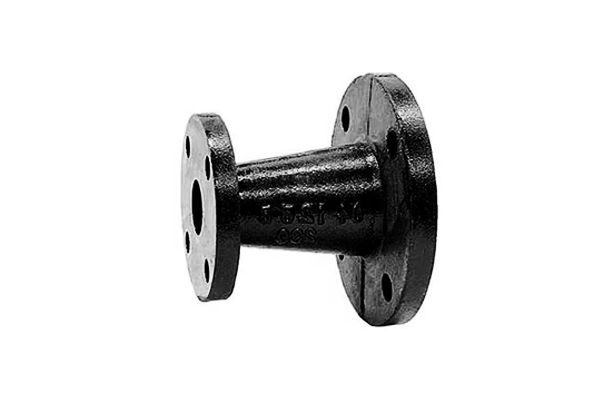
These grades are defined by international standards such as ASTM A536, Исо 1083, and EN-GJS (Еуропа), and vary primarily in созылу күші, іуу, қаттылық, жіне түйіндік.
| Дәреже | Стандарт | Созылу күші (МПа) | Бергі күш (МПа) | Іуу (%) | Типтік қосымшалар | Негізгі сипаттамалары |
| GJS-400-15 | En-gjs-400-15 | ≥ 400 | ≥ 250 | ≥ 15 | Сорғы корпустары, Клапанның денелері, жақшалар | Excellent ductility and castability |
| GJS-500-7 | EN-GJS-500-7 | ≥ 500 | ≥ 320 | ≥ 7 | Автомобильдердің тізбегі, Қолданбалы қарулар, Құбыр арматуралары | Good strength-to-ductility balance |
| GJS-600-3 | En-gjs-600-3 | ≥ 600 | ≥ 370 | ≥ 3 | Құрылымдық бөліктер, берікек, фланецтер | Жоғары күш, moderate elongation |
| ASTM A536 65-45-12 | ASTM A536 | ≥ 450 | ≥ 310 | ≥ 12 | Компрессорлық корпустар, Өнеркәсіптік техника | Common US-grade with balanced properties |
| ASTM A536 80-55-06 | ASTM A536 | ≥ 550 | ≥ 380 | ≥ 6 | Axle carriers, хабтар, шөлдер | Higher load-bearing capacity |
| ASTM A536 100-70-03 | ASTM A536 | ≥ 700 | ≥ 480 | ≥ 3 | High-load gears, heavy-duty structural parts | Жоғары беріктігі, limited ductility |
| Темірбелі үтік (Адди) | ASTM A897 / EN-GJS-800-8 | 800-1600 (Бағаға байланысты) | 500–1200+ | 1-0 | Берікек, rail components, shock-load parts | Exceptional strength and wear resistance |
| Ni-Resist Ductile Iron | ASTM A439 Type D2 | ~400–600 | ~ 200-300 | ~10–15 | Corrosion-resistant parts in marine and chemical environments | Enhanced corrosion/thermal stability |
7. Advantages of Ductile Iron Investment Casting
Ductile iron investment casting combines the mechanical benefits of nodular iron with the precision of investment casting, offering a powerful solution for advanced engineering applications.

Дәлдік & Күртекс
- Fine Features: Accurately reproduces small features such as 0.5 mm threads, 1 mm wall thickness, жіне Күрделі ішкі арналар that are virtually impossible with sand casting.
- Аймақтық өңдеу: Delivers near-net-shape components that cut post-processing by 70–90%, saving time and labor costs—especially for tight-tolerance or intricate geometries.
Материалдық тиімділік
- Жоғары өнім: Material utilization rates of 85-95% significantly outperform sand casting (60–70%), minimizing waste.
- Cost Optimization: Although upfront costs are higher, the material and machining savings make it economically viable for medium-to-high-value components.
Жақсартылған механикалық қасиеттері
- Superior Microstructure: Rapid cooling rates (20–30°C/min) in ceramic shells refine the graphite nodule distribution and grain size.
- Improved Fatigue Life: Reduced porosity and refined nodules boost fatigue resistance and mechanical integrity, extending part lifespan by 20-30% in dynamic loading environments.
Дизайн бостандығы
- Topology Optimization: Compatible with 3D-printed patterns that enable lattice structures, internal cooling channels, and hollow sections.
- Салмақты азайту: Structural optimization can reduce component weight by 30-40% while maintaining strength and stiffness—crucial for aerospace, автомобиль, және медициналық салалар.
8. Limitations and Challenges of Ductile Iron Investment Casting
Оның артықшылықтарына қарамастан, ductile iron investment casting comes with several constraints that must be carefully managed.
Жоғары бастапқы құны
- Tooling and Materials: Wax injection dies and high-grade ceramic shells (E.Г., zirconia-based) make the process 3–5× more expensive than sand casting.
- Cost Justification: Ең қолайлы high-performance or high-precision applications (E.Г., аэроғарыш, қорғаныш, медициналық) where long-term benefits outweigh initial expenses.
Көлемі шектеулері
- Қабыршақтың күші: Ceramic shells are fragile beyond a certain mass. Most investment castings are limited to <10 кг.
- Scale Constraints: Large or thick-sectioned parts (E.Г., >100 mm wall thickness) па better suited to sand or shell mold casting.
Nodulization Sensitivity
- Sulfur Entrapment: The enclosed ceramic shell retains more sulfur than sand molds, requiring melt sulfur levels to be <0.02% (stricter than <0.03% Құмның құюында).
- Microstructure Risk: Poor sulfur control degrades nodularity, leading to brittle or flake-like graphite—compromising ductility and fatigue life.
Ұзақ уақытқа созылған уақыт
- Технологиялық күрделілігі: The investment casting cycle—including wax pattern production, multi-layer shell building, жіне de-waxing—can take 2-4 апта.
- Slower Iteration: Өте ыңғайлы емес Жедел прототиптеу or short lead-time projects, unless combined with additive manufacturing (E.Г., 3D-printed molds or patterns).
9. Common Applications of Ductile Iron Investment Casting

Индустриялық & Механикалық компоненттер
- Дәлдік Редукторлар жіне Білімдер
- High-load жақшалар жіне mounting flanges
- Гидравликалық сорғы компоненттері жіне Клапанның денелері
- Compressor impellers жіне роторлар
Аэроғарыш
- Құрылымдық жақшалар with weight-reducing lattices
- Landing gear linkages жіне actuator arms
- Missile fin mounts жіне turret housings
- High fatigue-resistance sensor enclosures
Автомобиль & Тасымал
- Жайғақ Қолданбалы қарулар жіне Бақылау қарулары
- Differential carriers жіне тізелер
- Жоғары дәлдік Манифольдтар жіне turbocharger components
- Әдет-ғұрып electric vehicle brackets and mounts
Медициналық жабдықтар
- Биомаққа сәйкес келеді orthopedic supports жіне prosthetic frames
- MRI-compatible non-ferrous housings
- Орнықты wheelchair joints жіне байланыстар
Құралдар & Машиналар
- Дәлдік джигс, Арматура, жіне machine tool frames
- Тозуға төзімді die holders жіне clamping arms
- High-durability robotic fingers жіне grippers
Құрылыс & Сәулет
- Жоғары беріктігі load anchors, hinge arms, жіне қонтқыштар
- Эстетикалық decorative structural elements with complex detail
- Facade support frames with reduced weight
10. Comparison with Sand Casting and Other Methods
| Аспект | Инвестициялық құю (Ішкі үтік) | Құмның құюы | Жоғалған көбік құю | Центрифугалық құю |
| Өлшемді дәлдік | Үздік (± 0,2-0,5 мм); Желіге жақын | Байсалды (±1.0–2.0 mm); көбірек өңдеуді қажет етеді | Жақсы (± 0,5-1.0 мм); құмды құюға қарағанда жақсы | High in cylindrical parts (±0.3–0.7 mm) |
| Бетті аяқтау | Ең жақсы (RA 1.6-3.2 мкм) | Рухан (Ra 6,3-25 мкм); post-processing needed | Көрме (RA 3,2-12.5 мкм) | Өте жақсы (RA 1,6-6.3 мкм) |
| Күрделі геометрия | Үздік; supports undercuts, Жіңішке қабырғалар (0.5–1 mm), internal features | Шектеу шектеулі; not suitable for intricate details | Жақсы; allows moderate complexity | Жарлы; best for simple, symmetric geometries |
| Материалдық кәдеге жарату | Биік (85-95%) | Түсіру (60–75%) | Байсалды (70–85%) | Орташа жоғары; depends on riser design |
| Механикалық қасиеттері | Enhanced due to finer grain and low porosity | Жақсы, but lower than investment casting | Құмды құюмен салыстыруға болады | Excellent directional strength |
| Құны (per unit) | High for low volume; economical for precision high-value parts | Аласа; ideal for large, low-cost production | Амал; tooling is less expensive than investment | Орташа; setup cost depends on mold |
| Құралдардың құны | Биік (wax die + shell material) | Аласа (wood/metal pattern) | Төменнен орташа | Амал (rotating mold system required) |
| Тоқтау | Ұзын (2–4 weeks for tooling & shell building) | Қысқа (1–2 weeks) | Short to medium | Амал |
| Бөлшектердің өлшем мүмкіндігі | Кішкентай орта (әдетте <50 кг) | Small to very large (бірнеше тоннаға дейін) | Орташа | Limited to cylindrical parts (<500 mm Ø typically) |
| Қолданылатын қосымшалар | Аэроғарыш, медициналық, automotive precision parts | Қозғалтқыш блоктары, Машиналар базалары, Манхол қақпағы | Complex castings like engine heads, Сорғы корпустары | Құбырлар, бұталар, жеңдер, сақиналар |
11. Quality Assurance and Inspection Standards
To meet demanding performance and regulatory needs, typical inspections include:
- NDT: Рентген, Ультрадыбыстық, бояудың енуіне сынау
- Механикалық сынақ: Созық, қаттылық, іуу
- Microstructure analysis: Graphite nodularity and matrix phase
- Өлшемді тексеру: См (Координаталық өлшеу машинасы)
- Standards followed: ASTM A536, Исо 1083, -Да 1563
12. Қорытынды
Ductile iron investment casting is a precise, high-integrity manufacturing method for demanding applications requiring strength, күртекс, және өлшемді бақылау.
While it comes with higher upfront costs, it significantly reduces machining, жиналыс, and quality control overhead—especially for parts requiring tight tolerances and excellent performance.
As industries demand lighter, күшті, and more complex components, ductile iron investment casting continues to gain traction in critical sectors worldwide.
Бұл антилондық темір құю бойынша қызметтер ұсынады
-Та Осы, Біз жоғары сапалы киюге арналған темір құймаларын, құю технологияларының жетілдірілген технологияларының толық спектрін қолдана отырып, мамандандырамыз.
Сіздің жобаңыз икемділікті талап ете ме Жасыл құмды құю, дәлдік қабық немесе Инвестициялық құю,
Күш пен дәйектілік металл көлі (тұрақты көгеру) кастинг, немесе тығыздық пен тазалық центрифугал жіне Жоғалған көбік құю,
Осы Инженерлік сараптама және өндірістік қуаттылығы сіздің нақты сипаттамаларыңызға сәйкес келеді.
Біздің мекеме прототиптің дамуынан барлық нәрсені жоғары көлемді өндіріске дейін шешуге арналған, қатаң қолдау көрсетеді Сапаны бақылау, материалдық бақылау, жіне Металлургиялық талдау.
-Ден Автомобиль және энергетикалық секторлар қарай Инфрақұрылым және ауыр машиналар, Осы Металлургиялық шеберлікті біріктіретін арнайы кастинг шешімдерін береді, өлшемді дәлдік, және ұзақ мерзімді қойылым.
Бізбен хабарласыңы, Жедел баға ұсыныстарын алыңыз>>
ЖҚС
Is ductile iron investment casting suitable for large components?
Typically no. Investment casting excels at producing small to medium-sized parts with intricate shapes. For large components, sand casting is more economical.
How does ductile iron compare to steel in investment casting?
Ішкі үтік offers better vibration damping and castability, while steel provides superior tensile strength and wear resistance. The choice depends on the application’s load and durability needs.
What tolerances can be achieved with investment casting ductile iron?
Dimensional tolerances of ±0.1–0.3 mm are typical, бөліктің күрделілігіне және өлшеміне байланысты.
Can ductile iron investment castings be welded?
Welding is possible but may require preheating and post-weld heat treatment to avoid cracking and maintain microstructure integrity.
Is investment casting cost-effective for low-volume production?
It depends. For low-volume precision parts with complex geometry, investment casting can eliminate expensive machining and multi-part assemblies, offsetting the higher tooling cost.