
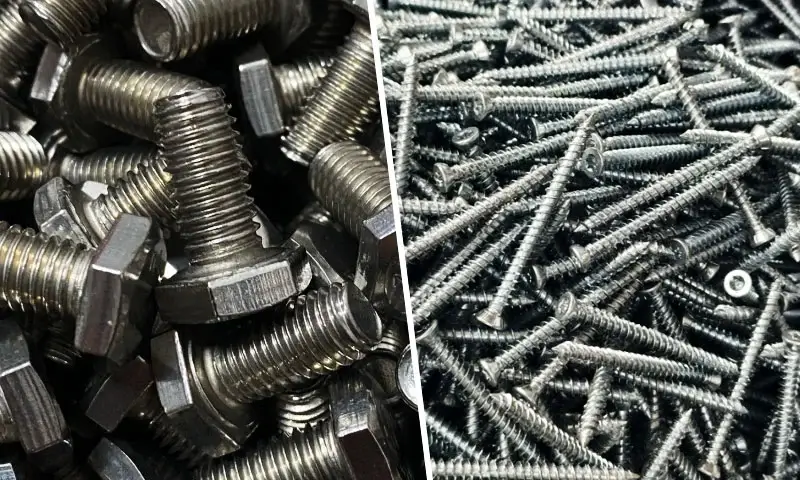
Bolts and screws are two of the most widely used mechanical fasteners in manufacturing, құрылыс, automotive engineering, машиналар, және күнделікті өнімдер.
Although they may look similar, they can differ in how they engage with mating components, how clamping force is generated, how they are installed, and which applications they are best suited for.
The terminology also varies among industries, regions, and technical standards.
, Сорт, selecting a fastener based only on its commercial name can lead to incorrect assumptions about its strength, орнату талаптары, or suitability for a particular joint.
This guide explains the differences between bolts and screws from the perspectives of geometry, fastening mechanics, материалдар, Өндіріс, арнату, және қолдану.
1. Why the Confusion Exists
The terms boltand screware often used interchangeably in everyday language.
A threaded fastener with a hexagonal head may be sold as a bolt in one catalog and described as a screw in another.
The distinction becomes even less obvious when both fasteners have similar heads, thread forms, материалдар, және өлшемдер.
Three factors contribute to this confusion.
Common usage differs from engineering terminology. In everyday conversation, people may call almost any threaded fastener a screw.
Инженерлікте, дегенмен, the terms can describe different fastening arrangements and installation methods.
Standards do not always use the terms identically. Fastener standards specify dimensions, thread forms, Механикалық қасиеттері, төзімділік, and product requirements.
Depending on the applicable standard and product category, a fastener with a particular head and thread configuration may be designated a bolt or a screw.
Appearance alone is not decisive. Hex-head bolts, hex-head screws, socket-head cap screws, and machine screws can share similar external features.
The presence of a pointed tip is also not a universal criterion: many machine screws have flat or blunt ends, while some bolts have specialized end configurations.
For practical selection, it is more useful to examine how the fastener engages the joint, how the load is transferred, and how it is installedthan to rely exclusively on its name.
2. What Is a Bolt?
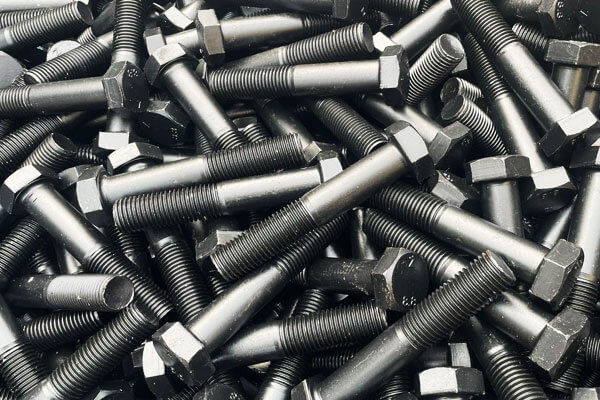
A boltis a threaded fastener commonly designed to pass through aligned holes in two or more components and be secured with a compatible nut.
Tightening the nut, or the bolt head where appropriate, creates tension in the fastener and clamps the components together.
A typical bolt has a head, a shank, and a threaded section. The shank may be partially or fully threaded, depending on the design and application.
Bolts are widely used in structural steelwork, машиналар, автомобиль жинақтары, қысымды жабдық, and other applications where a joint must withstand tensile loads, shear loads, діріл, or repeated service.
How Bolts Work
In a conventional bolted joint, tightening the fastener stretches the bolt slightly, generating preload, also called clamping force.
This preload presses the joined components together and helps prevent separation or relative movement.
The joint’s performance depends on more than bolt strength. It is influenced by the bolt diameter, thread pitch, Материалдық деңгей, tightening method, joint stiffness, Беттің жағдайы, and friction beneath the head and nut.
When properly designed, a bolted joint can be disassembled for maintenance without destroying the fastener or the joined components.
Дегенмен, repeated use, коррозия, thread damage, or excessive tightening can reduce reliability.
Common Types of Bolts
| Bolt Type | Түсіндірме | Типтік қосымша |
| Hex bolt | Hexagonal head, partially threaded shank, used with a hex nut | Құрылымдық болат, машиналар, general assembly |
| Heavy hex bolt | Larger head and nut across flats than standard hex | Structural steel connections (A325, A490) |
| Carriage bolt | Round or dome head with a square neck under the head | Wood-to-wood, wood-to-metal; neck prevents rotation |
| Lag bolt | Hex or square head, coarse threads, pointed tip | Wood construction; technically a screw, but commonly called a bolt |
| Plow bolt | Countersunk flat head with a square neck | Plows, Ауылшаруашылық техникалары; flush surface |
Stove bolt |
Slotted or Phillips round head, machine threads | Light-duty assembly; historically used on stoves |
| Eye bolt | Ring-shaped head | Lifting, tie-down, тозу |
| Anchor bolt | Designed to embed in concrete | Structural connections to foundations |
| U-bolt | U-shaped with threaded ends | Pipe clamping, axle mounting |
| Flange bolt | Hex head with integrated flange (washer-like base) | Автомобиль, машиналар; distributes load |
| Structural bolt | Heavy hex, Жоғары беріктігі, specified for structural steel | Көпірлер, Ғимараттар, Мұнаралар (ASTM A325, A490, F3125) |
3. What Is a Screw?
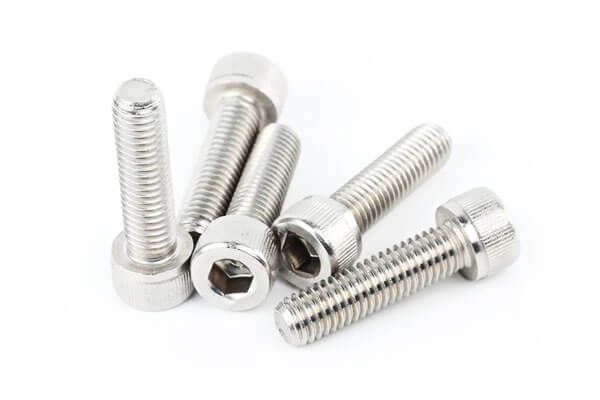
A screwis a threaded fastener designed to engage a mating thread or, in some applications, create its own thread in the material being fastened.
It commonly has a head with a drive feature, such as a slot, Phillips recess, Torx socket, hex socket, or external hexagon.
Unlike a conventional bolt-and-nut arrangement, many screws are installed directly into a tapped hole, a threaded insert, орман, пластмасса, or sheet metal.
Screws are used in products ranging from electronic enclosures and consumer appliances to industrial machinery, precision instruments, жиһаз, and building components.
How Screws Work
Screws transfer load through a combination of:
- Жіберуді тарту: The threads mate with the material or internal thread, resisting pull-out.
- Clamping force: Similar to bolts, screws create clamping force when tightened, though the mechanics differ because the screw engages the material directly.
- Head bearing: The screw head bears against the surface of the joined part, distributing load.
Screw performance depends on:
- Thread engagement length: Әдетте, engagement equal to the screw diameter provides adequate strength in steel; softer materials require more.
- Pilot hole size: Critical for self-tapping and thread-forming screws.
- Драйвер түрі: Филлипс, ойық, Токс, hex socket, шаршы, т.б.
- Материалдық үйлесімділік: Screw material must be compatible with the joined material to avoid galvanic corrosion or stripping.
Common Types of Screws
| Screw Type | Түсіндірме | Типтік қосымша |
| Machine screw | Machine threads, various heads, used with a nut or in a tapped hole | Машиналар, электроника, Құрылғылар |
| Cap screw | Socket head (hex socket), machine threads | Машиналар, Құралдар, автомобиль |
| Self-tapping screw | Forms or cuts its own thread in the material | Металл, пластмассалар, орман |
| Self-drilling screw | Drill point; drills and taps in one operation | Металл, metal framing |
| Wood screw | Coarse threads, tapered shank, pointed tip | Ағаш өңдеу, жиһаз |
Drywall screw |
Fine threads, bugle head, sharp point | Drywall installation |
| Sheet metal screw | Sharp point, fine or coarse threads | Sheet metal assembly |
| Set screw | Headless; used to secure a component on a shaft | Collars, шөлдер, Тұтқалар |
| Thumb screw | Knurled or winged head for hand tightening | Түзетулер, access panels |
| Shoulder screw | Cylindrical shoulder for pivot or sliding applications | Linkages, ілгектер, бұрылыстар |
| Eye screw | Ring-shaped head | Hanging, tie-down |
| Concrete screw | Қатырылған, high-low threads for concrete | Anchoring to concrete |
| Lag screw | Hex or square head, coarse threads, pointed | Heavy wood connections |
4. Mechanical and Geometric Differences
Bolts and screws can share similar thread forms and head designs, but they often differ in shank geometry, thread engagement, installation methods, and load transfer.
Geometric Differences
Bolts commonly feature a defined unthreaded shank and a partially threaded section, while many screws are fully threaded.
The actual geometry depends on the fastener type, nominal diameter, ұзындығы, және қолданылатын стандарт.
| Белгі | Болттар | Бұрандалар |
| Қою | Often includes an unthreaded section to support alignment and transfer shear loads | May be fully or partially threaded, Дизайнға байланысты |
| Жіп ұзындығы | Frequently partial-threaded in structural and general-purpose applications | Often fully threaded in smaller machine screws; varies by type |
| Head жобалау | Commonly hex, heavy hex, фланец, or carriage heads | Includes socket, Филлипс, Токс, ойық, pan, and countersunk heads |
Drive method |
Typically tightened with a wrench or socket | Typically driven with a screwdriver, hex key, Torx bit, or socket |
| Жіп форма | Commonly metric coarse/fine or Unified threads, such as UNC and UNF | May use standard machine threads, self-tapping threads, or specialized wood-screw threads |
| Ұпай жобалау | Usually flat or chamfered | May be flat, pointed, or equipped with a drill point |
| Өкіл стандарттар | ASME B18.2.1, ASME B18.2.3, ASTM F3125 | ASME B18.6.3, Исо 7045, Исо 4762 |
Nominal size ranges overlap substantially, so diameter alone cannot reliably distinguish a bolt from a screw.
The applicable product standard and intended joint configuration provide more useful criteria.
Thread Form and Engagement
Bolts and screws may use the same standardized thread forms, including metric coarse, metric fine, UN, және UNF. The key difference is often how the threads engage with the joint.
Bolts typically pass through clearance holes, with the threads engaging a nut or a tapped component.
The unthreaded shank, when present, can help locate the joint and carry transverse loads. Screws may engage pre-tapped holes, бұрандалы кірістер, or the material itself.
Self-tapping and wood screws use thread geometries designed to form or cut threads in specific substrates.
Coarse threads generally provide faster assembly and better tolerance of minor contamination or damage, while fine threads offer a smaller pitch and finer adjustment of axial position.
Neither is universally stronger or more resistant to vibration; performance depends on fastener dimensions, материал күші, engagement length, және бірлескен дизайн.
Mechanical Behavior
The primary mechanical difference lies in the joint’s load path and the control of clamping force.
| Фактор | Болттар | Бұрандалар |
| Тиеу transfer | Commonly develop tension in the bolt and compression across the clamped joint | Transfer load through the screw and its engagement with a nut, tapped hole, insert, or substrate |
| Preload басқару | Often established through a specified torque or tensioning method; friction strongly affects the result | Also depends on torque and friction, with greater variability possible when threads engage directly with softer materials |
| Ерекше сәтсіздік modes | Tensile fracture, Шаршау жеткіліксіздігі, thread stripping, or joint separation | Screw fracture, drive recess damage, head failure, or stripping of the engaged material |
Шаршау өнімділігі |
Can be predicted using established fastener and joint-design methods | Depends on fastener geometry, thread engagement, substrate properties, және циклдік жүктеме |
| Діріл қарсыласу | May require locking nuts, Жіп бекітпелі қосылыстар, or other validated retention methods | May require similar retention measures, particularly where the substrate or threaded engagement can loosen or degrade |
5. Bolts vs Screws: Core Differences Explained
The practical differences between bolts and screws become clearer when their fastening arrangements, installation methods, and typical applications are compared directly.
| Салыстыру факторы | Болттар | Бұрандалар |
| Typical fastening arrangement | Commonly passes through clearance holes and is secured with a nut | Commonly engages a tapped hole, insert, or material directly |
| Mating component | Often a nut, though some bolts engage threaded holes | Often an internally threaded component or the substrate itself |
| Thread configuration | May be partially or fully threaded | May be fully or partially threaded, Дизайнға байланысты |
| Installation tools | Wrench, socket, torque wrench, or specialized tooling | Screwdriver, hex key, socket, or powered driver |
| Clamping force | Commonly generated by tightening the bolt-and-nut assembly | Commonly generated by tightening the screw into its mating thread |
Disassembly |
Usually straightforward if the nut and threads remain accessible and undamaged | Depends on thread engagement, substrate condition, and screw design |
| Typical failure risks | Tensile fracture, қажу, thread stripping, loosening, or joint slip | Drive recess stripping, thread stripping, pull-out, қажу, or loosening |
| Common applications | Structural joints, Машина кадрлары, фланецтер, автомобиль жинақтары | Қоршау, electronic products, жиһаз, машиналар, and sheet-metal assemblies |
| Design considerations | Bolt strength, nut compatibility, preload, grip length, and joint stiffness | Жіберуді тарту, субстраттың беріктігі, drive design, installation torque, and pull-out resistance |
One important qualification is that these are typical practices, not absolute rules. A fastener called a bolt may be installed into a tapped hole, while a screw may be used with a nut.
The applicable standard, product design, and fastening arrangement determine the more precise classification.
Which Provides a Stronger Connection?
Neither bolts nor screws are inherently stronger in every application. Joint strength depends on the fastener’s dimensions, Материалдық деңгей, thread geometry, engagement length, installation preload, and the strength of the connected materials.
A properly designed high-strength bolt can provide substantial clamping force in a structural joint.
A properly sized socket-head screw can also provide high clamping force in a compact machine assembly.
Кез келген жағдайда, the joint may fail before the fastener itself if the threads strip, the substrate deforms, or the connected parts cannot withstand the applied load.
6. Materials and Coatings for Bolts and Screws
The material and surface treatment of a bolt or screw determine its tensile strength, Коррозияға төзімділік, кию тәртібі, and suitability for specific operating conditions.
Selection should consider mechanical loads, Экологиялық әсер, температура, and compatibility with the materials being joined.
Base Materials
The appropriate choice depends on the required strength, Коррозияға төзімділік, салмақ, және қызмет көрсету ортасы.
| Материал | Типтік бағалар |
| Төмен көміртекті болат | SAE Grade 2, ISO property class 4.6 |
| Орташа көміртекті болат | SAE Grade 5, Исо 8.8 |
| Легірленген болат | SAE Grade 8, Исо 10.9, 12.9 |
| Тот баспайтын болат 304 | A2, 304 |
| Тот баспайтын болат 316 | А4, 316 |
| Мартенситті тот баспайтын болат | 410 |
| Тұндырғышпен қатайтатын баспайтын болат | 17-4 Р |
| Жез және қола | C360, C464, кремний қола |
| Титан | Дәреже 2, Дәреже 5 (TI-6AL-4V) |
| Алюминий қорытпалары | 2024, 6061, 7075 |
| Никель қорытпалары | Моник, Жұқпалы |
Қамту және беттік емдеу
Coatings improve corrosion resistance, үйкелісті азайтыңыз, or provide specific surface properties.
| Coating or Treatment | Негізгі артықшылықтар | Common Applications and Considerations |
| Электроплицент мырыш | Экономикалық, moderate corrosion protection | General-purpose fasteners; may require additional passivation or sealing |
| Hot-dip мырыштау | Семіз, durable zinc coating | Outdoor structures and construction; coating thickness depends on the applicable specification and fastener size |
| Zinc-nickel | Enhanced corrosion protection | Automotive and demanding industrial applications |
| Zinc-flake жабу | Strong corrosion protection with low risk of hydrogen embrittlement during coating application | Automotive and high-strength fasteners |
| Cadmium желник | Corrosion protection and useful lubricity | Restricted in many applications because of toxicity; used in certain legacy aerospace specifications |
Phosphate coating |
Provides a base for oil, бояу, or other treatments | Industrial fasteners and components requiring controlled friction |
| Қара оттер | Appearance and limited corrosion protection when oiled | Tooling and indoor applications |
| PTFE-based жабу | Төмен үйкеліс және химиялық төзімділік | Applications requiring controlled friction or chemical compatibility |
| Кылдан жабу | Low friction and corrosion protection | Industrial and chemical-service fasteners |
| Күміс желник | Electrical conductivity and anti-galling properties in suitable applications | Specialized electrical and aerospace assemblies |
| Тотсыз болат ауысу | Removes free iron and promotes the protective passive surface | Stainless steel fasteners exposed to corrosive environments |
7. Installation and Tooling
- Access Requirements: Bolts require access to both sides of the joint (one side for the bolt head, the other for the nut).
Screws require access only from the installation side since they mate with internal housing threads. - Torque and Preload: Bolts are routinely tightened using calibrated torque wrenches, hydraulic tensioners, or turn-of-nut methods to achieve precise clamping preload.
Screws are typically driven using standard screwdrivers, Allen keys, or pneumatic torque drivers. - Қытық ету: Bolted joints can be disassembled and reassembled repeatedly without damaging the parent material.
Screwed joints in soft metals or plastics risk stripping the internal tapped threads over multiple maintenance cycles.
8. Manufacturing Processes of Bolts and Screws
Bolts and screws share many manufacturing processes. Their production routes depend on material, Өлшемдер, thread design, қажетті күш, шыдам, Бетті аяқтау, Өндіріс көлемі.
Cold Heading and Hot Forging
Cold heading forms a fastener head by plastically deforming wire or rod at or near room temperature.
It is widely used for high-volume production because it offers good material utilization, қайталану, және өндіріс тиімділігі.
Hot forging is used when larger dimensions or materials require elevated-temperature forming.
Depending on the design, forging can produce fastener heads and other features that would be difficult to form economically through cold heading.
Thread Rolling and Thread Cutting
Thread rolling forms threads by pressing the fastener blank between dies. It is commonly used for mass-produced bolts and screws and can produce consistent thread geometry without removing material from the thread profile.
Thread cutting removes material with a cutting tool to create the required thread. It is useful for certain specialized designs, Көлемі аз өндіріс, large fasteners, and applications where the geometry or material makes rolling less suitable.
The choice between rolling and cutting depends on material properties, thread specifications, required production rate, және құрамдас дизайн.
Термиялық өңдеу
Heat treatment is used when the specified mechanical properties cannot be achieved through forming alone.
Depending on the steel grade and fastener property class, processes may include quenching and tempering or other controlled thermal treatments.
The purpose is to achieve the required combination of strength, қаттылық, and toughness while controlling the risk of excessive brittleness, бұрмалау, және басқа ақаулар.
Not all fasteners require the same heat treatment. Requirements should follow the applicable material specification and mechanical-property standard.
Surface Finishing and Quality Inspection
Surface treatments may be applied to improve corrosion resistance, үйкелісті азайтыңыз, or meet appearance requirements.
Depending on the coating, additional controls may be needed to manage dimensional changes, hydrogen-embrittlement risk, or friction variability.
Quality inspection can include checks of:
- Диаметр, ұзындығы, head dimensions, and thread geometry
- Mechanical properties and hardness
- Coating thickness and corrosion performance
- Surface defects and material traceability
- Dimensional conformity to the applicable product standard
Standards such as ISO 898-1 for the mechanical properties of specified carbon-steel and alloy-steel bolts, бұрандалар, және арбалар, және ИСО 3506 for corrosion-resistant stainless steel fasteners, provide relevant frameworks for many applications.
The exact standard depends on the fastener type and specification.
9. Қолданбалар: Where Bolts and Screws Are Used
The choice between bolts and screws depends on the assembly design, service loads, installation access, Техникалық қызмет көрсету талаптары, and receiving material.
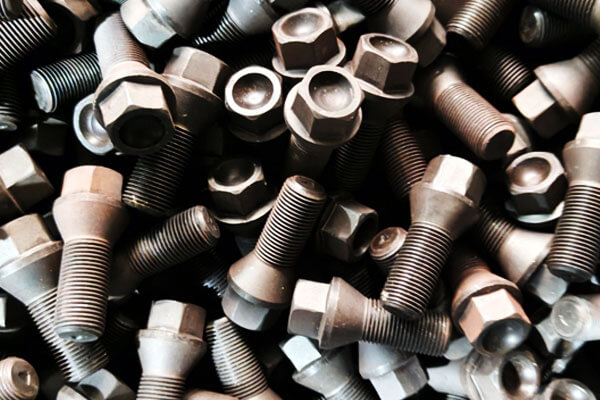
Болттар are widely used in structural steel connections, bridge and building assemblies, Автомобиль шассиі, Машина кадрлары, Құбырлар фланецтері, және ауыр жабдықтар.
These applications often benefit from controlled clamping force, accessible nuts, and fasteners designed for defined tensile or shear loads.
Бұрандалар are common in electrical enclosures, Электрондық құрылғылар, жиһаз, Құрылғылар, sheet-metal products, machine covers, and precision equipment.
They are particularly convenient when the design includes tapped holes or when a fastener must be installed from one side.
Some applications use both. Мысалы, an industrial machine may use high-strength bolts to connect its structural frame, socket-head screws to secure precision components, and self-tapping screws for selected covers or panels.
The correct choice should be based on the requirements of the joint—not simply on which fastener is easier to install.
10. How to Choose Between Bolts and Screws
Selecting the right fastener requires evaluating the entire joint, including the connected materials, жүктеу шарттары, installation access, және техникалық қызмет көрсету талаптары.
Адымдау 1: Determine the Joint Configuration
If the components have clearance holes and can accommodate a nut, a bolt-and-nut arrangement may be appropriate.
If the assembly includes tapped holes or threaded inserts, screws may provide a simpler solution.
For thin sheet metal, пластмассалар, or wood, specialized self-tapping or thread-forming screws may be more suitable than conventional bolts, provided the substrate can sustain the required loads.
Адымдау 2: Evaluate the Loads
Consider whether the joint will experience tensile loading, шаш күзеу, діріл, әсер, or cyclic fatigue.
For critical structural or mechanical joints, calculate the required fastener size, күш, and preload rather than selecting a fastener by diameter alone.
Адымдау 3: Check Material Compatibility
Select a fastener material that is compatible with both the connected components and the operating environment.
Коррозия, galvanic interaction, температура, and chemical exposure can affect long-term reliability.
Адымдау 4: Consider Installation and Maintenance
Evaluate whether both sides of the joint are accessible, whether specialized tooling is required, and how frequently the assembly will need to be disassembled.
Fasteners should also be selected to minimize the risk of drive damage, thread stripping, and loosening.
Адымдау 5: Verify the Specification
Confirm the required diameter, thread pitch, ұзындығы, head style, property class or grade, жабу, және қолданылатын стандарт.
For safety-critical applications, follow the engineering drawings, relevant standards, and approved assembly procedures.
11. Common Mistakes When Selecting Fasteners
Several common errors can compromise joint reliability, even when the selected bolt or screw appears suitable.
- Choosing by appearance alone: Similar-looking fasteners may have different thread specifications, Механикалық қасиеттері, or intended uses.
- Ignoring thread engagement: A screw installed in a weak or insufficiently threaded substrate may pull out before the fastener reaches its rated capacity.
- Using the wrong strength grade: A fastener that is too weak may fail under load, while an unnecessarily high-strength fastener may increase cost or introduce other design considerations.
- Шамадан тыс қысқарту: Excessive torque can stretch or fracture the fastener, damage threads, or deform the joined components.
- Ignoring corrosion and galling: The wrong material or surface treatment can cause seizure, accelerated corrosion, or difficult maintenance.
- Mixing incompatible specifications: Thread pitch, диаметр, property class, and nut compatibility must be verified rather than assumed.
- Reusing damaged fasteners: Deformed threads, damaged drive recesses, коррозия, or prior overload may make reuse unsafe or unreliable.
- Neglecting the joint design: Fastener selection alone cannot compensate for inadequate edge distance, weak substrate material, insufficient bearing area, or poor load distribution.
The most reliable fastening solution considers the fastener, mating materials, буын геометриясы, installation method, and operating environment as one integrated system.
12. Қорытынды
Bolts and screws perform similar fastening functions, but they are commonly used in different joint configurations.
Bolts typically pass through clearance holes and work with nuts, while screws often engage tapped holes, кірістер, or the material being fastened directly.
These distinctions influence installation, қысу күші, қолдау, және бірлескен дизайн, although the terminology can vary by standard and application.
Neither type is universally stronger or more reliable. Performance depends on material, Өлшемдер, thread engagement, preload, буын геометриясы, және қызмет көрсету шарттары.
Manufacturing processes—including cold heading, соғу, thread rolling, Термиялық өңдеу, and surface finishing—also determine whether a fastener meets its specified requirements.
Инженерлер үшін, Өндірушілер, and purchasing teams, the best approach is to select fasteners according to load requirements, Материалдық үйлесімділік, installation access, коррозияға ұшырау, және қолданыстағы стандарттар.
Understanding these factors leads to safer assemblies, more reliable performance, and lower maintenance costs.
ЖҚС
What is the main difference between a bolt and a screw?
A bolt typically passes through clearance holes and is secured with a nut, while a screw commonly engages a tapped hole, threaded insert, or the receiving material directly.
Дегенмен, terminology varies by product standard and application.
Are bolts stronger than screws?
Міндетті емес. Strength depends on the material, диаметр, thread geometry, mechanical-property grade, және бірлескен дизайн.
A high-strength screw can outperform a lower-grade bolt, while the strength of either joint may be limited by the mating material or thread engagement.
Can a bolt be used without a nut?
Иә. Some bolts are designed to engage a tapped hole directly. Whether this arrangement is appropriate depends on the fastener specification, thread engagement, тиеу, және өтінімге қойылатын талаптар.
Can a screw be used with a nut?
Иә. Some screws, including certain machine screws, can be installed through clearance holes and secured with nuts. The product designation does not always determine the fastening arrangement.
What is the difference between a bolt and a machine screw?
A bolt is commonly associated with a joint secured by a nut, whereas a machine screw generally has machine threads designed to engage a tapped hole or a nut.
Both can have similar head styles and thread forms, so the applicable product standard is important.
What is the difference between a bolt and a stud?
A bolt typically has a head and a threaded shank, while a stud is generally a headless fastener with threads at one or both ends, or along much of its length.
Studs are often used where repeated assembly, туралау, or flange connections are important.

