1. Талдамалы жазбахат
Алюминий өлу cost is multi-dimensional.
Өндірілген бірліктің бағасы капиталдың бір реттік амортизациясының сомасы болып табылады, recurring direct production costs, қосалқы операциялар, scrap and quality overhead, and general overheads allocated across the production volume.
Design choices, die complexity and required surface/functional specifications drive tooling and secondary operation cost disproportionately.
Economies of scale are strong: tooling amortization dominates small-run cost, while variable costs dominate at high volume.
Effective cost control therefore requires simultaneous attention to design for manufacture (DFM), Процесс мүмкіндігі, scrap/yield control and supplier/region selection.
2. High-level cost model (per-part accounting)
A clear per-part cost decomposition helps prioritize improvements. A commonly used model:
Unit cost=A+B+C+D+E+F
Қайда:
- A = die & fixture capital amortized over expected useful shots or parts (die life × cavities).
- B = alloy weight × recovery factor × alloy price + charge for fluxes/filters.
- C = machine runtime cost (depreciation on press, operator time, еркелу, filtering, ату, т.б.).
- D = trim, өңдеу, Жылуды емдеу, жабу, сынау, жиналыс.
- E = cost of scrap, rework, тексеру, warranty reserve.
- F = plant overhead, логистика, энергия, environmental compliance, sales/admin.
This decomposition supports sensitivity analysis and identifies where design or process changes yield the largest savings.
3. Die Costs — a significant upfront investment with long-term consequences
Tooling for алюминий die casting represents one of the largest up-front capital items in the process and materially shapes the part’s unit economics over its lifetime.
Although the fraction varies by program, die cost typically contributes 10-25% of the total cost allocated across the die’s life.
Because tooling is amortized across all parts produced (and because die life and maintenance determine how many parts that will be), understanding the technical drivers of die cost is essential when optimizing total cost of ownership (ТШО).
Design complexity — the single biggest cost multiplier
Design choices determine most of the incremental tooling expense.
- Number of cavities. Multi-cavity dies reduce per-part fixed cost by producing multiple components per shot, but they are disproportionately more expensive to produce and balance.
A multi-cavity tool is not N times the price of a single-cavity tool: мысалы,
a four-cavity die can cost roughly 2.5-3 × the price of the comparable single-cavity die because of precision alignment, more elaborate gating, and heavier, more complex steelwork. - Асты сызбалар, internal features and side actions. Any feature that cannot be formed by simple two-plate action — undercuts, ішкі бастықтар, күрделі қабырғалар, or through-holes — usually requires slides, көтергіштер, collapsible cores or insert mechanisms.
Adding sliding cores, lifters or hydraulic actions typically increases die cost substantially;
on some parts additional moving components alone can add 30-50% to die price and appreciably increase complexity in manufacture and try-out. - Tolerance and surface finish requirements. Tight dimensional tolerances and high cosmetic finishes drive the need for specialized machining, finer EDM work, surface polishing and rigorous inspection during tool manufacture.
Tolerance bands that move from typical die-casting tolerances (E.Г., ± 0,2-0,5 мм) to precision ranges (±0.01–0.05 mm) increase both machining time and QA effort, raising the die price and extending lead time. - Thermal and gating design. Конформды салқындату, multiple venting paths and balanced gating for multi-cavity tools add design and machining steps.
Conformal or embedded cooling channels (Егер пайдаланылса) further increase complexity and cost.
Designers should therefore evaluate whether geometry can be simplified, combined, or rethought (DFM) to avoid features that force complex slide or core systems.
Die material and manufacturing processes
Material selection and machining operations directly affect die price and expected life.
- Tool steel choice.
-
- H13 is the industry workhorse for aluminum dies — it offers an effective balance of toughness, hot-work resistance and thermal fatigue performance.
H13 dies are more expensive in material and processing than lower-grade steels but typically provide the best life for aluminum casting under standard HPDC conditions.
Typical service life ranges from 100,000 қарай 500,000 циклдар depending on part complexity and process control. - P20 and similar steels are lower-cost alternatives used for lower-volume or prototype dies (useful life often in the 50k–100k cycle range) but they have lower thermal fatigue resistance and wear life.
- Special hot-work steels сияқты H11/H12 or other high-performance alloys are used where extreme thermal fatigue resistance or specific toughness is required;
these steels increase die cost but can extend life in demanding applications.
- H13 is the industry workhorse for aluminum dies — it offers an effective balance of toughness, hot-work resistance and thermal fatigue performance.
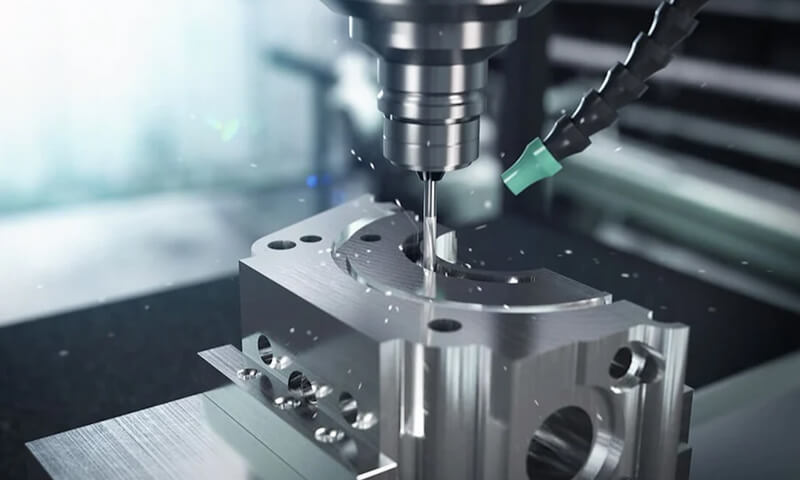
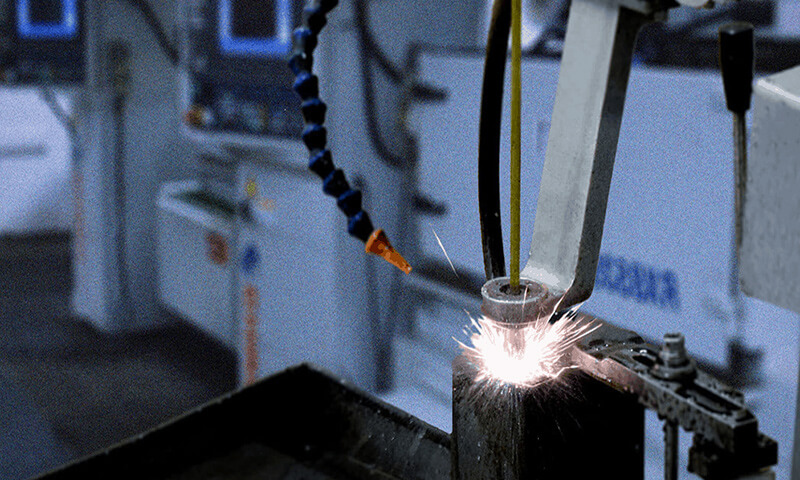
- Manufacturing processes. Modern dies require a combination of machining operations—CNC hard milling, conventional milling, grinding—and precision EDM (sink EDM and wire EDM) for profiles, slots and cores.
Термиялық өңдеу, stress-relief cycles and finishing (ұнтақтау, жылтырату, coatings or surface treatments such as nitriding or PVD) are common and add time and cost.
Complex dies may take Аптадан бірнеше ай to produce, whereas a straightforward die can be completed in a few days to a few weeks. - Surface treatments and coatings. Hard coatings, localized surface treatments or special finishes to reduce soldering or improve release will raise initial cost but can reduce maintenance frequency and extend die life.
Maintenance strategy and service life — operational levers on TCO
Die maintenance practices and service life determine how many parts the die actually produces before major rebuild or replacement — and therefore how the initial investment spreads across parts.
- Routine maintenance tasks. Cleaning cavities and cooling passages, inspecting for cracking or soldering, re-polishing wear zones, and replacing wear components (қақпалар, кірістер, тығыздағыштар) are regular activities.
Scheduled preventive maintenance reduces unplanned downtime and limits progressive damage. - Repair and refurbishment. Common repairs include welding buildups on worn cavities, re-machining surfaces, replacing slides or pins, and restoring quenched/tempered conditions.
Well-executed refurbishment can substantially extend life at a fraction of the cost of a full die replacement; дегенмен, each refurbishment has diminishing returns if the die has undergone repeated repairs. - Lubrication and die lubrication systems. Appropriate die lubricants, applied correctly, reduce stick-out, lower soldering risk and reduce abrasive wear.
Automated lubricant control and proper application regiment decrease cycle-to-cycle stress on the die. - Process control implications. Aggressive process parameters (excessive melt temperature, high injection pressure, or poor venting) accelerate thermal fatigue, soldering and erosion.
Controlling melt quality, shot profile and thermal cycles is therefore essential to preserving die life. - Expected life and variability. Die life is highly variable and a function of steel selection, Бөлшек күрделілік, maintenance discipline and process control.
An H13 die under well-controlled conditions and with regular maintenance may reach several hundred thousand shots;
керісінше, the same die under poor process control or with high soldering can fail after tens of thousands of shots.
Financial implication:
Investing in higher-quality steel, better surface treatments and a rigorous maintenance program usually increases upfront cost but reduces per-part die amortization and unplanned downtime, often lowering total cost over the program life.
4. Material costs — the foundation of die-casting economics
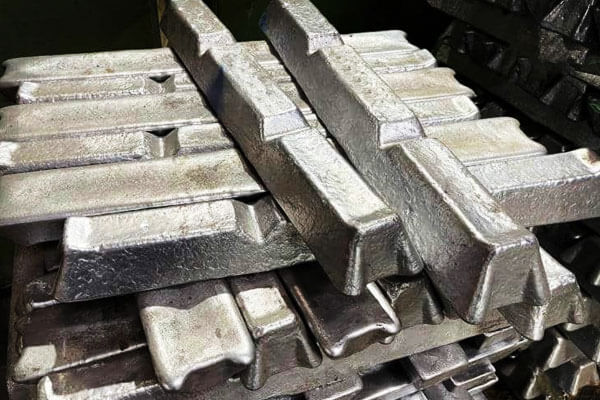
Material represents the single largest recurring expense in aluminum die casting, typically accounting for 30-50% of total per-part cost.
The alloy selection, material yield (scrap and rework), and the logistics of handling and melting directly determine both variable costs and process robustness.
Alloy selection and alloy purity
The specific aluminum alloy you choose strongly influences unit material cost because different alloys contain varying amounts of alloying elements (Жіне, Друг, Мг, т.б.),
have different scrap tolerances, and impose different downstream requirements (Термиялық өңдеу, өңдеу):
- Common die-casting alloys and their cost/usage profile
-
- A380 (3xx family): Widely used for general-purpose die casting because of excellent castability and balanced properties;
typically mid-range cost and good for high-volume, economy parts (корпустар, жақшалар). - A360 / 360: Higher strength and better machinability than A380; used where improved mechanical performance is required and is priced somewhat higher.
- A356 / 356: Heat-treatable alloy offering superior strength and ductility for demanding applications (automotive structural parts, аэроғарыш); higher purity and property requirements make it more expensive.
- 4xx сериясы (Cu/Si containing): Alloys with elevated copper or silicon content for wear resistance are typically more costly because of alloying element premiums.
- A380 (3xx family): Widely used for general-purpose die casting because of excellent castability and balanced properties;
- Purity and recycled content
-
- High-purity or virgin charge alloys carry a premium versus scrap-based or secondary feedstock.
Using recycled feedstock can reduce raw material expense (often by 10-30%) but introduces variability risks—contamination, inconsistent melt chemistry,
or higher hydrogen/dross levels—that can increase scrap, rework and inspection costs. - Ымыралы шешім: savings on alloy cost must be weighed against potential increases in porosity, mechanical variation and downstream processing costs.
- High-purity or virgin charge alloys carry a premium versus scrap-based or secondary feedstock.
Practical levers:
specify acceptable recycled content and chemical tolerances; implement robust incoming metallurgy control (spectrochemical analysis) and melt-shop practices to limit the quality penalty of lower-cost charge materials.
Material yield, gating/riser waste and scrap rates
Not all charged metal becomes finished part weight. Several unavoidable and avoidable loss streams materially affect the effective material cost per casting:
- Gating and riser waste: Sprues, runners and risers are necessary sacrificial metal.
Typical gating/riser waste commonly consumes 15-30% of total metal charged in a die-casting run (lower with optimized runner design and hot-trim systems). - Casting scrap: Defective castings (кеуелік, cold-shuts, dimensionally out-of-spec) are scrapped or reworked.
Well-controlled processes may see scrap rates in the 5-15% тау тізбектері; poorly controlled operations can exceed 20%. - Melting and transfer losses: Oxidation and dross formation during melting/handling typically account for an additional 2-5% loss, depending on furnace type, melt management and transfer practices.
Some of this material is recyclable on-site: runner and trim scrap, returned scrap and dross (after appropriate refining) can be re-introduced to the melt, reducing net purchased metal.
Дегенмен, reprocessing incurs energy, labor and fluxing costs.
Сұмдық: reducing gating mass, improving first-pass yield and controlling dross formation are among the highest-leverage actions to lower material cost per finished part.
Өңдеу, storage and melt-shop logistics
Material cost isn’t only the alloy price per kilogram; өңдеу, storage and melt-shop management add measurable expense and affect yield:
- Storage and preservation: Aluminum ingots and billets must be stored dry and covered to limit surface oxidation.
Poor storage increases oxide scale and dross generation at melt, raising effective material loss. - Material transport and charging: Forklifts, hoppers, conveyors and automated feeders enable safe, low-loss handling.
Manual handling increases the risk of spillage, contamination and labor cost.
For high-volume shops, automated ingot feeders and controlled charging reduce both losses and labor burden. - Melt temperature control and transfer: Maintaining melt at a consistent, optimal temperature (typical aluminum die casting melt ranges ~650–700 °C depending on alloy and practice) requires insulated ladles, accurate thermometry and controlled transfer to the shot sleeve.
Temperature excursions increase dross, gas pickup and misruns.
Equipment to support precise temperature control and inerting/degassing (аргон, Айналмалы газсыздар) represents an investment that lowers scrap and improves metallurgical quality.
Operational recommendation:
treat material handling and melt control as a quality investment — marginal increases in equipment or process controls typically pay back quickly through reduced dross, lower scrap and more consistent cast properties.
Төменгі сызық:
alloy choice and alloy quality set the baseline material cost, but effective management of gating design, scrap recycling, melt practices and handling logistics determines the actual material expense per good part.
To minimize material cost you must combine DFM (minimize sacrificial gating mass), strict metallurgy control (manage recycled content and chemistry), and disciplined melt-shop/handling practices to reduce losses and improve first-pass yield.
5. Production process costs — operational expenditures that determine per-part price
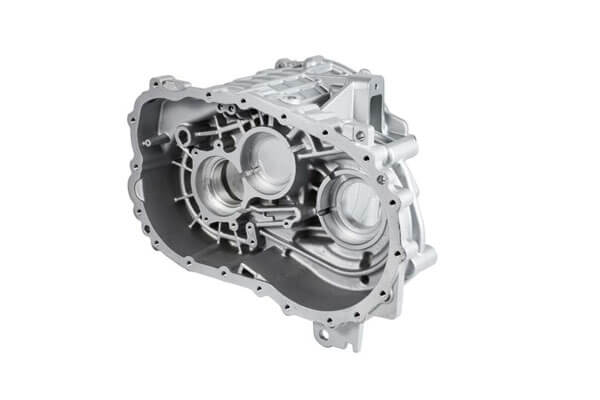
Production process costs are the recurring, operational expenses of an aluminum die-casting operation.
They typically represent 15-25% of total unit cost and are driven by process efficiency, equipment selection, өткізу қабілеті.
The three principal components are энергия, equipment depreciation & қолдау, жіне process consumables.
Энергия
Energy is a major and variable component of process cost (жалпы 5-10% of unit cost). The primary consumers of energy in a die-casting plant are:
- Балқыту пештері. Induction furnaces are the most widely used for melt preparation and are relatively efficient;
typical energy consumption for induction melting is on the order of 500–800 kWh per tonne of aluminum melted.
Gas-fired furnaces tend to be less energy-efficient but may present different capital or fuel-cost trade-offs depending on local rates. - Die-casting machines. High-pressure die-casting presses consume energy for hydraulic or electric actuation, Басқару жүйелері, and auxiliary heating.
Machine energy per cycle depends on press size (E.Г., 100-ton vs. 1,000-ton class) және цикл уақыты;
larger machines normally use more energy per cycle but can produce bigger parts or multiple cavities per shot. - Auxiliaries. Cooling systems, temperature controllers, degassing and filtration equipment, and material-handling devices add to the facility’s energy burden.
Energy costs vary materially by region and over time.
Effective cost control strategies include selecting energy-efficient furnaces and presses, shortening cycle time where metallurgically acceptable, recovering waste heat, and optimizing auxiliary system use.
Equipment depreciation, availability and maintenance
Capital equipment (Басыс, пештер, trim presses, CNC машиналары, чилерлер) carries depreciation and must be maintained to sustain availability and quality; together these are substantial components of per-part cost.
- Depreciation. Typical accounting lives for die-casting equipment are 5-10 жыл, but actual useful life depends on utilization rates and maintenance.
Depreciation spreads the up-front capital across produced parts and therefore increases unit cost most at low volumes. - Preventive maintenance. Routine activities—inspection, майлау, replacement of wear parts (тығыздағыштар, клапандар, platens), and periodic calibrations—reduce unplanned downtime and prolong equipment life.
A disciplined preventive program reduces total cost of ownership by minimizing catastrophic failures. - Corrective repairs and downtime. Unscheduled repairs are costly both in repair expense and lost production; effective spare-parts strategies and predictive maintenance lower these risks.
- Calibration and process control. Regular calibration of thermocouples, pressure sensors and control systems is essential to maintain process windows and reduce scrap.
Investing in robust equipment and an organized maintenance program typically raises fixed cost but lowers per-unit cost by increasing overall equipment effectiveness (OEE) және қызмет ету мерзімін ұзарту.
Process consumables
Consumables are recurring, necessary inputs whose quality and usage rate influence both cost and product quality:
- Die lubricants / босату агенттері. High-temperature lubricants protect dies from soldering and improve surface finish.
While premium lubricants cost more per litre, they can reduce die wear and the amount required per cycle. - Refractories. Furnace refractories and linings degrade and must be replaced periodically; their lifetime affects furnace downtime and repair planning.
- Filters and fluxes. Ceramic filters, flux compounds and degassing agents remove inclusions and hydrogen from melt metal.
Filter and flux selection affect yield, porosity control and rework rates. - Other consumables. Салқындатқыштар, Кесетін сұйықтықтар (for secondary machining), sealing compounds, and maintenance supplies add to the running cost.
Optimizing consumable selection and dosing—choosing products that reduce overall waste, extend die life or lower scrap—reduces total process cost even if unit price is higher.
Key takeaways:
production process costs are controllable levers.
Reducing energy intensity, investing in reliable equipment and maintenance practices, and optimizing consumable quality/usage all lower per-part cost while improving quality and uptime.
Quantify these elements in your cost model and prioritize actions that deliver the largest reduction in cost per part given your production volume and technical constraints.
6. Post-processing and secondary operations
Secondary operations can exceed the casting cost per se, especially where tight tolerances or cosmetic/functional surfaces are required.
- Кесу / die-cutting: manual or automated trim presses. For complex parts, trimming becomes labor-intensive.
- Өңдеу & бастау: CNC machining for critical surfaces, Жіптер, бұрғылар. Machining cost depends on tolerance, machined stock allowance and material machinability.
- Термиялық өңдеу: solution heat treat, aging or T6 processes add cycle time, fixtures and energy.
- Беттік емдеу: ату, құммен қаптау, Анодтық, ұнтақ пальто, бояу, желник; each adds cost and process control steps.
- Жиналыс & сынау: Пресс-фиталар, кірістер, герметизация, leakage testing, functional test rigs.
Сұмдық: Design choices that remove secondary operations (E.Г., include features that reduce machining) significantly lower total cost.
7. Сапа, scrap and yield factors
- Defect drivers: кеуелік (gas or shrinkage), суық жабдықтар, қосындылар, hot tears, die soldering. These generate scrap or rework.
- Process choices to reduce scrap: vacuum die casting, press-wall controls, optimized gating and risering, squeeze pins, local pressure, and hot-shot control. These options add cost but reduce per-part scrap.
- Тексеру & NDT: 100% dimensional checks, Рентгенография, pressure/leak tests and functional testing add cost but mitigate field failure risk.
- Warranty & field costs: high reliability applications (automotive safety, аэроғарыш) require tighter control, higher inspection cost and larger reserves for warranty.
8. Overhead, allocation & Жанама шығындар
Overhead includes facility depreciation, environmental permits, waste treatment, administrative salaries, quality systems (ISO/TS), insurance, and inventory carrying costs.
Allocation of overhead to parts depends on utilization and costing method — poor allocation hides true cost drivers.
9. Дыбыс, lot size and economies of scale
- Tooling amortization: For a die costing $100k with expected life of 500k parts, the tooling amortization is $0.20/part; if only 5k parts are produced, amortization is $20/part. Scale matters.
- Break-even analysis: compute break-even quantity where investment is justified. Include die maintenance and expected re-tooling cycles.
- Batching benefits: filling multiple cavities per shot, multi-cavity dies, and higher machine utilization lower unit fixed costs.
10. Design and specification drivers that increase cost
These elements directly inflate tooling and production cost:
- Қатаң төзімділіктер: ±0.05 mm vs ±0.5 mm ramp up inspection, machining and die complexity.
- Thin walls and thin ribs: require high fill speed, good venting and tight control to avoid cold shuts — increases die complexity.
- Асты сызбалар, слайдтар, өзектер: require side-action cores or collapsible cores → higher die cost and maintenance.
- Ішкі ерекшеліктері / соқыр тесіктер: may require cores, inserts or machining.
- High surface finish or cosmetic requirements: additional polishing or secondary processes.
- Multi-material assemblies or inserts: require insert placement during casting → specialized tooling and higher scrap risk.
- Large casting size / asymmetry: increased die thermal stress, longer cycle, heavy press — raise cost.
DFM principle: simplify geometry, relax noncritical tolerances, consolidate parts, and avoid features that force slides/cores.
11. Cost-Reduction Methods
Reducing unit cost in aluminum die casting requires coordinated action across design, Құралдар, Процесті басқару, materials and operations.
Өндіріске арналған дизайн (DFM) — highest single-leverage action
What to do: simplify part geometry, consolidate parts, relax non-critical tolerances, increase wall-thickness uniformity, eliminate undercuts that require slides, and minimize machined features.
Why it saves: reduces die complexity, lowers secondary machining and scrap, and shortens try-out time.
Typical impact: can lower total part cost 10-30% (Құралдар + бір бөлігі) depending on baseline complexity.
Іске асыру: run part review sessions with design, өлу, and process engineers early; use fill/solidification simulation to validate alternatives.
Optimize tooling strategy (die count, қуыстар, материалдар)
What to do: choose the right cavity count, invest in appropriate tool steel/coatings for projected life, and design for easier maintenance/repair.
Consider modular or replaceable inserts for wear zones.
Why it saves: spreads tooling cost, reduces downtime and extends die life.
Typical impact: amortization and maintenance savings; multi-cavity/multi-shot designs can reduce fixed cost per part significantly when volume justifies the increased die cost.
Іске асыру: perform a break-even analysis for each die option and account for die life, repair cycles and expected volumes.
Reduce gating and runner mass (material yield improvements)
What to do: redesign runner systems, adopt hot-trim or choke techniques, use simulation to minimize sacrificial metal while preserving fill and feed behavior.
Why it saves: lowers raw material input and re-melting energy; reduces trimming labor.
Typical impact: material yield improvements of 2–8 percentage points Көптеген жағдайларда.
Іске асыру: iterative simulation + shop trials, then update trimming tooling.
Improve first-pass yield (defect and scrap reduction)
What to do: tighten process control (Зат), adopt vacuum or squeeze techniques where justified, improve melt quality (газасты, сүзу), and stabilize shot profiles.
Why it saves: fewer scrapped parts, less rework, lower warranty cost.
Typical impact: reducing scrap from 10% → 5% often saves more than small raw-material discounts; ROI is typically strong.
Іске асыру: identify top defect modes (Pareto), apply targeted countermeasures, measure defect trend.
Optimize secondary operations (кесу, өңдеу, бастау)
What to do: reduce machined allowances, move critical features into the die where possible, automate trimming, and specify finishes that meet functional but not over-spec cosmetic needs.
Why it saves: secondary operations often exceed casting cost when tight tolerances or heavy machining are required.
Typical impact: significant per-part savings for machined components—often 20-50% reduction in secondary cost for well-executed changes.
Іске асыру: review each machined surface for function vs. форма, pilot automated trimming or fixture redesign.
Material purchasing & melt-shop optimization
What to do: negotiate long-term alloy contracts, use controlled recycled content where acceptable, improve melt yield (dross control, көну, transfer practices).
Why it saves: direct reduction in raw-material spend and lower re-melting energy.
Typical impact: material cost is 30–50% of total; even modest improvements (2-5%) yield outsized dollar savings.
Іске асыру: implement incoming spectro analysis, develop approved scrap mixes, and optimize furnace practice.
Energy efficiency and utility optimization
What to do: invest in efficient induction furnaces, recover waste heat, optimize cycle time, and control auxiliary system usage.
Why it saves: lowers recurring energy cost and often reduces environmental overhead.
Typical impact: energy is 5–10% of unit cost; targeted measures can cut energy spend by 10-30%.
Іске асыру: energy audit, pilot heat-recovery, then scale.
Automation where it reduces labor and variation
What to do: automate high-volume, repetitive tasks—assembly, кесу, part handling, and in-line inspection. Use robotics and vision for consistent placement and fewer rejects.
Why it saves: lowers per-part labor cost and improves repeatability, қайта өңдеуді азайту.
Typical impact: labor-intensive operations can see per-part labor cost reduced by 40-80% after automation (depends on labor rates and cycle times).
Іске асыру: ROI calculation—pilot cell for high-volume family parts before full rollout.
Preventive & predictive maintenance to extend die life and uptime
What to do: implement scheduled maintenance, die condition monitoring, spare parts strategy, және болжамды аналитика.
Why it saves: reduces unplanned downtime, extends die life, reduces hurried, costly repairs.
Typical impact: up to double die life in some cases; reduces downtime significantly, improving OEE.
Іске асыру: set MTBR/MTTR targets, schedule interval work, capture die life metrics.
Supply-chain and logistics rationalization
What to do: consolidate suppliers, locate critical tooling close to production, use vendor-managed inventories and JIT where appropriate.
Why it saves: reduces freight, lead times, and inventory carrying costs.
Typical impact: variable—can reduce total landed cost materially in global supply chains.
Іске асыру: supplier segmentation by strategic value and risk; negotiate service levels.
12. Қорытынды
Aluminum die casting cost factors are diverse and interconnected, requiring a holistic understanding to optimize total costs.
Материалдық шығындар, die costs, production process costs, Еңбек шығындары, quality control costs, and auxiliary costs all play a critical role in determining the final cost of die cast components.
By analyzing these factors in depth and implementing targeted optimization strategies, manufacturers can reduce costs while maintaining the high quality and performance required for modern applications.
As the aluminum die casting industry continues to evolve—with advancements in automation, Материалдық ғылым, and process technology—manufacturers must stay updated on the latest trends to remain competitive.
By focusing on cost optimization, quality improvement, and process efficiency, aluminum die casting will continue to be a cost-effective and versatile manufacturing process for years to come.
ЖҚС
How much does a typical aluminum die cost?
Highly variable. A simple single-cavity die might range from low five figures; complex multi-slide, multi-cavity dies with slides and conformal cooling can cost several hundred thousand dollars or more.
Always estimate based on part complexity.
When does die casting become cost-effective?
It depends on part complexity and tooling cost, but generally die casting becomes attractive for medium to high volumes (thousands to millions of parts).
Perform a break-even analysis with your specific tooling cost and target unit price.
Is vacuum or squeeze casting worth the extra cost?
For parts that require low porosity and high mechanical integrity (structural automotive, safety parts),
vacuum or squeeze whole-process may be required despite higher initial and cycle costs because they reduce scrap and warranty risk.
What’s the fastest way to reduce unit cost?
Early DFM (simplify geometry, reduce machining), paired with gating/riser optimization and yield improvement programs, typically delivers the largest near-term cost reduction.