Вугляродзістай сталі is a class of iron–carbon alloys in which iron (F) serves as the matrix and carbon (C) is the primary alloying element, typically present at concentrations ranging from 0.002% да 2.11% па вазе.
It remains one of the most widely used engineering materials due to its Эканамічная эфектыўнасць, універсальнасць, and tunable mechanical properties.
Unlike alloy steels, which rely on significant additions of elements such as chromium, нік, or molybdenum to tailor properties, carbon steel achieves its performance primarily through the interplay between carbon content, мікраструктура, і тэрмічнай апрацоўкі.
Глабальна, carbon steel underpins industries including construction, Аўтамабільнае вытворчасць, суднабудаванне, machinery production, і інструменты.
Its suitability for these sectors arises from a balance between strength, пластычнасць, вынослівасць, насіць супраціў, і тэхналагічнасць, making it a foundational material in both traditional and advanced engineering applications.
Understanding carbon steel requires a multi-perspective analysis encompassing chemical composition, мікраструктура, mechanical and thermal properties, Карозійнае паводзіны, electrical characteristics, and processing methods.
Each of these factors directly influences material performance in real-world applications.
1. Composition and microstructure
Carbon as the primary control variable
Carbon atoms occupy interstitial sites in the iron lattice and form cementite (Fe₃c). The mass fraction of carbon controls phase fractions and phase transformation temperatures:

- Нізкі С (≤ 0.25 вага%) — ferrite matrix with dispersed pearlite: excellent ductility and weldability.
- Medium-C (≈ 0.25–0.60 wt%) — increased pearlite fraction; after quench-and-temper a balance of strength and toughness.
- Высокі С (> 0.60 вага%) — high pearlite/cementite content; high as-quenched hardness and wear resistance; limited ductility.
These regimes follow the iron–carbon equilibrium relationships; actual microstructures in practice depend on cooling rates and alloy additions.
Minor elements and their roles
- Марганец (Мн) — combines with sulfur to form MnS rather than FeS, improves hardenability and tensile strength, refines grain. Typical 0.3–1.2 wt%.
- Крэмнім (І) — deoxidizer and solid-solution strengthener (тып. 0.15–0.50 wt%).
- Фосфар (P) and Sulfur (S) — controlled to low ppm levels; elevated P causes embrittlement at low temperature; S causes hot shortness unless mitigated (e.g., Mn additions or desulfurization).
- Alloying additions (Кр, Мо, У, V, Аб) — when present in modest amounts the steel becomes “low-alloy” and gains improved hardenability, toughness or high-temperature capability; these move the material beyond the simple “carbon steel” family.
2. Microstructural Regulation via Heat Treatment
Heat treatment is the primary industrial lever for turning the same carbon-steel chemistry into distinctly different microstructures and mechanical property sets.

Адпачынку (full / process anneal)
- Намер: soften, relieve stress, homogenize microstructure and improve machinability.
- Cycle (тыповы): heat to just above Ac3 (or to a specified austenitizing temperature) → hold to equalize (time depends on section size; rule-of-thumb 15–30 min per 25 таўшчыня мм) → slow furnace cool (often 20–50 °C/hr or uncontrolled furnace cooling).
- Microstructure produced: coarse pearlite + ферыт; carbide spheroidization can develop with subcritical soak.
- Property outcome: lowest hardness, maximum ductility and formability; useful before heavy cold working or machining.
Нармалізацыя
- Намер: refine grain, increase strength and toughness relative to full anneal.
- Cycle (тыповы): heat above Ac3 → hold ~15–30 min per 25 mm → cool in still air.
- Microstructure produced: finer pearlite than anneal with smaller grain size.
- Property outcome: higher yield/UTS than annealed, improved notch toughness and more uniform mechanical properties across sections.
Spheroidizing
- Намер: produce a soft, easily machinable structure for high-carbon steels prior to machining.
- Cycle (тыповы): prolonged hold (~10–40 hours) slightly below Ac1 (or cyclic subcritical anneal) to promote carbide coarsening into spheroids.
- Microstructure produced: ferrite matrix with spheroidal cementite particles (spheroidite).
- Property outcome: very low hardness, excellent machinability and ductility.
Тушэнне (уцвярджанне)
- Намер: create a hard martensitic surface or bulk by rapid cooling from austenite.
- Cycle (тыповы): аустенитизировать (temperature depends on carbon and alloy content, often 800–900 °C) → hold for homogenization → quench in water, oil or polymer quenchants; cooling rate must exceed critical cooling to suppress pearlite/bainite.
- Microstructure produced: мартэнсіт (or martensite + retained austenite depending on Ms and carbon), potentially bainite if cooling is intermediate.
- Property outcome: very high hardness and strength (мартэнсіт); high residual tensile stresses and susceptibility to cracking/ distortion without proper control.
Загармаванне
- Намер: reduce brittleness of martensite and restore toughness while retaining hardness.
- Cycle (тыповы): reheat quenched steel to tempering temperature (150–650 °C depending on desired hardness/toughness), трымаць (30–120 min depending on section) → air cool.
- Мікраструктурная эвалюцыя: martensite decomposes to tempered martensite or ferrite+spheroidized carbides; precipitation of transition carbides; reduction of tetragonality.
- Property outcome: trade-off curve: higher tempering temp → lower hardness, higher toughness and ductility.
Typical industrial practice tailors tempering to target HRC or mechanical minima.
3. Mechanical Properties of Carbon Steel
The table below gives representative, engineering-useful ranges for нізкі-, сярэдні- і высокавугляродзістых сталей in commonly encountered conditions (hot-worked/normalized or quenched & tempered where noted).
Гэта тыповы numbers for guidance — qualification testing is required for critical applications.
| Маёмасць / стан | Нізкі С (≤0.25% C) | Medium-C (0.25–0.60% C) | Высокі С (>0.60% C) |
| Typical condition (вытворчасці) | hot-rolled / нармалізаваны | hot-rolled, normalized or QT | annealed or quenched+tempered |
| Граніца трываласці на разрыў, Ots (МПА) | 300–450 | 500–800 | 800–1200 |
| Мяжа цякучасці (0.2% Rp0.2) (МПА) | 150–250 | 250–400 | (вар'іруецца; often high if quenched) |
| Падаўжэнне, А (%) | 20–35 | 10–20 | <10 (адпачываў) |
| Памяншэнне плошчы, З (%) | 30–50 | 15–30 | <15 |
| Цяжкасць (Hb / HRC) | HB 80–120 | HB 120–200 | Hb 200+; HRC up to 60 (тунг) |
| V-вобразная выемка Шарпі (room T) Akv | >100 J | 50–80 J | <20 J (ас-тах) |
| Elastic modulus, Е | ~200–210 GPa (all bands) | same | same |
| Шчыльнасць | ~7.85 g·cm⁻³ | same | same |
Plasticity and Toughness
Plasticity describes the material’s ability to undergo permanent deformation without fracture, while toughness refers to its capacity to absorb energy during impact loading:
- Low-carbon steel: Exhibits excellent plasticity, with elongation at break ranging from 20%–35% and reduction of area from 30%–50%.
Its notch impact toughness (Akv) at room temperature is above 100 J, enabling processes such as deep drawing, марнаванне, and welding without cracking.
This makes it the preferred material for thin-walled structural components like automotive panels and building steel bars. - Medium-carbon steel: Balances plasticity and toughness, with elongation at break of 10%–20% and Akv of 50–80 J at room temperature.
Пасля загартоўкі і гартавання, its toughness is further improved, avoiding the brittleness of quenched high-carbon steel, which suits applications such as transmission shafts, перадачы, і балты. - Высокавугляродзістай сталі: Has poor plasticity, with elongation at break below 10% and Akv often less than 20 J пры пакаёвай тэмпературы.
Пры нізкіх тэмпературах, it becomes even more brittle, with a sharp drop in impact toughness, so it is not suitable for load-bearing components subjected to dynamic or impact loads.
Замест, it is used for static parts requiring high wear resistance, such as knife blades and spring coils.
Устойлівасць да стомленасці
Fatigue resistance is the ability of carbon steel to withstand cyclic loading without failure, a critical property for components like shafts and springs that operate under repeated stress.
Low-carbon steel has moderate fatigue strength (about 150–200 MPa, 40%–50% of its tensile strength), while medium-carbon steel after quenching and tempering exhibits higher fatigue strength (250–350 Мпа) due to its refined microstructure.
Высокавугляродзістай сталі, when properly heat-treated to reduce internal stress, can achieve fatigue strength of 300–400 MPa,
but its fatigue performance is sensitive to surface defects such as scratches and cracks, which require careful surface finishing (e.g., шмарка, Стрэл Пінінг) to enhance fatigue life.
4. Functional properties
Beyond basic mechanical metrics, carbon steel exhibits a set of functional attributes that determine its suitability for environments and service conditions.
Corrosion behaviour and mitigation
Carbon steel does not form a protective passive oxide film (unlike chromium-bearing stainless steels); замест гэтага, exposure to oxygen and moisture produces loose, porous iron oxides (іржа) that permit continued penetration of corrosive species.
Typical atmospheric corrosion rates for unprotected carbon steel are roughly 0.1–0.5 mm/year, but rates accelerate markedly in acidic, alkaline or chloride-rich environments (Напрыклад, у марской вадзе).
Common engineering responses:
- Абарона паверхні: hot-dip galvanizing, гальваніка, organic paint systems, and chemical conversion coatings (e.g., фасфатаванне).
- Канструктарскія меры: drainage to avoid stagnant water, isolation of dissimilar metals, and provision for inspection/maintenance.
- Material substitution: where exposure is severe, specify stainless steel, corrosion-resistant alloys or apply robust claddings/linings.
Selection should be based on expected environment, required service life and maintenance strategy.
Thermal properties and service temperature limits
Carbon steel combines relatively high thermal conductivity with moderate thermal expansion, which makes it effective for heat-transfer applications while providing predictable dimensional behaviour under temperature change.
Key numerical values and implications:
- Цеплаправоднасць: ≈ 40–50 W·m⁻¹·K⁻¹ at room temperature — superior to typical stainless steels and most engineering polymers; suitable for heat exchangers, boiler tubes and furnace components.
- Каэфіцыент цеплавога пашырэння: ≈ 11–13 × 10⁻⁶ /°C (20–200 ° С), lower than aluminium and compatible with many steel-based assemblies.
- Тэмпературная ўстойлівасць: Low-carbon steel can be used continuously at temperatures up to 425℃, but its strength decreases rapidly above 400℃ due to grain coarsening and softening.
Medium-carbon steel has a maximum continuous service temperature of 350℃, while high-carbon steel is limited to 300℃ due to its higher susceptibility to thermal softening.
Above these temperatures, alloy steels or heat-resistant steels are required to maintain structural integrity.
Электрычныя ўласцівасці
Carbon steel is a good electrical conductor, with a resistivity of approximately 1.0 × 10⁻⁷ Ω·m at room temperature—higher than that of copper (1.7 × 10⁻⁸ Ω·m) but lower than most non-metallic materials.
Its electrical conductivity decreases slightly with increasing carbon content, as cementite particles disrupt the flow of free electrons.
While carbon steel is not used for high-efficiency electrical conductors (a role dominated by copper and aluminum), it is suitable for grounding rods, электрычныя карпусы, and low-current transmission components where conductivity is secondary to mechanical strength.
5. Processing performance — manufacturability and forming behaviour
Hot working and cold forming
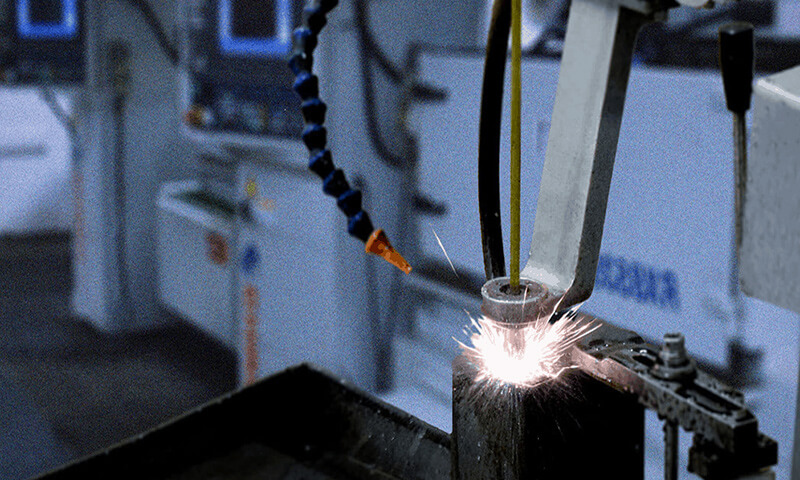
- Hot forging / скрутка: Нізкі- and medium-carbon steels exhibit excellent hot workability.
Каля ~1000–1200 °C the microstructure converts to austenite with high ductility and low deformation resistance, enabling substantial hot forming without cracking. - Сталі з высокім узроўнем вугляроду: Hot workability is poorer due to the presence of hard cementite; forging requires higher temperatures and controlled deformation rates to avoid cracking.
- Халодная пракатка / фарміраванне: Low-carbon steels are well suited to cold forming and sheet production, enabling thin gauges with good surface finish and dimensional control.
Welding considerations and best practice
Weldability is strongly dependent on carbon content and the associated risk of forming hard martensitic structures in the heat-affected zone (Хаз):
- Сталі з нізкім утрыманнем вугляроду (C ≤ 0.20%): Excellent weldability with standard processes (дуга, MIG/MAG, Зрадак, resistance welding). Low propensity for HAZ martensite and hydrogen-induced cracking.
- Medium-carbon steels (0.20% < C ≤ 0.60%): Moderate weldability. Разагрэчэнне (звычайна 150–300 °C) and controlled interpass temperatures, plus post-weld tempering, are commonly required to reduce residual stresses and avoid HAZ brittleness.
- Сталі з высокім узроўнем вугляроду (C > 0.60%): Poor weldability. HAZ hardening and cracking risk are high; welding is generally avoided for critical components in favor of mechanical joining or using matching low-risk filler/welding procedures with extensive pre-/post-heat treatment.
Machining Performance
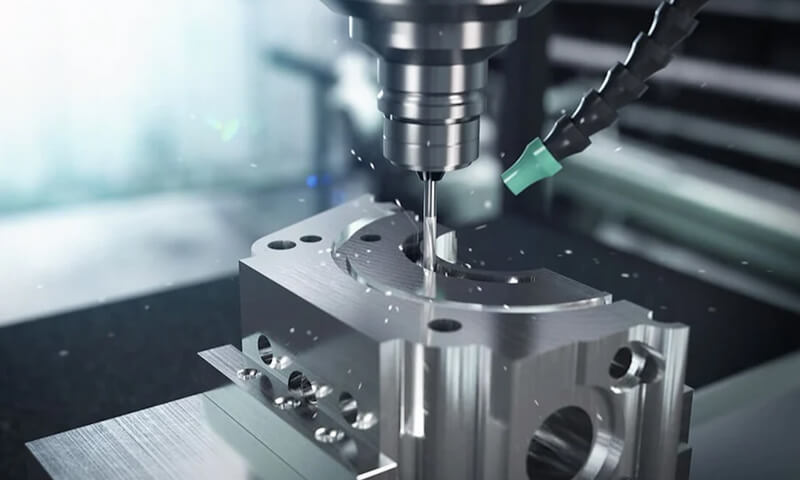
Machining performance refers to the ease with which carbon steel can be cut, прасвідраваны, and milled, which is determined by its hardness, вынослівасць, і мікраструктуры:
- Medium-carbon steel (e.g., 45# сталь): Has the best machining performance.
Its balanced hardness and toughness reduce tool wear and produce a smooth surface finish, making it the most widely used material for machined components such as shafts and gears. - Low-carbon steel: Tends to stick to cutting tools during machining due to its high plasticity, resulting in poor surface finish and increased tool wear.
This can be mitigated by increasing cutting speed or using lubricating coolants. - Высокавугляродзістай сталі: У отожженном стане, its reduced hardness improves machining performance; in the quenched state, its high hardness makes machining difficult, requiring the use of wear-resistant cutting tools such as cemented carbide.
6. Limitations and Performance Enhancement Methods
Нягледзячы на мноства пераваг, carbon steel has inherent limitations that restrict its application in certain scenarios, and targeted enhancement methods have been developed to address these issues.
Асноўныя абмежаванні
- Дрэнная ўстойлівасць да карозіі: As noted earlier, carbon steel is prone to rust in most environments, requiring surface treatments or replacement with more corrosion-resistant materials for long-term use in harsh conditions.
- Limited high-temperature strength: Its strength decreases significantly above 400℃, making it unsuitable for high-temperature structural components such as jet engine parts or high-pressure boiler tubes.
- Low wear resistance: Pure carbon steel has relatively low wear resistance compared to alloy steels or surface-hardened materials, limiting its use in high-wear applications without additional treatment.
Performance Enhancement Methods
A range of metallurgical and surface engineering approaches are used to extend service life and expand application envelopes:
- Павярхоўнае ўмацаванне: Служэнне, nitriding and induction/laser hardening produce a hard wear-resistant case (case hardness up to HRC ~60) with a ductile core—widely applied to gears, cams and shafts.
Nitriding uniquely offers hardening at lower temperatures with minimal distortion. - Легіраванне / Сталь з нізкім сплавам: Small controlled additions of Cr, У, Мо, V and others transform carbon steels into low-alloy grades with improved hardenability, elevated-temperature strength and enhanced corrosion resistance.
Прыклад: adding 1–2% Cr to a medium-carbon base yields a Cr-bearing alloy (e.g., 40Кр) with superior hardenability and mechanical performance. - Composite coatings and cladding: Ceramic thermal-spray coatings, PTFE/epoxy polymer linings, metallic claddings or weld overlays combine carbon steel’s structural economy with a chemically or tribologically resistant surface—effective in chemical processing, food handling and corrosive service.
- Surface finishing and mechanical treatments: Стрэл Пінінг, шмарка, and controlled surface grinding reduce stress concentrators and improve fatigue life; passivation and appropriate coating systems slow corrosion initiation.
7. Typical Industrial Applications of Carbon Steel
Carbon steel’s broad property envelope, low cost and mature supply chain make it the default structural and functional material across many industries.
Construction and civil infrastructure
Прыкладанне: structural beams and columns, арматурныя пруткі (арматура), bridge components, фасады будынкаў, cold-formed framing, piling.
Why carbon steel: excellent cost-to-strength ratio, Фармальнасць, weldability and dimensional control for large-scale manufacture.
Тыповы выбар & апрацоўка: low-carbon steels or mild steels (rolled plates, hot-rolled sections, cold-formed profiles); fabrication by cutting, welding and bolting; corrosion protection by galvanizing, painting or duplex coating systems.
Тэхніка, power transmission and rotating equipment
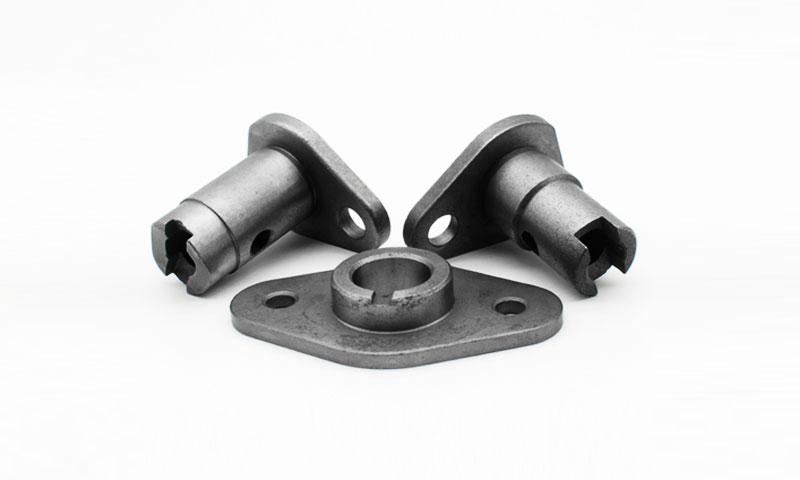
Прыкладанне: шахты, перадачы, муфты, восі, коленфоры, bearings housings.
Why carbon steel: medium-carbon grades balance machinability, strength and hardenability; can be surface-hardened for wear resistance while retaining a tough core.
Тыповы выбар & апрацоўка: среднеуглеродистых сталей (e.g., 45#/1045 эквіваленты) тунг & tempered or carburized then hardened; дакладная апрацоўка, драба, shot-peening for fatigue life.
Аўтамабільны і транспарт
Прыкладанне: кампаненты шасі, Падвесныя дэталі, зашпількі, Панэлі для цела (мяккая сталь), transmission and braking components (heat-treated medium/high-carbon steels).
Why carbon steel: cost-effective mass production, stampability, weldability and capacity for localized hardening.
Тыповы выбар & апрацоўка: low-carbon steels for body panels (cold-rolled, coated); medium/high-carbon steels for structural and wear parts with heat treatment; electrocoatings and galvanneal for corrosion protection.
Змазваць, газавай і нафтахімічнай прамысловасці
Прыкладанне: трубы, корпуса пад ціскам, downhole tool bodies, drilling collars, канструктыўныя апоры.
Why carbon steel: strength and economic availability for large-diameter pipes and heavy structural components; ease of field fabrication.
Тыповы выбар & апрацоўка: carbon steel pipelines and pressure parts are frequently clad or lined (stainless overlay, polymer liner) in corrosive service; heat treatments and controlled microstructure for fracture toughness in cold climates.
Energy generation, boilers and heat-transfer equipment
Прыкладанне: кацельныя трубы, цеплаабменнікі, turbine structural components (non-hot-section), апорныя канструкцыі.
Why carbon steel: high thermal conductivity and good fabricability for heat-exchange applications where temperatures remain within service limits.
Тыповы выбар & апрацоўка: нізкі- to medium-carbon steels for tubes and supports; where temperatures or corrosive media exceed limits, use alloyed or stainless steels.
Інструменты, рэжучыя беражкі, springs and wear parts
Прыкладанне: рэжучыя інструменты, стрыжкі ляза, удары, крыніцы, wire dies, Насіць талеркі.
Why carbon steel: high-carbon steels and tool steels can achieve very high hardness and wear resistance when heat treated.
Тыповы выбар & апрацоўка: high-carbon grades (e.g., T8/T10 or tool steel equivalents) quenched and tempered to required hardness; surface grinding, cryogenic treatments and case hardening for wear-critical parts.
Marine and shipbuilding
Прыкладанне: hull plates, структурныя члены, калоды, fittings and fasteners.
Why carbon steel: economic structural material with good fabrication and repairability at sea.
Тыповы выбар & апрацоўка: нізкі- to medium-carbon structural steels; heavy coatings, cathodic protection and corrosion-resistant claddings are standard.
Use of weathering steels or protected composites where long maintenance intervals are required.
Чыгуначны, heavy equipment and mining
Прыкладанне: rails, колы, восі, bogies, excavator booms and buckets, crusher components.
Why carbon steel: combination of high strength, toughness and ability to be surface-hardened for wear resistance under extreme mechanical loading.
Тыповы выбар & апрацоўка: сярэдні- and high-carbon steels with controlled heat treatment; induction or surface hardening for contact surfaces.
Трубаправоды, tanks and pressure vessels (non-corrosive or protected service)
Прыкладанне: water and gas pipelines, ёмістасці для захоўвання, pressure-retaining vessels (when corrosion and temperature are within limits).
Why carbon steel: economical for large volumes and easy field joining.
Тыповы выбар & апрацоўка: low-carbon plates and pipes with weld procedures qualified to code; internal linings, coatings or cathodic protection in corrosive service.
Спажывецкія тавары, appliances and general fabrication
Прыкладанне: рамы, карпусы, зашпількі, інструменты, furniture and appliances.
Why carbon steel: нізкі кошт, ease of forming and finishing, wide availability of sheet and coil products.
Тыповы выбар & апрацоўка: cold-rolled low-carbon steels, zinc or organic coated; марнаванне, глыбокі малюнак, spot welding and powder coating are common.
Зашпількі, fittings and hardware
Прыкладанне: балты, арэхі, шрубы, шпількі, hinges and structural connectors.
Why carbon steel: capacity to be cold-formed, heat treated and plated; predictable performance under preload and fatigue conditions.
Тыповы выбар & апрацоўка: medium-carbon and alloyed carbon steels for high-strength fasteners (тунг & загартаваны); гальваніка, phosphate plus oil or hot-dip galvanizing for corrosion protection.
Emerging and specialized uses
Прыкладанне & trends: additive manufacturing of structural parts (powder-bed and wire-arc cladding), hybrid structures (steel-composite laminates), strategic use of clad or lined carbon steel to replace more expensive alloys.
Why carbon steel: material economics and adaptability encourage hybridization (steel substrate with engineered surface) and the adoption of near-net-shape manufacturing.
8. Conclusion
Carbon steel remains one of the most widely used metallic materials in modern industry due to its combination of Эканамічная эфектыўнасць, tunable mechanical properties, and excellent processability.
Its performance is primarily governed by Змест вугляроду, мікраструктура, and trace element composition, which can be further optimized through тэрмічная апрацоўка (адпачынку, тушэнне, загармаванне, or normalizing) і surface engineering (пакрыцці, пакрыццё, ашалёўка, or alloying).
From a mechanical perspective, carbon steel spans a broad spectrum: low-carbon grades offer high ductility, Фармальнасць, і зварваемасць; medium-carbon steels provide a balance of strength, вынослівасць, і апрацоўваемасць; high-carbon steels excel in hardness, насіць супраціў, і прадукцыйнасць стомленасці.
Beyond mechanical performance, carbon steel possesses functional properties such as цеплаправоднасць, Памерная стабільнасць, і электраправоднасць, although its corrosion resistance and high-temperature strength are limited relative to alloy steels or stainless steels.
Industrial versatility is a defining feature of carbon steel. Its applications range from construction and automotive components да тэхніка, энэргія, трубаправоды, and wear-resistant tools, reflecting its adaptability to diverse mechanical and environmental demands.
Limitations in corrosion, насіць, and high-temperature performance can be mitigated through surface hardening, легіраванне, ахоўныя пакрыцця, and hybrid or clad systems, ensuring carbon steel remains competitive even in demanding conditions.
FAQ
How does carbon content affect carbon steel properties?
Carbon increases hardness, трываласць на расцяжэнне, і нашэнне супраціву, but reduces ductility and impact toughness.
Low-carbon steel is highly formable; medium-carbon steel balances strength and ductility; high-carbon steel is hard and wear-resistant but brittle.
Can carbon steel replace stainless steel?
Carbon steel is not inherently corrosion-resistant like stainless steel.
It can replace stainless steel in non-corrosive environments or when surface protection (пакрыцці, пакрыццё, or cladding) is applied. У моцна агрэсіўных асяроддзях, stainless steel or alloy steels are preferable.
Is carbon steel suitable for high-temperature applications?
Low-carbon steel can be used continuously up to ~425℃, medium-carbon steel up to ~350℃, and high-carbon steel up to ~300℃. For temperatures above these limits, alloyed or heat-resistant steels are recommended.
How is carbon steel protected from corrosion?
Common methods include hot-dip galvanizing, гальваніка, карціна, фасфатаванне, applying polymer or ceramic coatings, or using low-alloy or stainless-clad alternatives for harsh environments.